

According to CBC’s the fifth estate, four computer programmers contracted by the British Columbia government are believed to be North Korean agents.
From 2023 to 2025, these four individuals were engaged to assist with the province’s business registry system.
As part of a significant contract to provide software developers to the province, a Lower Mainland IT staffing firm facilitated the hiring of a person identifying himself as Kevin Zhang.
“Kevin’s resume was perfect for the role I was dealing with,” stated the owner of the staffing firm, who requested anonymity for himself and his company while speaking with the fifth estate. He expressed that he was entirely unaware that he may have hired individuals likely linked to North Korea due to the remote hiring process.
Over the past year, the fifth estate has been delving into the activities of North Korean IT workers and their ability to penetrate Canadian businesses and governmental organizations.
“Zhang is quite well-known,” remarked Michael Barnhart, a former U.S. Army intelligence officer who now investigates North Korean operations in the private sector.
“I had tracked him previously. There are several cryptocurrency companies that have monitored him before, along with various other industries. Each one had a unique piece of the overall puzzle.”
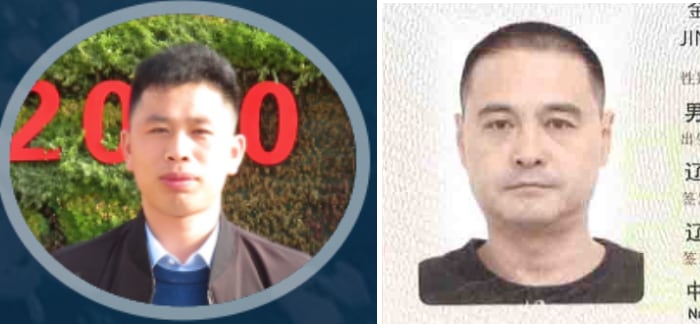
The image from Kevin Zhang’s website, left, does not align with the passports stored on his GitHub account, right. (kzdev420/GitHub)
In addition to corroborating insights from experts like Barnhart, the fifth estate uncovered several online indicators suggesting North Korean IT worker tactics:
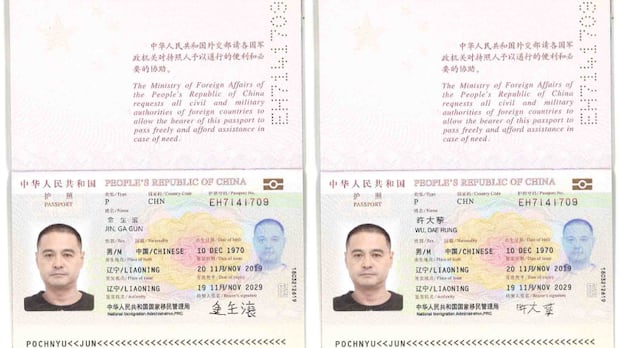
Zhang’s online profile, used for his work with the B.C. government, displayed two counterfeit Chinese passports. The birthplace listed for the passport holder is Liaoning, a Chinese province that borders North Korea. Previously, the U.S. Department of the Treasury has imposed sanctions on companies operating IT worker cells in Liaoning.
- Watch the complete documentary, “For Hire: North Korea’s IT Army” from the fifth estate on YouTube, CBC Gem, or CBC-TV on Friday at 9 p.m.
The names on these passports appeared to be altered, as neither matched the name on the document’s bottom stripe.
A resume-style website belonging to Zhang featured a headshot that did not correspond with the image on the passports.
“This is the same individual who also uses the name Kevin Chang,” Barnhart noted. “Sometimes he will exclusively go by that name.
“Chang, Ching, or Zhang, just different variations of the beginning or ending name.”
As time progressed, the B.C. government engaged three additional remote developers through the same IT staffing firm. The firm’s owner informed the fifth estate that each was recommended by Zhang, who claimed they were his former coworkers.
The owner mentioned that the ultimate decision to hire them rested with the B.C. government, which would have conducted a 30-minute competency interview.
The fifth estate contacted several individuals and entities within the B.C. government but received no replies or were informed that due to the provincial election, which concluded on October 24, responses could not be provided.
In response to a freedom of information request, the fifth estate was told that the ministry employing Zhang could not find any record of an employee by that name, even after being given the account details that documented his contributions to a ministry software project.
Red flags
Apart from the counterfeit Chinese passports and mismatched headshots, an investigation into Zhang and his associates conducted by the fifth estate revealed several other anomalies.
For example, an online resume for Zhang that listed the B.C. government as a previous employer indicated his address as “Main St. E, North Bay, ON,” yet it lacked a street number.
Email exchanges provided to the fifth estate by the B.C. staffing firm revealed that Zhang and the other developers frequently altered their banking details.
“In hindsight, it is highly unusual for someone to change their bank and change their company,” the staffing firm’s owner remarked. “In my years of experience, this has happened once or twice before.”
This is a concerning sign, according to cybersecurity specialist Barnhart.
“I have maintained the same bank account with my employer for decades. I’ve never requested my company to change it. If I had, it would have been once. If I had done it twice, I would have been questioning: ‘What is going on?’”
At one point last year, Zhang requested payment to the bank account for a firm named Dev Dragon Inc. Corporate records indicate that Dev Dragon, now defunct, was registered by a James Zhang at a dilapidated building in Dawson City, Yukon.
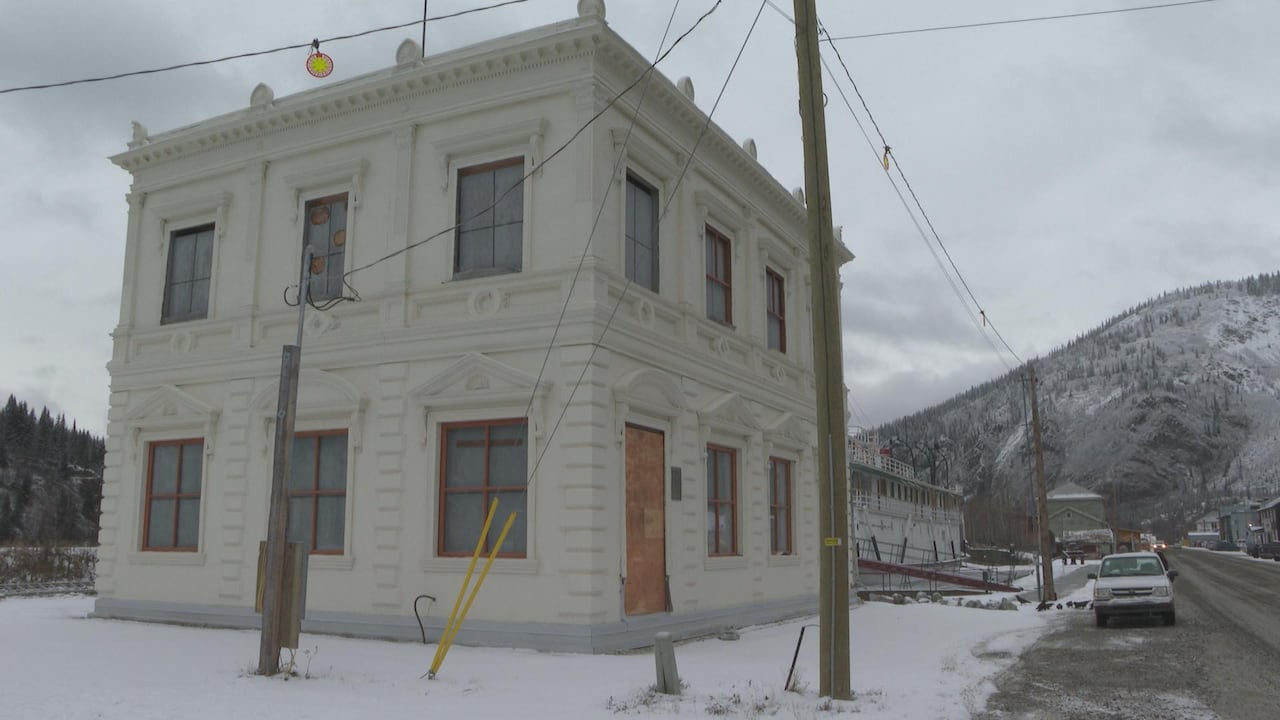
The registered location for DevDragon Inc. was an old, abandoned bank building in Dawson City, Yukon. (CBC)
Another remote worker, Brandon Galli, exhibited a similarly perplexing digital presence. On the profile associated with his work on B.C. government code, Galli’s profile image depicts an Asian man, while his linked personal website shows a photo of a Caucasian man.
In an email acquired by the fifth estate, Galli requested that his salary be directed to the account of a company in Ontario called Luk Castle Investments, which is registered to a residence in Markham by a man named Kenny Luk.
According to his LinkedIn profile, Luk has performed computer programming tasks for various Canadian banks before establishing a software development consultancy.
When the fifth estate reached out to Luk regarding Brendan Galli and the payments made to him, he stated that “Luk Castle Investments does not engage in media inquiries or respond to unsolicited questions concerning its business operations. Neither I nor anyone affiliated with the company will provide comments on this matter.”
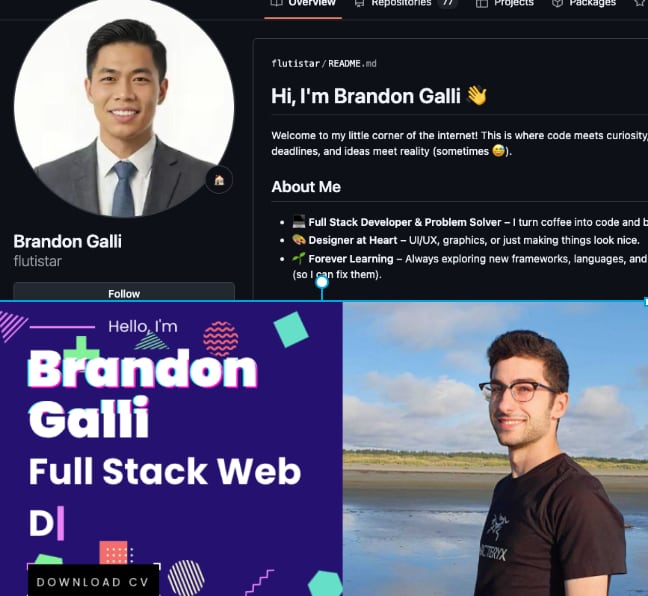
Using a real person’s identity for fraudulent activities is a frequent tactic among North Korean IT workers. (GitHub/Brandongalli.io)
The fifth estate located the actual Brandon Galli in New Jersey. Upon learning that someone had used his identity to work for the B.C. government, he suggested that his identity may have been compromised.
However, when probed further, he admitted to having provided his identity to someone he collaborated with online. He stated that this individual continues to exploit his identity without his consent, leading to a myriad of issues for him.
-
Ontario architect’s seal forged by remote worker believed to be North Korean fraudster
-
Binance says $6.3B US hacked in what could be largest cryptocurrency theft ever
“It was prior to the pandemic. We collaborated on Upwork and freelancing platforms, and I received small payments for a brief period while I was in college just to cover my food expenses,” Galli explained to the fifth estate in a WhatsApp message.
Barnhart has observed this same behavior before.
“You will often see them targeting college students who may be in need of some cash,” he noted.
“It’s like: ‘Hey, I don’t want anything from you, I just need — can I use your LinkedIn profile? Can I borrow your driver’s license to get this job one time?’ And once you [allow them to use it] once, they have it indefinitely.”