
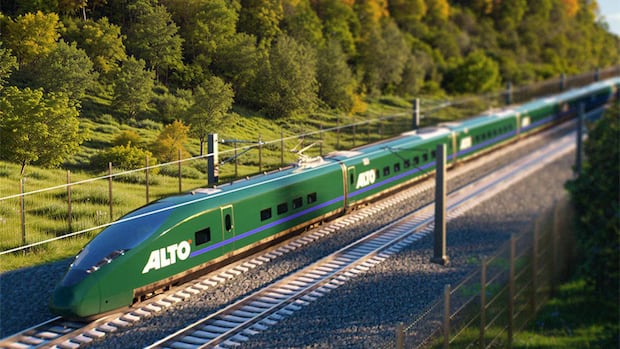

The federal government is looking to eliminate the standard expropriation protocols for Canada’s inaugural high-speed rail initiative.
Should the proposed measures be included in the government’s Budget 2026 implementation legislation, Ottawa would have the authority to expropriate land without conducting public hearings, directly transfer ownership to a private consortium, and resolve unresolved disputes concerning crossings for farms and municipal roads through private arbitration.
The draft legislation aims to grant Alto special powers regarding expropriation, which includes exempting the project from certain provisions of the Railway Relocation and Crossing Act, key parts of the Railway Safety Act and Impact Assessment Act, as well as the full Expropriation Act.
The Alto initiative seeks to establish a high-speed rail connection between Toronto and Quebec City and has garnered criticism from farmers, landowners, and some municipal authorities.
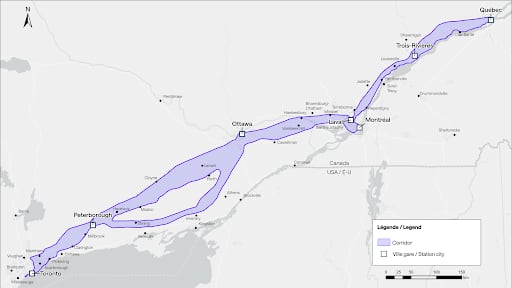
The proposed route for the Alto high-speed rail line connecting Toronto to Quebec City. (Alto)
Alto has chosen not to comment on the proposed legislation.
“In terms of both financial implications and the quantity of private properties needed, I believe this will be the most significant expropriation endeavor in contemporary Canadian history,” stated municipal and land use planning attorney Ajay Gajaria.
Gajaria indicates that the suggested amendments would empower the government with exceptional authority to compel landowners to sell, potentially impacting thousands of properties.
Historically, Ottawa could only acquire private land for the Crown after adhering to stringent regulations and independent public hearings.
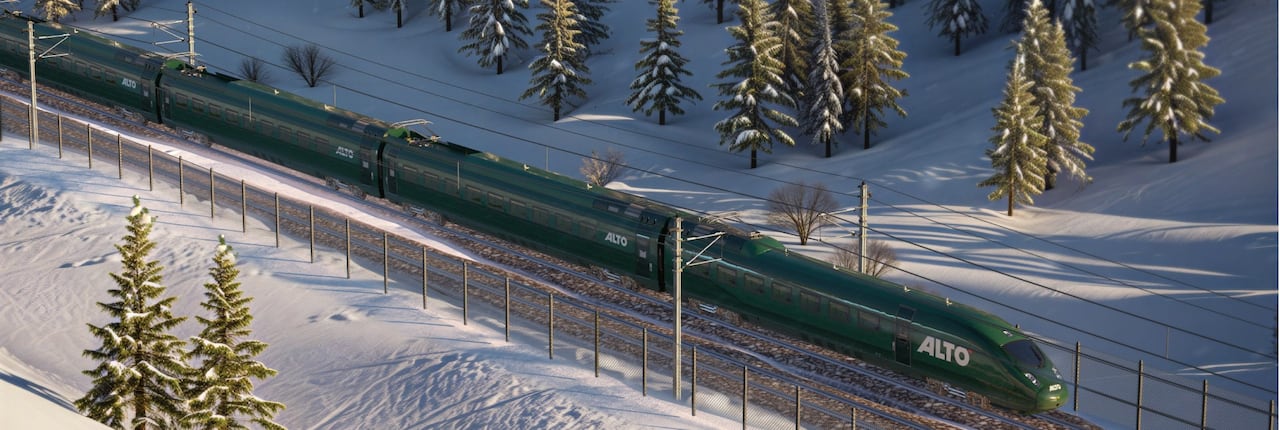
A 3D rendering depicting a potential Alto high-speed train. (Alto)
When Parliament approved the High-Speed Rail Network Act as part of Bill C-15 in March, it included specific exceptions to expedite the process — enabling Alto to avoid initial purchase negotiations and replace public hearings with written objections while still anchoring the project within Canada’s Expropriation Act.
This newly proposed legislation would eliminate the remaining oversight, allowing Ottawa to take private property and transfer ownership to a third party.
The modifications are outlined in a 521-page notice of ways and means motion released on November 20.
Right of First Refusal
Gajaria expressed significant concern regarding a provision that would allow the government to secure property rights for up to eight years and impose a work prohibition for four years before determining whether to expropriate the land.
Some of these elements were part of C-15. The expanded authorities now proposed would grant the minister the ability to consider “any factor… including the public interest” before imposing a work ban.
“The right of first refusal and the work prohibition, if applied broadly, in my opinion, would be excessive,” Gajaria remarked.
With the powers granted in March, Alto would have the first opportunity over several years to acquire a targeted property without needing to provide upfront payment.
“A potential buyer is likely to see that the Crown has the right of first refusal, which enables it to match the best offer,” Gajaria stated.

The proposed Alto high-speed rail line is expected to divide land and disrupt communities, as expressed by farmers.
Individuals within the designated corridor, Gajaria noted, “might find themselves in a situation where they cannot market or sell their property for potentially eight years or longer.”
The “notice of prohibition on work” may be issued on a target property for up to four years, effectively barring the landowner from making any new constructions, significant alterations, or improvements without special approval from the transportation minister.
The proposed legislation states that any property value increase resulting from upgrades or work conducted during this timeframe will be excluded from the expropriation compensation.
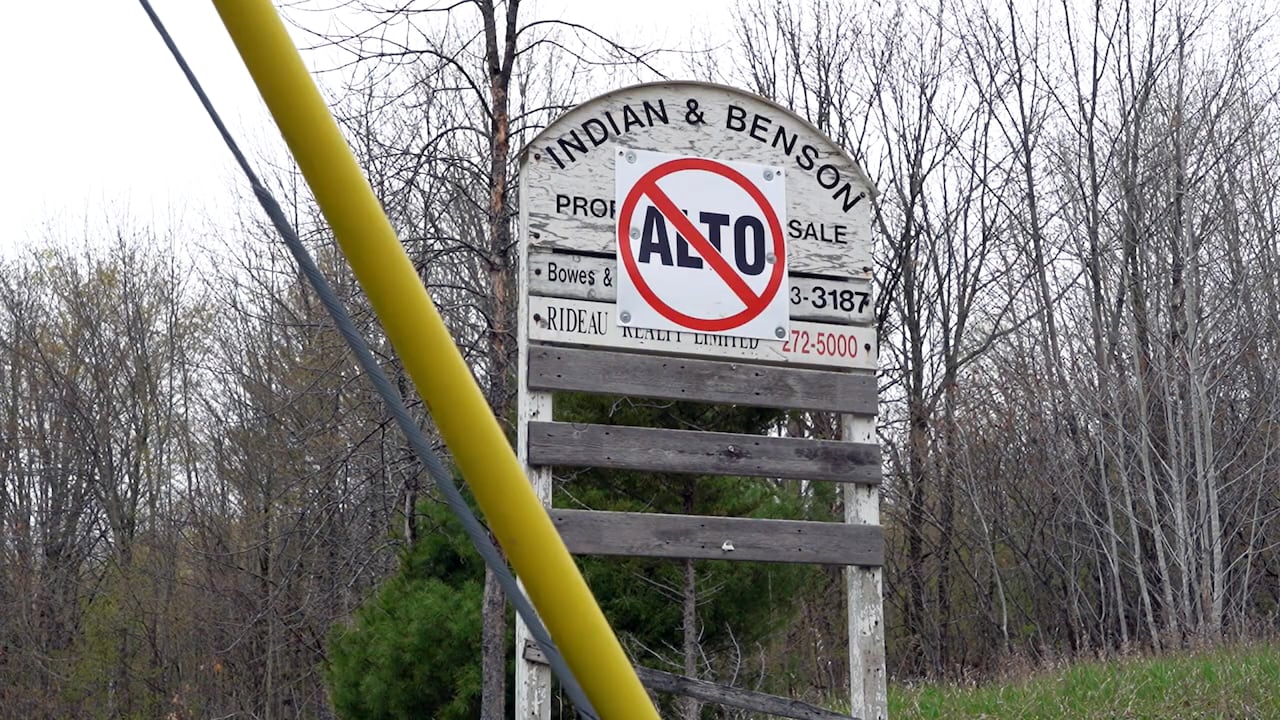
A sign displaying ‘Alto’ crossed out is visible along the road in Chaffey’s Lock, Ont., in May 2026. (Dan Taekema/CBC)
Another amendment to the expropriation regulations involves how a notice of expropriation is articulated.
Previously, if a government expropriation notice did not clearly specify which part of a property was being taken, the landowner could have the notice dismissed in court. In March, Ottawa modified the guidelines to allow officials to rectify defective notices and backdate those corrections to the original filing date.
This new proposal escalates the previous measure: if an expropriation notice fails to identify the specific land being taken, it automatically claims 100 percent of the owner’s property rights and nullifies any existing easements, leases, or rights-of-way.
“Those who ultimately have their land expropriated will likely receive compensation,” Gajaria remarked.
“The aim is to ensure that individuals expropriated for a public project receive adequate and fair compensation for their property.”
Farmers and Crossing Rights
Under traditional Canadian rail regulations, farmers had the legal right to request a crossing when a freight train traversed a farm or rural road, and the Canadian Transportation Agency could mandate the railway to construct and finance what is known as a level crossing.
However, for high-speed rail, where trains can attain speeds of up to 300 km/h, safety standards are altered.
These crossings must be grade-separated, implying that the entire corridor needs to be isolated, with every crossing requiring either an overpass or underpass made of concrete.
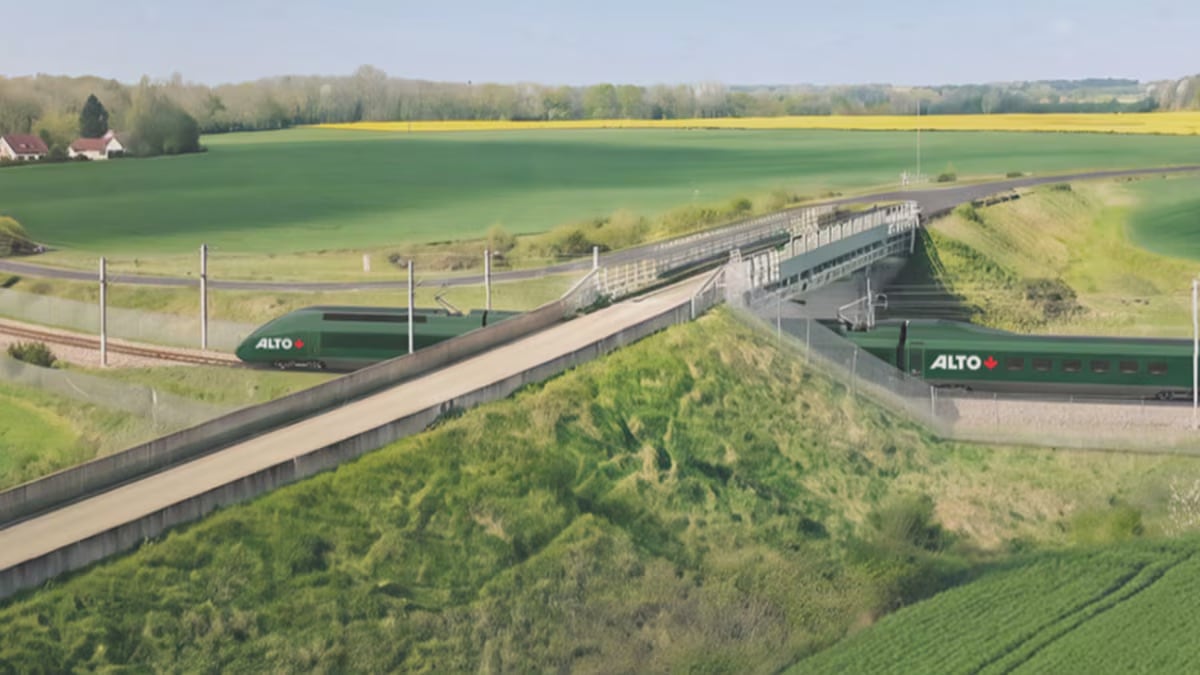
Alto asserts that it does not aim to divide or isolate communities and intends to build overpasses and underpasses wherever feasible. (Alto)
For any private farm or municipality with affected land, the proposed budget legislation compels the parties into private arbitration, with each side responsible for half the costs — potentially reaching $25,000 per party, in addition to their own legal expenses. It would also permit arbitrators to bill landowners for portions of the construction or upkeep of a crossing.
“For costs to be divided on a 50/50 basis with expenses reaching up to $25,000 for an individual landowner,” Gajaria commented, “I believe that provision is excessive.”
$24.5B in Projected Annual Benefits
A recent study commissioned by Alto indicates that the rail line will enhance productivity by improving connections for individuals living and working in the Toronto-Quebec City corridor — and claims that once operational, the line could generate approximately $24.5 billion in economic benefits each year.
The federal government has emphasized the significance of a project such as Alto in Canada, describing it as a “bold step to address [Canada’s] growing transportation needs” and a component of a national “transformational strategy” aimed at initiating construction ahead of schedule.
The Conservative Party and Bloc Québécois have opposed the Alto initiative, highlighting the proposed expropriations as a primary reason for their dissent.
The NDP backs the development of high-speed rail in Canada but has expressed concerns regarding the extensive powers being suggested by the Carney government.
“With high-speed rail, there isn’t much room to maneuver… Expropriation is sometimes necessary, but it should be a last resort,” remarked NDP Leader Avi Lewis.
“Some areas will involve public land, while others will involve private land… but we require these projects. Canada is a vast country.”