
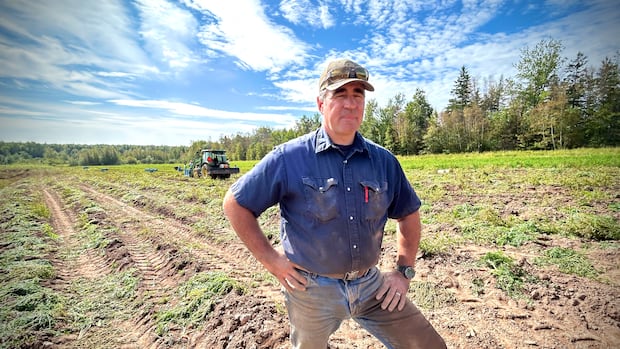

Ken Reid was raised on a cash crop and cattle farm located in southwestern Quebec, close to Montreal. At 18, he left home to serve in the Canadian military, took on contracting work with CN Rail, established his own businesses, and ultimately spent several years with J.D. Irving Ltd.
Throughout his journey, he found his way back to his roots.
In 2015, while serving on the board of Harvest House, an organization that offers food and support services to individuals facing homelessness and food scarcity, Reid established 5000 Farms, a non-profit farming initiative. He explained that the concept stemmed from his observations in the community.
“I came to understand that food insecurity is a problem affecting a broader range of people than we typically think,” Reid remarked.
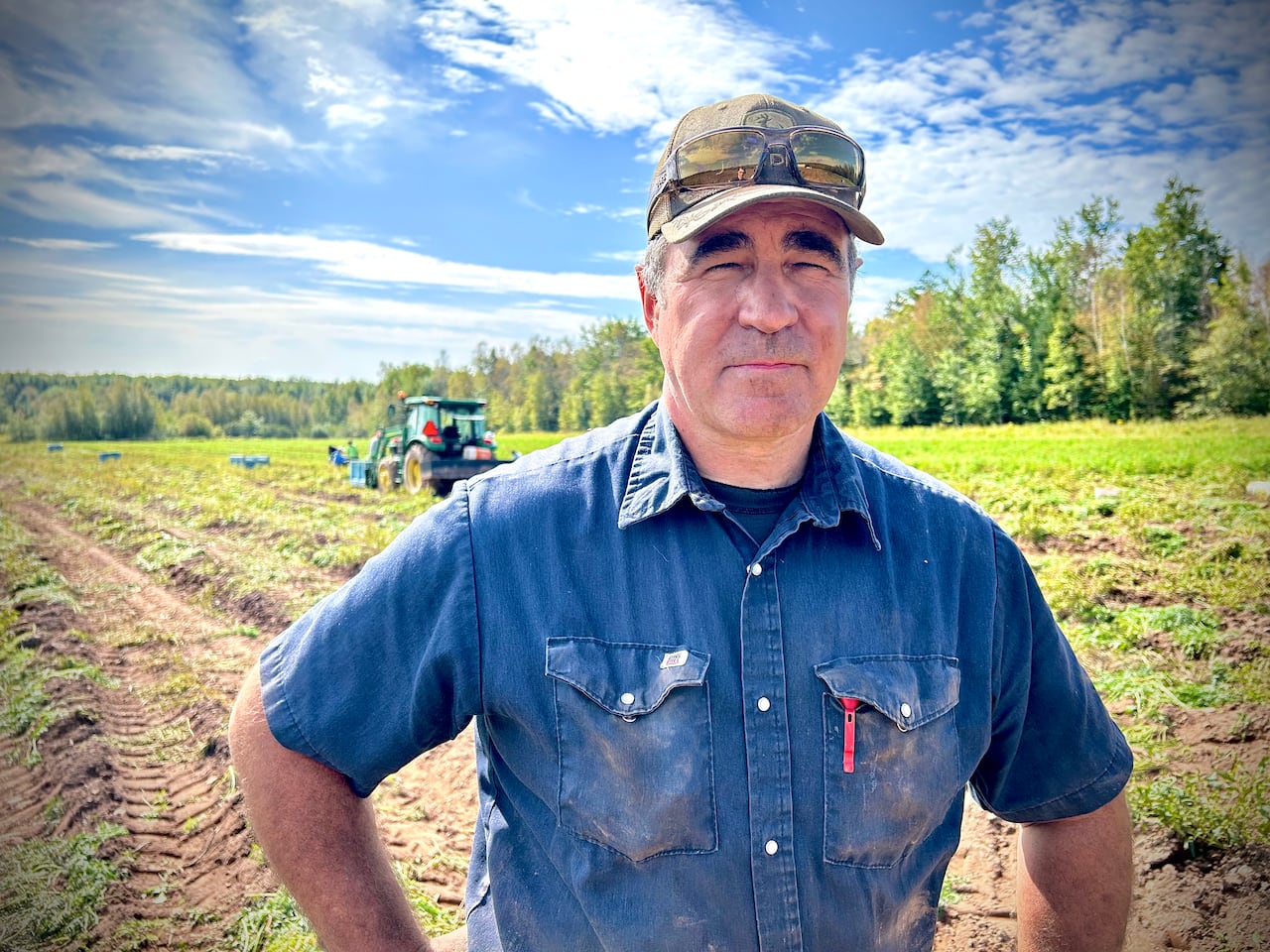
Reid departed the farm at 18 but returned through 5000 Farms. (Ian Curran/CBC)
Currently, 5000 Farms cultivates 45 acres across two locations near Moncton, distributing between 250,000 and 300,000 pounds of fresh produce and meat chickens annually through its partnership with Feed New Brunswick.
This weekend alone, he anticipates that volunteers will gather around 25,000 pounds of produce.
Rows of carrots extend across the Murphy farm, where volunteers are busy harvesting by pulling and snapping off stems, filling buckets that are then emptied onto a conveyor belt for washing, bagging, and distribution.
None of the harvested produce is sold; everything is directed to food banks.
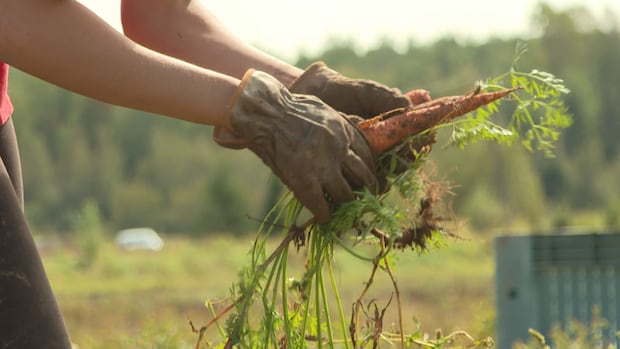
5000 Farms is a non-profit that plants, grows and picks vegetables on donated land to tackle food insecurity.
Cheryl Wortman has been volunteering with 5000 Farms for five years. Previously, she and her husband operated a dairy farm before selling it. After retiring from her nursing career, she sought a new purpose.
“I thought it would be a good role for my husband,” she chuckled. “But here I am instead.”
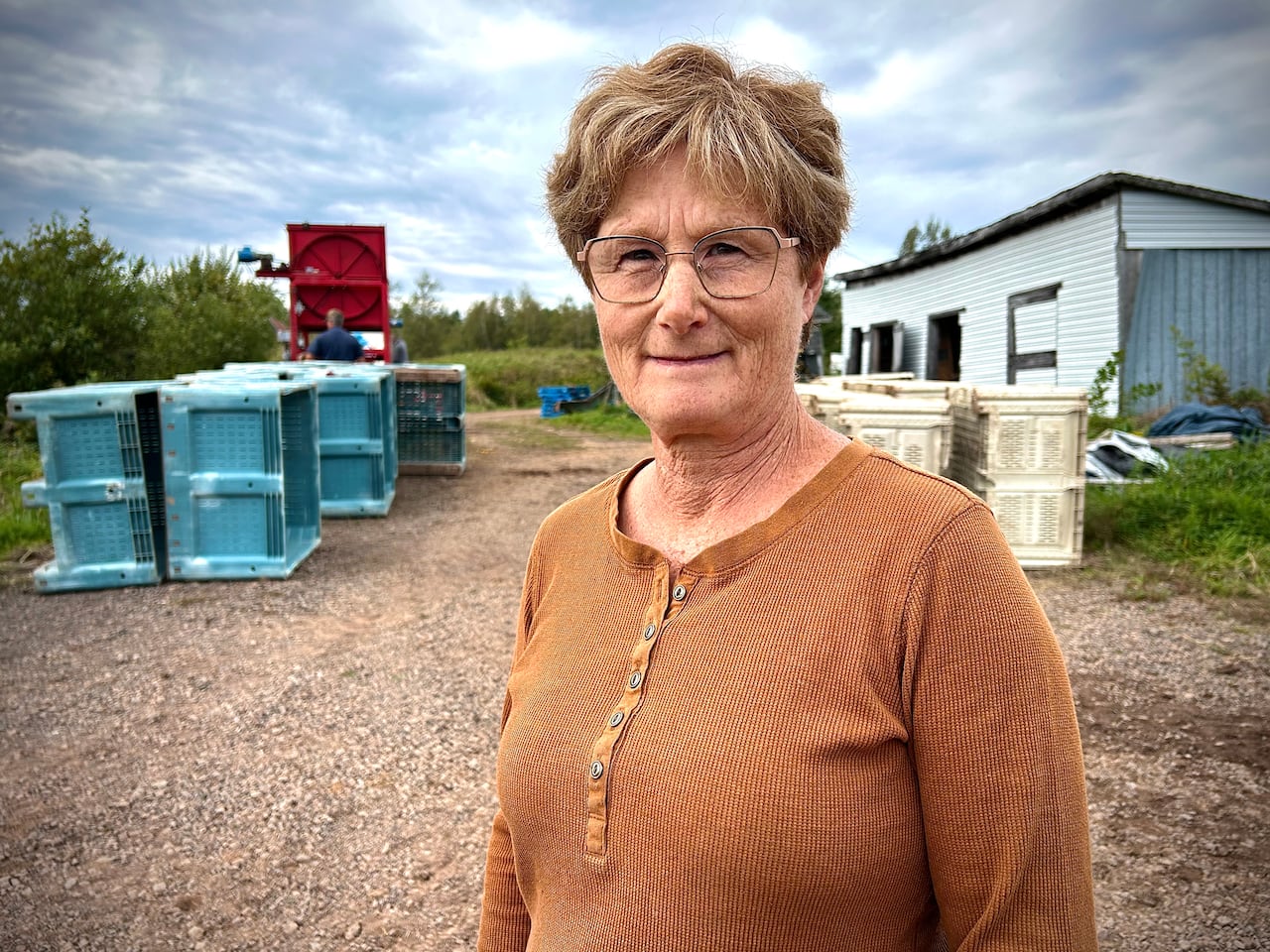
Wortman assists with whatever crop needs harvesting that day — beans, carrots, or corn. (Ian Curran/CBC)
She engages in harvesting whatever crop is ready that day, be it beans, carrots, or corn, operating the tipper to transfer bins of harvested crops onto the conveyor belt.
Wortman emphasized the importance of ensuring that the food being distributed is fresh.
“Whenever I visit Feed New Brunswick and observe the crates there, it’s mostly packaged items, predominantly carbs,” she noted. “From a nutritional standpoint, fresh vegetables are far more beneficial.”
Reid mentioned that the organization aims to further expand, seeking a permanent site that can offer enhanced processing capabilities and plans to venture into cattle farming.
“Protein is likely the most significant need we have in food banks,” he remarked.
Currently, 5000 Farms is raising $300,000 to boost its capacity, with an annual goal of 300,000 pounds of vegetables and protein.