

Ukrainian authorities have challenged assertions made by SpaceX CEO Elon Musk, claiming that the nation’s military breached Starlink’s service agreement by employing the civilian satellite internet system for offensive drone operations.
Serhii Beskrestnov, an advisor on defense technology to President Volodymyr Zelenskyy, stated that enduring limitations on the civilian network in Ukraine rendered such offensive actions unfeasible.
“It is quite peculiar that Elon Musk is unaware of the operational restrictions on Starlink in Ukraine,” he commented in a social media post.
Starlink, along with its military-oriented Starshield service, plays an essential role in maintaining Ukraine’s connectivity during wartime. Earlier this month, Ukrainian drones linked to Starshield experienced a loss of connectivity at high speeds, compromising air defense systems amid ongoing Russian aerial assaults. Officials indicated that the imposed speed limitations were lifted on Saturday, restoring the service.
Nonetheless, uncertainties remain regarding who was responsible for the interruptions of the satellite internet system that Kyiv has depended on for years in the face of Moscow’s aggression.
In a Telegram message, Beskrestnov mentioned that drones utilizing the civilian Starlink network were restricted to speeds between 70 and 90 km/h within Ukraine and were inoperable in Russia.
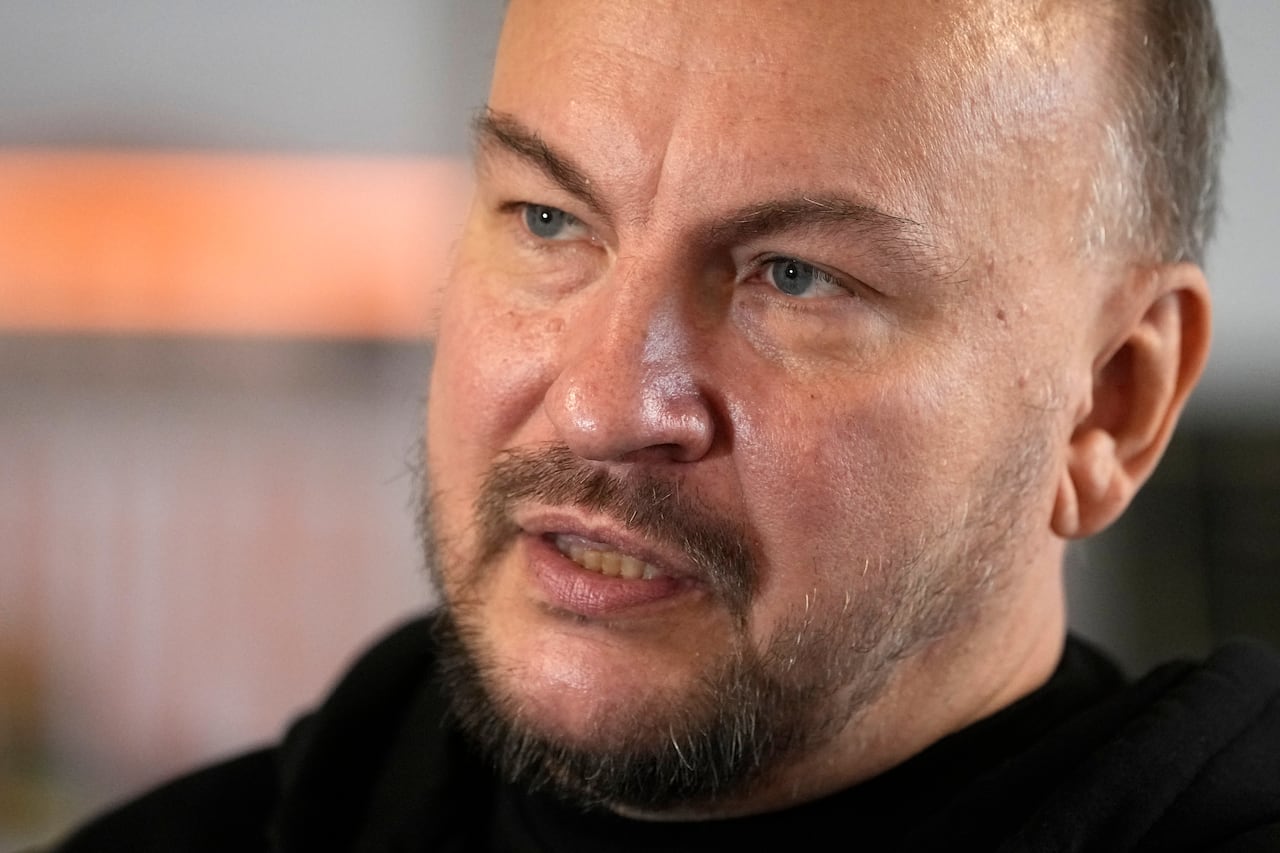
Serhii Beskrestnov, also known as Flash, an adviser to Ukraine’s President Volodymyr Zelenskyy, asserts that it is impossible for Ukraine’s military to utilize Starlink for offensive drone missions. (Efrem Lukatsky/The Associated Press)
“Thus, we are physically incapable of employing commercial Starlink for deep or medium-range strikes,” he explained.
Musk acknowledged on Saturday that SpaceX had indeed limited Starlink’s capabilities in Ukraine.
“The use of Starlink, a civilian commercial service, for offensive drone strikes intended to kill individuals has never been permitted, nor should it be,” Musk stated. “The Ukrainian military breached Starlink’s terms of service by using it for offensive drone attacks. That loophole was closed last week.”
However, he insisted that any adjustments made to Starshield, the military-grade variant of Starlink that supports Ukraine’s drone communications, were under the control of the U.S. government.
Former U.S. President Donald Trump has indicated that he did not make that decision, while Vice President JD Vance has suggested coordination between the White House and Musk.
-
Musk says he was behind Starlink speed restriction in Ukraine
-
FRONT BURNER
Elon, Starlink and the betrayal of Ukraine
The limitations placed on Starshield last week alarmed both military and government officials in Ukraine, with commanders reporting lost drones and disrupted operations.
These developments have heightened tensions between Kyiv and Washington, a relationship already strained by Trump’s alleged agreement with Moscow to import diesel from Russia, which Ukraine deemed a betrayal.
New efforts to conclude the conflict
The reinstatement of Starlink service coincided with a renewed U.S. diplomatic initiative aimed at resolving the conflict. Russia agreed on Wednesday to resume trilateral talks with Washington and Kyiv next month.
Furthermore, on Friday, Kyiv and Moscow reached an agreement for a localized ceasefire, facilitated by efforts from both First Lady Melania Trump and Pope Leo around Oleshky, a town in Ukraine’s southern Kherson region that has suffered due to the war.
In the meantime, Zelenskyy reported on Sunday that Russia had launched nearly 2,300 drones targeting Ukrainian cities over the past week, reiterating his appeal to Western allies for expedited deliveries of interceptors.
He noted that these attacks—many of which resulted in fatalities—impacted nine regions of the country, damaging power facilities, grain storage, civilian residences, and commercial properties.

Prime Minister Mark Carney expresses concern over the reported slowdown of SpaceX’s Starlink satellite system in Ukraine, which results in ‘real consequences.’ He emphasizes that Canadians ‘do not want to be left in a position where we depend on a single provider that may alter its stance’ and potentially jeopardize Canadian sovereignty.
Increased civilian casualties
Overnight into Sunday, Russia executed more than 20 assaults on Ukraine’s Dnipropetrovsk region, deploying drones and aerial bombs, as reported by local officials. Four individuals were killed, including three at the scene and one who later succumbed to injuries in a hospital, according to Oleksandr Hanzha, head of the regional military administration, while more than a dozen others sustained injuries.
In Vinnytsia, a central Ukrainian city, at least six individuals were injured when a Russian drone struck a residential structure, as per the state emergency service. The attack also affected a nearby care facility, prompting emergency teams to evacuate 15 elderly residents, the service noted.
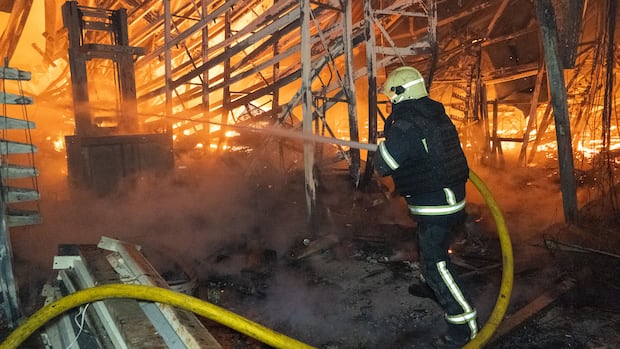
Additionally, the emergency service reported that consecutive Russian attacks on a shopping center in Kharkiv resulted in injuries to four individuals late Saturday, including three members of the rescue team. Ukraine has long accused Russia of employing double-tap strikes, where an initial assault is followed by a second attack when rescuers arrive.
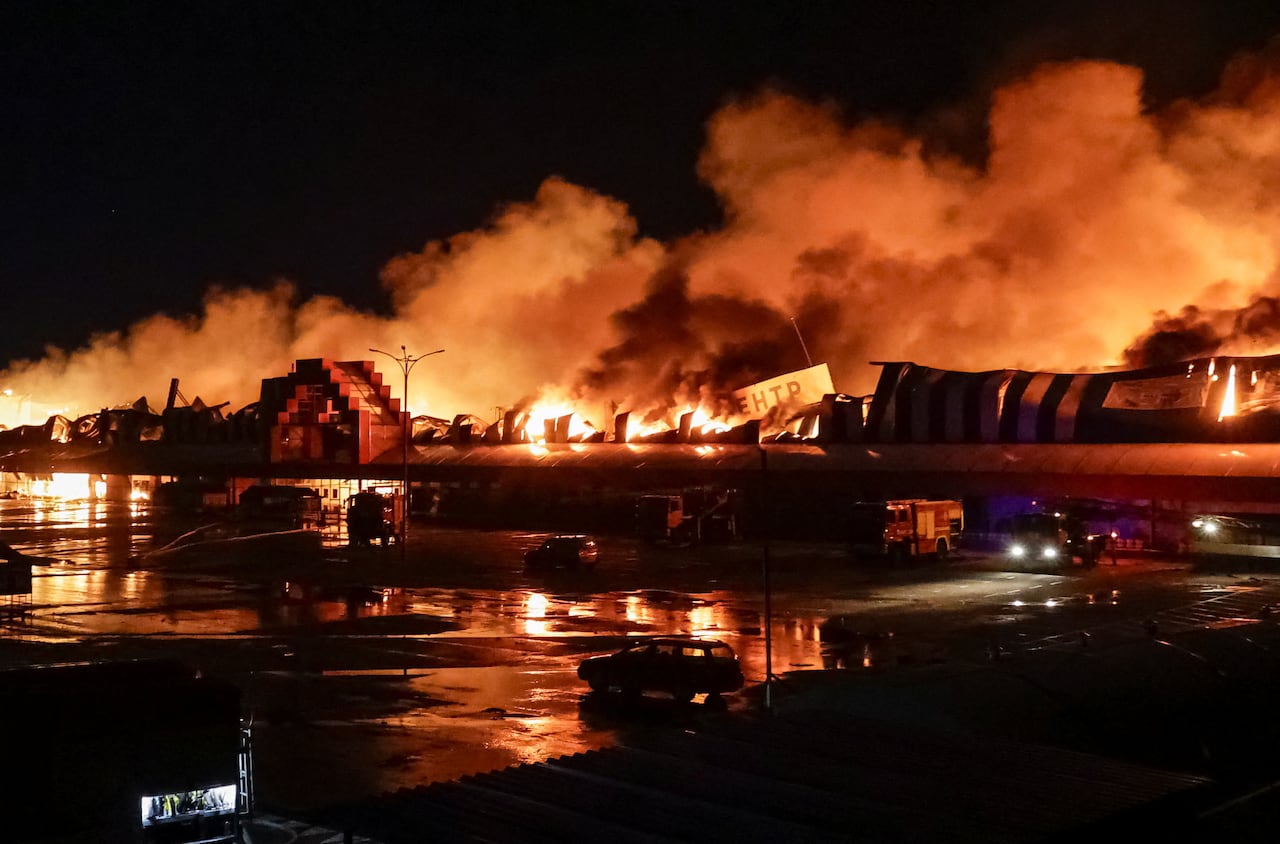
Firefighters respond to the missile strike on the shopping mall in Kharkiv on Saturday. (Sofiia Gatilova/Reuters)
The Russian Defence Ministry claimed on Sunday that its forces targeted multiple locations in and around Kharkiv, including a shopping and logistics center it alleged was storing dual-use goods intended for the Ukrainian military.
In Russia, two fatalities and 13 injuries were reported in Belgorod, a city located 40 kilometers from the Ukrainian border, following extensive nighttime drone attacks attributed to Kyiv, as stated by regional Governor Alexander Shuvayev on Sunday.
In the Russian city of Oryol, the body of a fourth victim was retrieved from the debris the day after a Ukrainian strike on an industrial facility, according to local Governor Andrey Klychkov. Earlier, local officials confirmed that three individuals had died in that attack.
On that day, Ukraine’s general staff reported that its forces targeted an electronics plant in Oryol responsible for manufacturing components used in the cruise and ballistic missiles that Russia deploys against Ukrainian cities.