
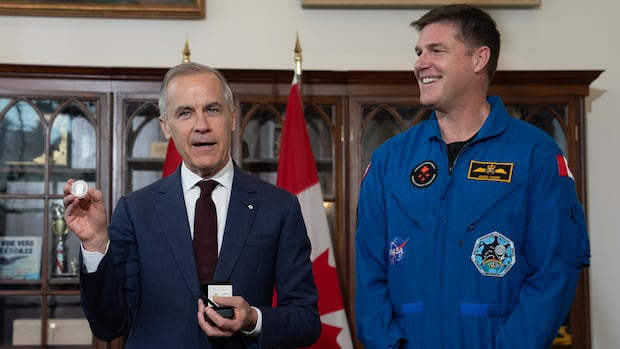

Prime Minister Mark Carney has designated Jeremy Hansen as a special adviser on space, coinciding with the United States acknowledging Canada’s initiative to realign its space collaborations towards Europe.
In a video shared on social media Tuesday, Hansen expressed, “I’m incredibly enthusiastic about this opportunity to serve Canada in this capacity.”
He added, “There exists a vast potential to utilize our current position to enhance our sovereignty, security, and overall quality of life on Earth, while also making notable contributions on a global scale.”
Hansen mentioned that he will be advising Carney and Industry Minister Mélanie Joly in his new capacity.
In April, as part of the Artemis II mission, Hansen participated in a journey around the moon, venturing farther into space than any humans had before.
Joly noted that Hansen had suggested assisting the government in “formulating a new space strategy” upon his departure from the Canadian Space Agency.
“We discussed various ways in which he could continue to make an impact, contribute, and serve,” she remarked during a Tuesday event.
Joly indicated that she is gathering insights from fellow Canadian astronauts and individuals in the aerospace industry regarding the strategy “to expedite innovation and strengthen our international collaborations.”
The offices of Carney and Joly did not provide further information about Hansen’s position, including its duration and remuneration.
On Wednesday, Defence Minister David McGuinty unveiled a $20-million agreement for utilizing a space launch facility in southern Newfoundland, building on a prior agreement from March concerning a facility in Nova Scotia.
According to a statement from McGuinty’s department, “Dependable and independent launch access will allow Canada to deploy essential satellites into orbit, even amidst global uncertainties, geopolitical tensions, or disruptions in international launch markets.”
The statement continued, “As military, emergency response, and government services become increasingly reliant on space systems, having sovereign launch capabilities safeguards national interests and ensures operational continuity.”
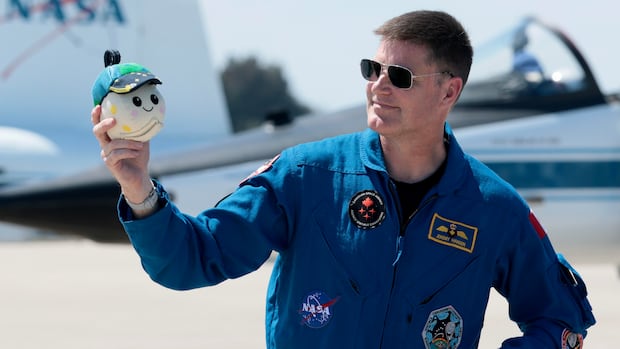
Astronaut Jeremy Hansen journeyed around the moon during the Artemis II mission earlier this year in April. The Canadian Space Agency announced on Monday that Hansen is retiring from the agency to explore new opportunities.
Hansen’s new role is timely as Canada aims to enhance its collaboration with European nations in space, while the U.S. has cautioned it may consider alternative partners for its space endeavors.
During her remarks at the SpaceBound 2026 Conference on Tuesday, Joly noted that U.S. Ambassador Pete Hoekstra stated at the same conference that Canada has decided to “move away” from collaborating with the American company SpaceX.
“Canada has indicated that it will explore opportunities with the European Space Agency and deepen its involvement with them,” he remarked.
Hoekstra expressed it was beneficial to recognize that Canada is not keen on partnering with the company founded by billionaire Elon Musk, who has close associations with U.S. President Donald Trump.
He commented, “It’s quite surprising that Canada is opting out of all the investment, innovation, and excellence that Elon is driving. That’s their choice, and it’s acceptable.”
Hoekstra pointed out that the United States will always lean towards the private sector.
“Healthy competition fosters excellence,” he stated.
He further explained, “Our ongoing challenge in the United States is to ensure that we do not over-regulate. We’ve faced that issue in the digital sector and may need to confront it within the space industry as well.”
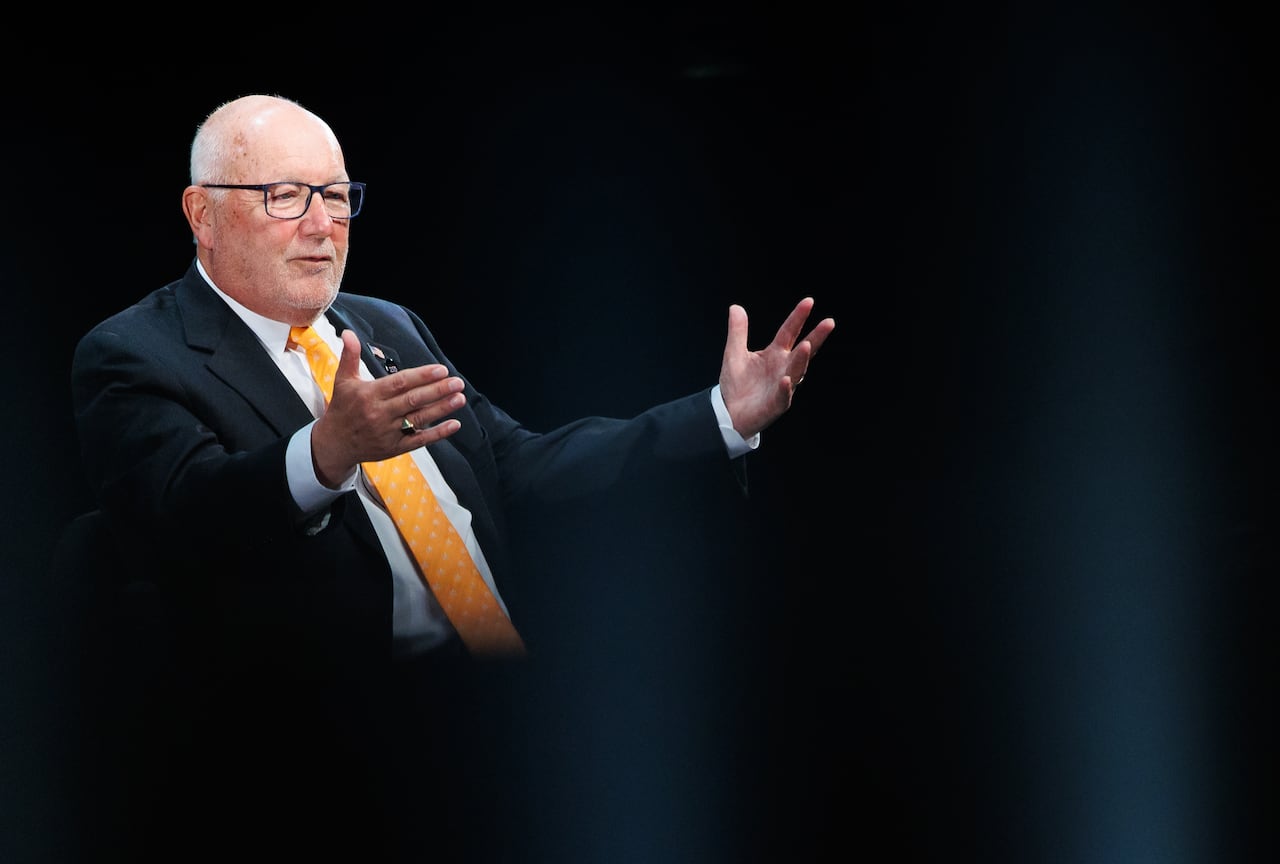
U.S. Ambassador Pete Hoekstra stated that his nation will maintain a ‘bias’ towards the private sector, including in the realm of space. (Keito Newman/The Canadian Press)
Hoekstra remarked that the F-35 jet is “the premier fighter globally.” He did not specifically address Ottawa’s choice to halt a planned acquisition of F-35s following Trump’s trade war and his repeated threats to Canadian sovereignty.
“We understand that Canada is reassessing its approach to defense,” he stated.
Hoekstra noted that the U.S. is awaiting Canada’s decision on whether it intends to continue decades of air defense collaboration through NORAD. He added that Trump’s recent security agreement with Greenland, which followed his threats to annex the territory, aims to strengthen U.S. security in the Arctic.
“We are eager to see where Canada stands on this matter,” he said. “We would love to collaborate with Canada, as it would be extremely beneficial. However, we have made it clear over the past year and a half that we are not remaining idle.”