
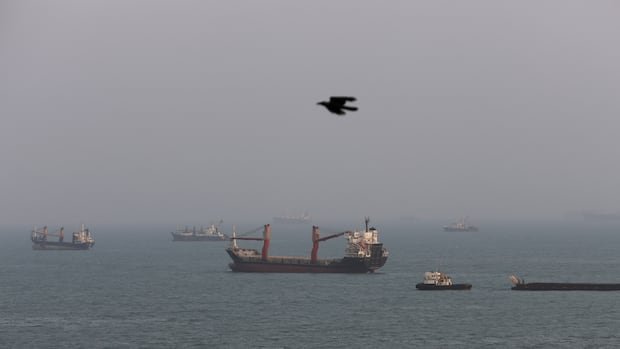

U.S. President Donald Trump stated on Tuesday that there were no ongoing discussions with Iran and affirmed that the Strait of Hormuz was open, contradicting Iran’s claim that the vital water passage remained closed to shipping. The diminishing hopes for a resolution to the nearly six-month conflict led to a rise in oil prices, a dip in stock markets, and increased borrowing costs for major economies, including the U.S., with concerns over long-term inflation and fiscal impacts.
Following the expiration of a temporary ceasefire agreement on Monday, a senior Iranian official revealed that Iran was transitioning to a “fully offensive” military stance due to the diplomatic deadlock, although there were no reports of new attacks from either side on Tuesday.
Trump declared on Truth Social that there were no ongoing or scheduled talks with Iran, emphasizing the continued Naval Blockade and the operational status of the Hormuz Strait with the removal or detonation of all water mines.
Despite Trump’s optimism relayed by Jared Kushner, talks with Iran were described as more robust than ever, with the conflict now at a stalemate after initial joint strikes by the U.S. and Israel on Iran. The primary U.S. objective remains preventing Iran from obtaining a nuclear weapon, a challenging task without addressing the enriched uranium allegedly buried at previously targeted sites by the U.S.
While Trump indicated improvements in the Gulf situation, reports persisted of attempts to disrupt shipping operations. The United Arab Emirates reported the launch of two ballistic missiles from Iran, the first such incident since an earlier strike on the Fujairah port. The UAE suspended various dealings with Iran, citing regional tensions compromising peace and security.
Further complicating matters, a vessel traveling through the Strait of Hormuz was reportedly struck by an unidentified projectile, causing engine damage and casualties among the crew, as per the United Kingdom Maritime Trade Operations. Iranian parliament Speaker Mohammad Baqer Qalibaf insisted that the strait would remain closed until the U.S. fulfilled the conditions outlined in an interim deal signed in June.
As the conflict persists, Iran remains open to dialogue with the U.S., emphasizing that negotiations do not equate to surrender. Despite facing economic pressures and sanctions, Iran vows to defend its security, dignity, and allies without seeking war. The conflict has resulted in significant casualties and economic repercussions, with Brent crude oil futures spiking during the crisis.
The U.S. administration warned of potential further economic actions against Iran, keeping the situation tense and uncertain for the foreseeable future.