


Global bond yields have surged to multi-decade highs, sparking interest on Wall Street in a previously unremarkable financial sector. This uptick means higher borrowing costs for Canadians seeking mortgages and auto loans, while also offering stronger returns for investments like Guaranteed Investment Certificates (GICs) and money market funds.
When individuals purchase bonds, they are essentially loaning money for a specific period to the bond issuer, which could be a government entity, private company, or municipality. Investors receive interest payments until the bond matures, at which point they redeem the bond at face value.
The bond yield represents the annual return an investor generates from holding a bond, expressed as a percentage. As bonds are traded on the market post-issuance, their prices fluctuate. When bond prices decrease, yields increase because investors receive the same interest payments for a lower purchase price.
Recently, the global bond market has been far from tranquil due to central banks maintaining near-zero interest rates for over a decade after the 2008 financial crisis. However, a shift is imminent as more investors anticipate rate hikes in response to rising inflationary pressures.
Central banks raising interest rates lead to higher payouts on newly issued bonds, diminishing the value of existing lower-yielding bonds.
Higher Inflation Challenges Central Banks
The current bond market is undergoing a significant global sell-off, with yields in countries like the United States, Germany, Japan, and Canada reaching multi-year or multi-decade highs.
Bank of Canada Governor Tiff Macklem highlighted the complex factors contributing to this movement, emphasizing the anticipation of interest rate hikes by the Bank of Canada and its global counterparts due to inflation apprehensions and escalating government debt.
Statistics Canada data indicates that soaring gas prices drove inflation up in July. The bank also noted that persistent high global oil prices, exacerbated by ongoing geopolitical tensions, are influencing inflation rates. U.S. benchmark oil prices have surged nearly 60% year-to-date.
Additionally, the Canada-U.S. trade conflict is pushing up business costs, potentially leading to higher consumer prices over time. Macklem mentioned that the AI infrastructure expansion is driving demand for new corporate bond issuances, thereby impacting previously issued bond prices.
All these factors collectively contribute to the rise in global bond yields, as stated by Macklem.
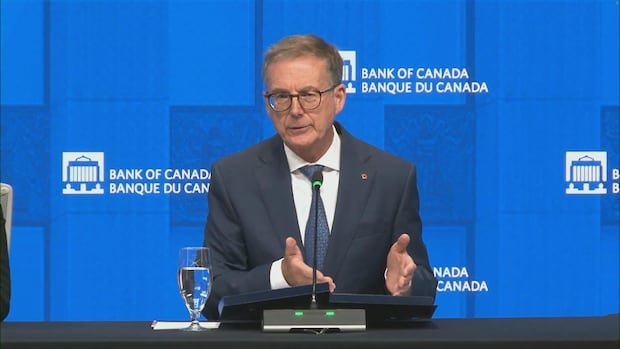
Canada’s 10-year government bond yield hit a two-year high post the Bank of Canada’s inflation risk signal.
Considering that Canadian banks can invest securely with the government, government bond yields establish the baseline for all other lending rates. Various forms of credit, including fixed-rate mortgages and auto loans, are interconnected with five-year and 10-year government bonds, implying that higher bond yields prompt banks to elevate their interest rates for these loans.
For investors seeking to grow their savings, the surge in bond yields necessitates banks to enhance their GIC rates to remain competitive, ultimately enhancing guaranteed returns.