
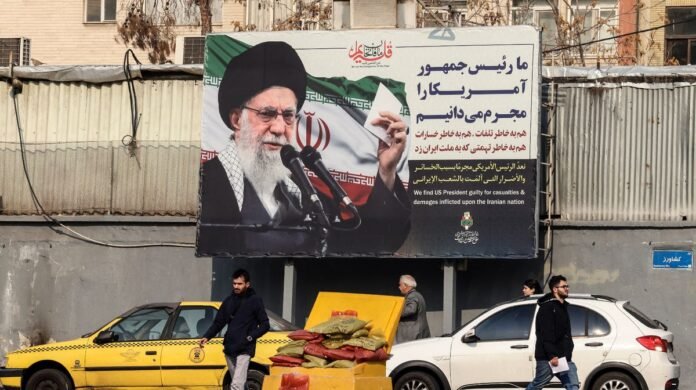

Iran has made a plea to other Middle Eastern countries to intervene and prevent potential US attacks that could aim to overthrow its government. Reports from Tehran suggest ongoing killings of opposition members while US President Donald Trump increases pressure on Iran. The USS Abraham Lincoln, along with three guided missile destroyers, is positioned off the coast of Oman, awaiting orders for potential action.
Saudi Arabia and the UAE have stated they will not allow their airspace for any potential attacks on Iran. However, their stance is seen as contradictory, given their disdain for the Iranian regime and past drone attacks by Iran on their territories. There is a possibility that they may reconsider their stance if needed to defend bases in the Middle East against an Iranian counter-attack.
The decision to launch an attack on Iran remains a contentious issue within the US administration. While some officials advocate for regime change as a moral necessity, others prefer diplomatic solutions to avoid escalating regional conflict. Iran is capable of retaliating aggressively to any US military action, despite warnings from Israel and the US.
President Trump is aware of the uncertainties associated with military strikes and the need for precision to minimize civilian casualties while aiming for regime change. Diplomatic efforts and increased pressure on Tehran may keep the situation tense in the region. The Iranian opposition may be anticipating US strikes to alleviate the ongoing crackdown by Tehran’s security forces.
As diplomatic negotiations continue, the region remains on edge, with the possibility of a blockade or further escalations. The Iranian opposition’s hopes for intervention may clash with the complexities of the geopolitical landscape in the Middle East.