
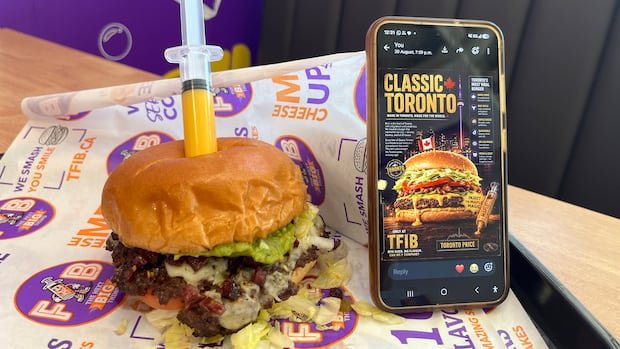

From whimsical sandwiches to shrimp shaped like doughnuts, artificial intelligence (AI) could be making its way onto the menus of fast-food joints. Customers have begun sharing photos online of signage and displays showcasing food that appears artificial and surreal, possibly created using AI tools that make it easier and cheaper to produce visuals.
One Reddit user likened the food to something aliens might present as Earth cuisine, accompanied by an image of breaded shrimp and gyros with oddly geometric textures. Comments on a CNE sandwich described it as uncanny and nauseating, with some labeling it as “slop.”
For some diners in Toronto, these AI-generated images not only deter their appetite but also raise concerns about the values of the restaurants displaying them. Cynthia Lem expressed feeling that the imagery is inauthentic, deterring her from dining at such establishments due to uncertainties about the actual appearance of the food upon serving.
While some consumers are put off by these images and worry about potential misrepresentation of menu items, restaurant owners argue that AI has helped them cut costs in a challenging industry. Marketing experts suggest that the use of AI technology can be beneficial if implemented thoughtfully.
Before customers take a bite, they heavily rely on visuals to guide their ordering decisions. Businesses that heavily rely on AI imagery risk damaging their sales and brand if the generated images are unappealing. However, if used appropriately, AI can assist small and medium-sized eateries in managing their expenses.
Restaurant businesses often struggle to turn a profit due to slim profit margins. Therefore, utilizing AI to enhance food photography can be a cost-effective alternative to hiring professional photographers. This approach involves taking high-resolution photos of food and making minor adjustments using AI to create appealing menu images.
The Fancy Induced Burger franchise in Canada employs AI to enhance food photos, reducing reliance on professional photographers and saving time and money. The company’s marketing manager, Fez Mian, highlights the speed and efficiency of using AI for creating marketing content, particularly on social media platforms.
While some consumers worry about potential misrepresentation through AI-enhanced images, marketing experts believe that AI imagery does not significantly increase the likelihood of misleading customers. The acceptance that menu images may look better than the actual product plays a role in managing consumer expectations.
Despite the growing use of AI in restaurant imagery, some industry professionals, like food stylist Zoe Rousseau, believe that their work involving real food and meticulous staging is more authentic than AI-generated imagery. Rousseau suggests that restaurateurs are better off using their smartphones for food photography and hopes that the backlash against AI-generated menu items will encourage more businesses to invest in professional styling and photography services.
Ultimately, while AI technology offers efficiency and cost-saving benefits, the human touch and attention to detail in food styling remain irreplaceable for creating authentic and appealing culinary visuals.