
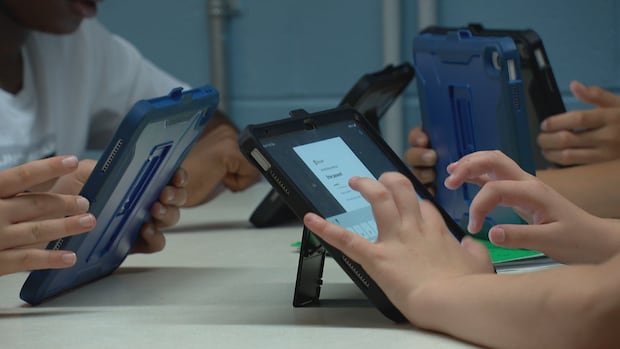

In a Moncton middle school this week, students engaged in an immersive experience, attempting to break free from a virtual dungeon guarded by a dragon while delving into the realm of cybersecurity. Following this, they diversified their activities by creating visual presentations, exploring food-related topics through interactive screens, and engaging in programming exercises with small robots.
Artificial intelligence played a significant role in these educational endeavors, with Grade 7 students being closely supervised by their teacher. The Anglophone East School District has been progressively incorporating AI into its educational framework over the past few years, a move that has gained momentum with more schools in New Brunswick following suit after the Department of Education integrated AI education into the updated anglophone K-12 curriculum.
This initiative aligns with global trends as some international education systems have imposed restrictions on AI use, with Norway banning most generative AI applications for students up to Grade 7. Similarly, major U.S. school districts like New York and Los Angeles have restricted student access to AI technologies.
Amid growing demands for standardized guidelines on AI education, there are dissenting voices advocating for a more cautious approach, particularly concerning younger students. Nevertheless, New Brunswick’s progressive stance on integrating AI into its curriculum has garnered praise from experts like André Côté from The Dais at Toronto Metropolitan University, who emphasizes the need for a structured approach to AI literacy in schools.
In New Brunswick, the updated curriculum aims to introduce AI concepts in a developmentally appropriate manner, fostering critical thinking skills among students. Starting from basic digital literacy discussions in kindergarten to more practical applications in higher grades, the curriculum emphasizes responsible AI usage and encourages students to approach AI as a tool for support rather than a shortcut in their academic pursuits.
Teachers are undergoing comprehensive training to facilitate AI integration in classrooms, with support provided through professional development sessions and ongoing guidance from tech coaches. The province has also rolled out specialized learning modules on AI for educators.
Education Minister Claire Johnson emphasized the importance of incorporating safe and ethical AI practices in schools, emphasizing that AI education should complement rather than replace traditional literacy and numeracy skills, underscoring the crucial role of teacher judgment in the learning process.
Reflecting on the ongoing evolution of AI education, there is a call for a balanced approach that prioritizes student well-being and cognitive development. This sentiment is echoed by Superintendent Randolph MacLean, who acknowledges the complexity of integrating AI into education and the need for thoughtful consideration before widespread implementation.
As concerns mount over the pace of technological advancement in classrooms, parental groups like Parents for AI Caution in Schools are advocating for a more cautious approach, particularly regarding the impact of AI on critical thinking skills and social development among students. The need for oversight and clear policies on AI usage in educational settings is increasingly recognized as essential for responsible AI integration.
In light of these concerns, stakeholders stress the importance of collaborative efforts among educators, policymakers, and international organizations to establish clear guidelines and best practices for AI education. This inclusive approach seeks to address emerging challenges related to AI implementation in schools and ensure that students are equipped with the necessary tools to navigate the digital landscape effectively.