
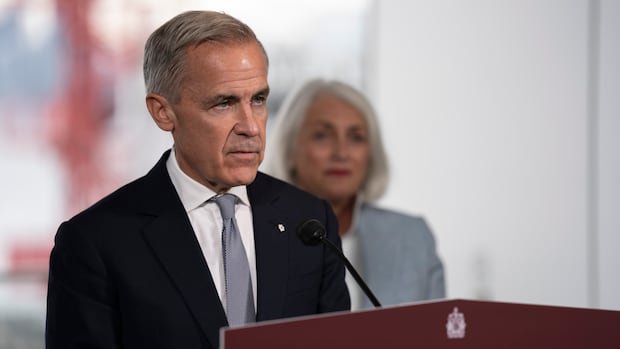

Prime Minister Mark Carney unveiled a $1.2 billion federal funding package for marine conservation on Tuesday, coinciding with upcoming decisions on a new West Coast pipeline and the expansion of a key port in Metro Vancouver. Carney emphasized the necessity of enhancing marine protection systems to mitigate potential risks posed by increased maritime activities. The allocated funds will support various initiatives, such as boosting the Canadian Coast Guard’s monitoring capabilities, implementing a national near-shore weather forecast system, and establishing a plan for responding to oil spills involving marine mammals.
Additionally, the government plans to enhance search and rescue facilities, upgrade seabed mapping technologies, and bolster fisheries conservation efforts. Carney’s announcement in North Vancouver preceded a deadline for Ottawa to determine the national interest status of a proposed Alberta-British Columbia pipeline. The Prime Minister highlighted the economic benefits of the project, emphasizing the creation of nearly 150,000 jobs across Canada and reducing dependency on the United States.
Carney assured that the pipeline would avoid environmentally sensitive areas and adhere to strict safety measures, including maintaining the tanker ban along B.C.’s north coast. Meanwhile, as Alberta prepares for a referendum on separation from Canada, LNG Canada confirmed its Phase 2 expansion in Kitimat, B.C., which would double its capacity. Carney also expressed support for the Port of Vancouver’s Roberts Bank terminal expansion, aiming to diversify trade partnerships and fortify national sovereignty.
Recognizing the growing marine traffic at the Port of Vancouver, Carney stressed the importance of implementing robust measures to safeguard ocean ecosystems, particularly the endangered southern resident killer whales. He outlined plans to address underwater noise pollution affecting marine life and committed $100 million to establish long-term monitoring capabilities along all three Canadian coasts. The Prime Minister emphasized stringent conditions for construction activities, stating that work must halt if killer whales approach the expansion site.
Moreover, funding will be allocated for Indigenous-led stewardship and restoration efforts in the Lower Fraser River Estuary, and $90 million will enhance fisheries enforcement measures. The government will also invest $186 million in the Northern Shelf Bioregion Reconciliation Framework Agreement to support collaborative governance, conservation initiatives, and emergency preparedness in the Great Bear Sea region. Coastal First Nations and environmental groups welcomed the funding, emphasizing the need for responsible shipping practices to mitigate risks associated with increased vessel traffic resulting from major projects.