
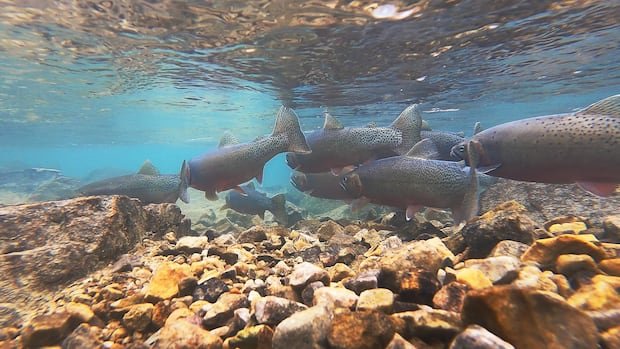

Parks Canada has reported a positive development in the revival of a threatened fish species in Banff National Park. Over a decade of effort has paid off, with westslope cutthroat trout now seen naturally spawning and repopulating Hidden Lake near Lake Louise. Shelley Humphries, an aquatics specialist at Parks Canada’s Lake Louise, Yoho, and Kootenay field unit, expressed delight at the self-sustainability of the species. She mentioned the successful precedents in the United States that have resulted in species delistings, indicating confidence in the ongoing conservation efforts.
Efforts to eradicate brook trout began in 2011, initially unsuccessfully. However, the use of rotenone, a natural fish poison, in 2018 and 2019 effectively removed brook trout. Subsequent initiatives involved stocking Hidden Lake with trout eggs annually since 2021, resulting in successful spawning and the appearance of mature fish this year. Monitoring will continue, with hopes of the trout expanding their habitat to streams and creeks beyond Hidden Lake.
Humphries emphasized the importance of seeing the westslope cutthroat trout spawn in streams, anticipating future spawning locations beyond the headwater lake. The population’s overall health is promising, with plans to encourage their spread to various water bodies. The restoration project aims to correct past mistakes that led to the decline of the species, emphasizing the urgency of saving the westslope cutthroat trout population.
Parks Canada’s conservation initiatives extend to other locations such as Helen Lake, Cascade Creek, Katherine Lake, and Corral Creek, with plans underway for similar efforts to protect threatened bull trout. The ecological benefits of preserving these species are highlighted, particularly in supporting other wildlife like birds of prey and bears. Parks Canada remains committed to safeguarding endangered species and fighting to prevent their extinction.