
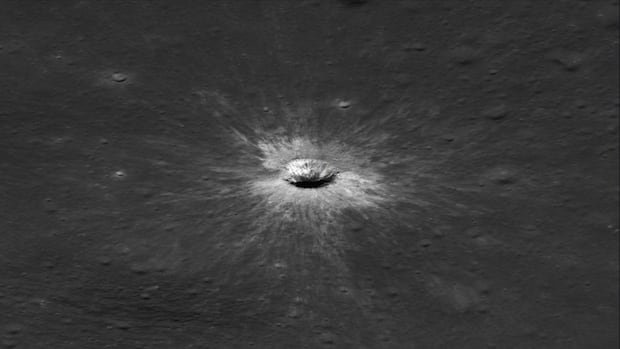

A massive crater on the moon, larger than the Roman Colosseum, was recently discovered by scientists. This impressive crater, measuring 222 meters across and up to 43 meters deep, is the largest known impact crater in the solar system formed in modern times.
The unique scale of this event, occurring approximately once every 132 years, provides valuable insights for NASA’s upcoming plans to establish a lunar base for astronauts. NASA’s Lunar Reconnaissance Orbiter (LRO) identified the crater on the moon’s near side in May 2024, following an impact from an asteroid or comet that went unnoticed by Earth-based and space telescopes.
Named after Thomas McGetchin, a former director of Houston’s Lunar and Planetary Institute, the crater altered over 100 kilometers of the lunar surface. Mark Robinson, chief scientist for LRO’s cameras at Intuitive Machines, revealed that the impact ejected dust and rocky soil at unexpected angles, resembling a gardening process on the moon’s regolith.
A secondary study observed a seven-kilometer cold spot surrounding the crater, indicative of the moon’s topsoil disturbance. David Paige of the University of California, Los Angeles, compared the impact’s effects to gardening, churning the sediments and reshuffling subsurface materials.
The LRO’s ongoing discoveries highlight that the moon’s top layer is overturned by ejected material every 80,000 years, a faster rate than previously presumed. Robinson dispelled the myth that Apollo moonwalkers’ footprints would endure forever, emphasizing their eventual disappearance within this timeframe.
Future efforts will focus on assessing the risk posed by ejected crater material to NASA’s forthcoming moon base. By understanding these dynamics, engineers can design structures resilient to potential impacts, ensuring the base’s safety and longevity.