
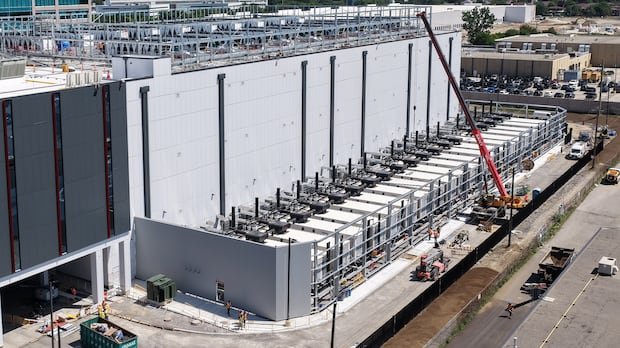

Ontario Premier Doug Ford unveiled the province’s fresh data center framework on Thursday, emphasizing the importance of keeping Canadians’ data within the country. The framework assesses data center approvals based on three main pillars: economic development, data protection and sovereignty, and community investment with a focus on public confidence.
During the announcement in Guelph, Ford stated that the new data center playbook aims to bolster the economy by fostering billions in economic growth, boosting tax revenues, and creating numerous job opportunities. The framework is designed to ensure that data centers cover the full cost of their electricity usage, motivating projects to establish their own power generation sources. Additionally, a separate rate class will be introduced for large new data centers, set higher than existing industrial rate programs for major electricity users to prevent costs from affecting Ontario families.
Ford also emphasized that the province will not provide financial incentives to attract investments. The framework is seen as a crucial component of Ontario’s artificial intelligence (AI) strategy, expected to bring about significant economic benefits, including $122 billion in economic growth by 2035 and the annual creation of 17,000 new jobs.
The unveiling of the framework coincides with ongoing discussions in municipalities across the province regarding moratoriums on data centers. Recent developments include Oakville’s decision to enact a one-year moratorium and Mississauga’s upcoming vote on a similar measure in September.
In response to the framework, Green Party of Ontario leader Mike Schreiner has called for a pause on data centers, citing concerns about the impact on local water resources and communities. Schreiner’s stance is supported by Ilham Abdulkadir from the Wellington Water Watchers group, who highlighted the significant land, energy, and water requirements of data center infrastructure.
Acknowledging the importance of data protection and sovereignty, Ford affirmed the government’s commitment to prioritizing data centers using closed-loop systems to minimize water consumption. Despite concerns raised by Schreiner and others, Ford defended the necessity of data centers in modern society, emphasizing their role in various sectors, including healthcare and business operations.
Schreiner criticized the new playbook, asserting that it lacks specific details and strong regulations to ensure environmental protections. He emphasized the need for stringent regulations to safeguard communities from the potential negative impacts of data centers.
Looking ahead, Waterloo region officials are exploring the local impacts of data center expansion. Coun. Colleen James has initiated a motion for an information report to inform elected officials about the development, economic implications, and environmental effects of data centers. The report is expected to be finalized early next year, aiming to provide insights into the growing significance of data centers in the region.