
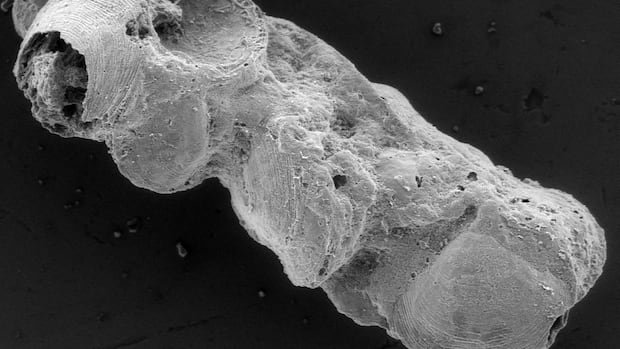

Long before the era of dinosaurs, a surge in biodiversity gave rise to early ancestors of modern animals and an uptick in feces production. A recent study sheds light on the significance of coprolites, fossilized feces, in unraveling Earth’s ancient ecosystems, nutrient cycles, and animal interactions.
The research, featured in the journal Trends in Evolution & Ecology, delved into the analysis of fecal fossils dating back to the Cambrian period, approximately 540 million years ago. By examining fecal remains from primitive worms, invertebrates, and mollusk-like creatures, scientists determined that fecal matter played a crucial role in enhancing deep water ecosystems’ habitability and nutrient availability during that period, long before the age of dinosaurs.
The findings revealed a substantial presence of feces during the Cambrian era, offering valuable insights into the origins of modern oceanic ecosystems. According to Julien Kimmig, co-author of the study and head of the paleontology division at the Karlsruhe Natural History Museum in Germany, the abundance of feces in the Cambrian period underscores the vital role it played in sustaining marine ecosystems, both past and present.
The study, conducted by Kimmig and Russell Bicknell, scrutinized hundreds of coprolites from 37 global deposits, ranging from burrowing worms to arthropods and brachiopods. These fecal remnants evolved from microscopic forms to rabbit-dropping-sized specimens within 15 million years into the Cambrian period, eventually becoming visible to the naked eye and containing remnants of shells or worms.
Beyond unraveling evolutionary patterns and predator-prey dynamics, studying coprolites offers valuable insights into the complex ecological dynamics of Earth, particularly during significant events like the Cambrian Radiation. This rapid proliferation of modern animal groups, known as the Cambrian Explosion, catalyzed profound transformations in ecosystems, shedding light on the interconnectedness of past and present ecological systems.
The research underscores the crucial role of coprolites in broadening our understanding of prehistoric life and ecosystems. By examining fossilized feces, scientists can decipher intricate interactions between organisms, nutrient cycles, and the evolutionary forces that shaped Earth’s ancient landscapes. This holistic approach not only enriches our knowledge of past environments but also provides valuable insights into predicting and modeling future ecosystems based on past ecological adaptations.
In the realm of paleontology, the study of coprolites unveils a new dimension to the exploration of pivotal geological periods like the Cambrian era. By delving into the fecal records of ancient organisms, researchers can trace the origins of modern marine life and comprehend the establishment of biodiversity during the Cambrian Radiation. This era, marked by the diversification of marine species akin to modern counterparts, serves as a pivotal juncture in Earth’s evolutionary history.
The study’s findings underscore the escalating prevalence of feces during the Cambrian Radiation compared to the preceding Ediacaran period, highlighting the pivotal role coprolites play in understanding past ecological dynamics and shaping future environmental projections. By examining waste products, nutrient cycles, and their cascading effects on biodiversity, researchers can glean profound insights into the interconnectedness of ecosystems across geological time scales.
For paleontologists like Karen Chin, coprolites constitute a fascinating avenue for uncovering hidden narratives of ancient ecosystems. While dinosaur fossils and plant remains offer glimpses into prehistoric biology, coprolites provide a unique perspective on ecological interactions, dietary preferences, and carbon cycling within ancient food webs. These fossilized feces offer a window into the unexpected behaviors and dietary habits of prehistoric organisms, enriching our understanding of ancient environments and biological adaptations.
Kimmig’s initial encounter with coprolites during his research expeditions kindled a newfound appreciation for these often-overlooked fossils. Encouraging a deeper interest in coprolites, researchers aim to unravel the untold stories preserved within these fossilized remnants, shedding light on an essential yet lesser-explored aspect of Earth’s ancient ecosystems.