
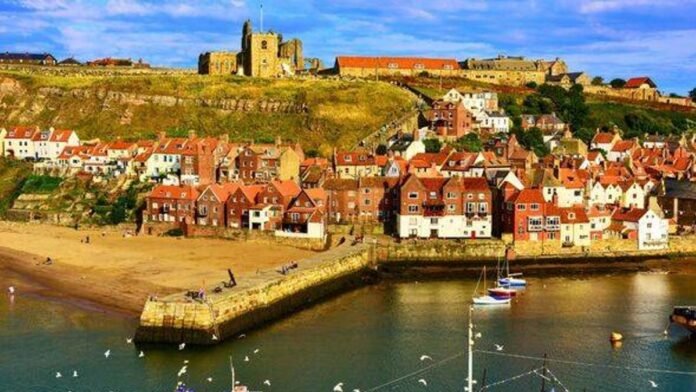

A dispute has arisen regarding a whalebone arch that has stood over a historic British fishing port for more than a century. The 12ft tall bones in Whitby, North Yorkshire, a former whaling port, are deteriorating rapidly and require urgent replacement.
Various options are being considered by local council leaders to address the issue, including using bones from a live whale caught by indigenous Inuit people in Alaska, bones from a deceased whale, or replica bones. Wildlife conservationists in the area are expressing concerns about the use of real bones, stating that it normalizes the display of wildlife body parts in public.
The whalebone arch, a cherished landmark in Whitby since 1853, is facing decay once again. Alexandra Smith from Whitby Wildlife Sanctuary opposes the replacement of the bones with real ones, emphasizing the need to avoid promoting the display of animal remains. She advocates for sustainable alternatives like high-quality replica bones to maintain the arch’s cultural significance without involving real animal parts.
Whitby’s port was once a major whaling hub in Britain, with over 2,700 whales caught during the 18th and 19th centuries. The North Yorkshire Council is in talks with Alaskan authorities about obtaining real whale bones, but they are also considering replica options due to logistical challenges in transporting the bones from a remote Arctic location.
Council officials are exploring ways to replace the bones, with a preference for sustainable and ethical solutions. The Mayor of Whitby, Cllr Sandra Turner, supports retaining the whale bones and is collaborating with the council to find a suitable replacement without resorting to harming whales.
Preserving the town’s iconic symbol is a priority for local authorities, who are engaging with stakeholders to make an informed decision on the future of the whalebone arch. Discussions are ongoing to ensure that the historical significance of the arch is upheld while promoting conservation and ethical practices.