
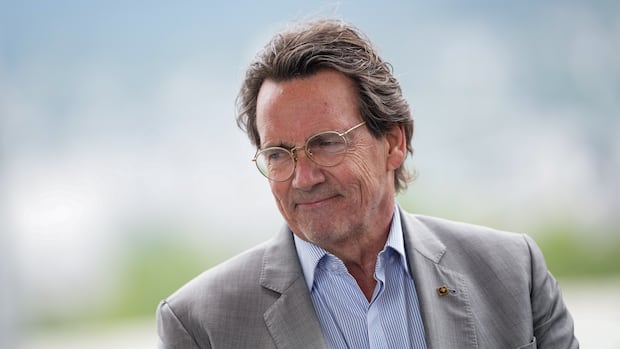

Quebecor Inc. CEO Pierre Karl Péladeau is advocating for his company’s $31-billion proposal to acquire Telus Corp., despite worries regarding competition in Canada’s telecommunications industry. He asserts that the prices of wireless plans are decreasing and that foreign companies are seeking to grow their presence in the market.
“Telecom assets are crucial for our nation — this is widely recognized. Thus, we must ensure we operate on an equal basis,” Péladeau mentioned during an interview on Rosemary Barton Live that aired Sunday morning.
The Montreal-based telecommunications, media, and entertainment firm announced on Monday that it made a non-binding offer to Telus in June to initiate discussions, and that the Vancouver-based company is now assessing a revised proposal submitted by Quebecor earlier this month.
This initiative by Quebecor follows the federal government’s approval three years ago for Rogers Communications to take over Shaw Communications, with the stipulation that Freedom Mobile be sold to Quebecor to maintain a four-player market.
Péladeau expressed to CBC’s chief political correspondent Rosemary Barton that his firm has been efficiently managing Freedom Mobile and servicing the Canadian market, stating, “Our results speak for themselves. We anticipate continuing this success with the Telus assets.”
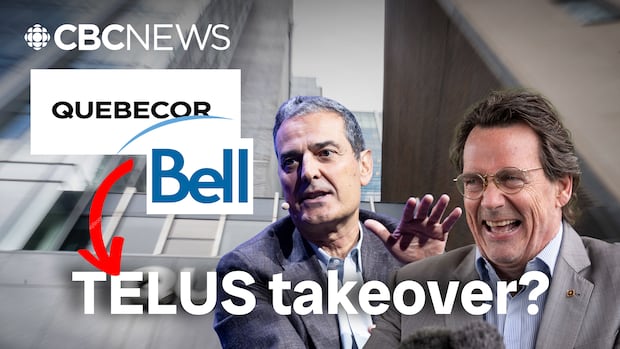
Quebecor has launched a massive $31-billion bid to take over Telus, a move that would crown it Canada’s largest telecom company — and potentially shrink the wireless market back down to three major players in B.C. The CBC’s Lien Yeung breaks down why Telus is pushing back and what this blockbuster merger could mean for your monthly phone bill.
Péladeau was asked how such a merger would affect wireless costs for Canadians, to which he replied that prices have been consistently decreasing since his company took over Freedom Mobile.
<p"Our revenues are increasing, as is our free cash flow," he stated. "Why would we alter a winning strategy?"
As per Canada’s annual telecom report, consumer prices for mobile services dropped in recent years but saw an uptick in 2025. Canada remains one of the countries with the highest wireless prices compared to other developed nations.
Currently, Quebecor is the fourth-largest telecommunications firm in Canada. With a market capitalization of $14.77 billion and Telus’s $21.72 billion, the potential acquisition would position Quebecor above Rogers or Bell in that regard.
Péladeau also presented the bid as a measure to safeguard Canada’s sovereignty, pointing out that Elon Musk’s satellite internet service, Starlink, operates in parts of Canada and is likely aiming to expand further.
“[Starlink’s] business model is global, much like Netflix’s approach was,” Péladeau remarked, adding that Netflix “devastated the Canadian industry” despite not holding a license from the Canadian Radio-television and Telecommunications Commission (CRTC).
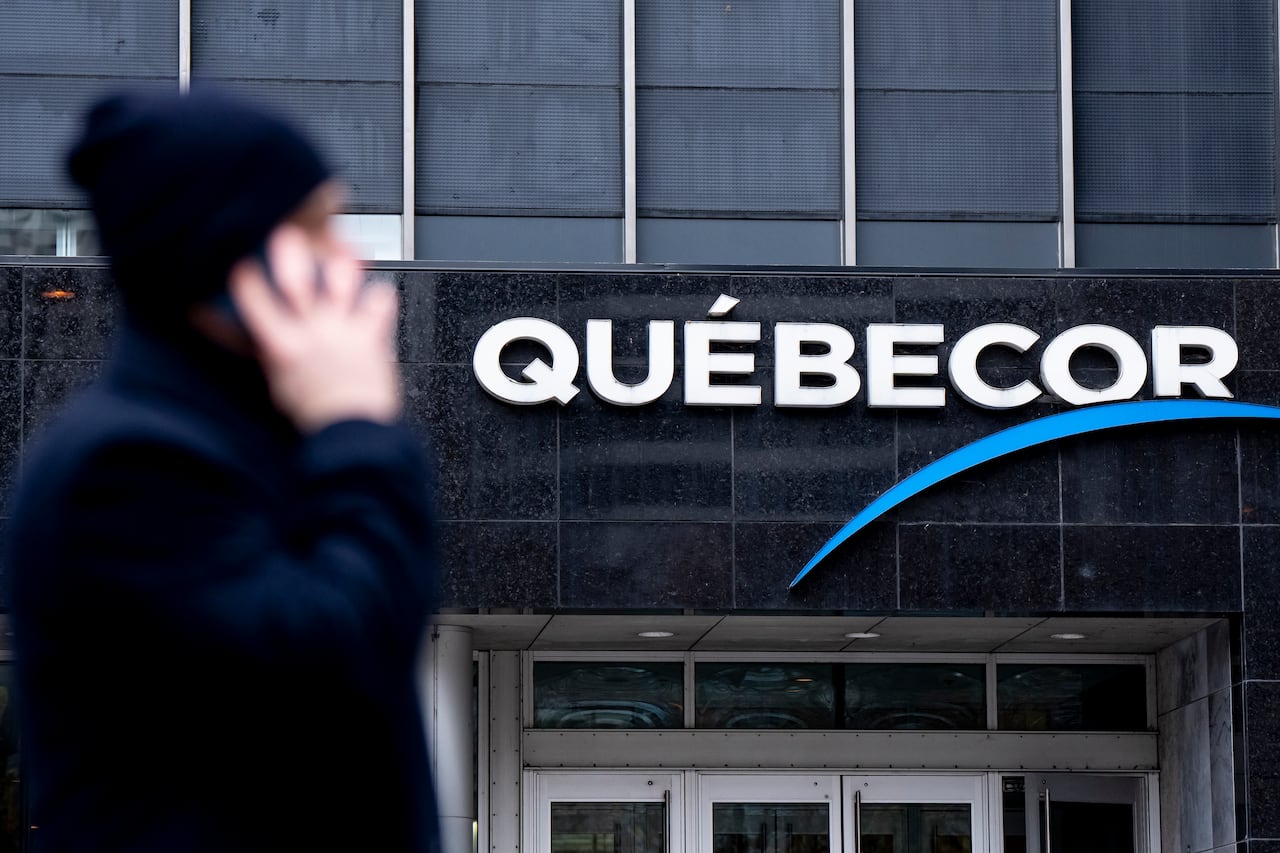
Quebecor is currently Canada’s fourth-largest telecom company, with a $14.77-billion market capitalization. (Christopher Katsarov/The Canadian Press)
Telus has established a special committee to evaluate the proposal and assess the potential deal’s value. According to John Manley, chair of Telus’s board of directors, the committee has already identified several “significant risks,” as stated in a company statement released on Monday.
Telus has also expressed concerns regarding how the Quebecor proposal values the company.
Manley indicated that Telus will continue discussions with Quebecor, the government, and regulatory bodies regarding these issues while considering other options.
The federal perspective so far
In a news statement released on Monday, Quebecor recognized that the deal will require approval from Canada’s Competition Bureau, alongside other authorities like the CRTC and Innovation, Science and Economic Development Canada.
This week, Prime Minister Mark Carney emphasized that enhancing competition, reducing prices, and improving service quality would be crucial factors in any decision related to the telecommunications sector.
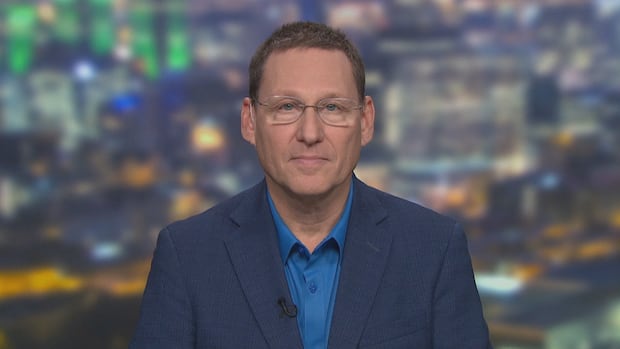
NDP Leader Avi Lewis joins Power & Politics after Montreal-based telecommunications company Quebecor announces its $31-billion bid to acquire competitor Telus. Critics of the potential deal are calling on the federal Competition Bureau to block the sale, saying it will increase costs for consumers and trigger layoffs.
Carney refrained from commenting directly on Quebecor’s bid but stated that, under certain conditions, an oligopolistic market structure could foster more competition with fewer players. He did not provide further details.
Péladeau noted that he believes few would contest Carney’s remarks, emphasizing that even with three Canadian firms, competition would still exist from other sources, such as Starlink.
On Friday, Conservative Leader Pierre Poilievre remarked that his party has not yet reviewed the proposal but intends to analyze it, operating on the principle of reducing consumer prices.
Poilievre also challenged Carney’s statements, asserting that he has never encountered “any economist anywhere in the world claiming that oligopolies ultimately reduce prices…. Once again, Mr. Carney prioritizes corporate interests over those of consumers.”
NDP Leader Avi Lewis has urged the Competition Bureau to block the acquisition, arguing that it would lead to increased costs for consumers and result in layoffs.
“We already face some of the highest cellphone prices globally,” he stated. “It seems evident to most individuals grappling with this cost-of-living crisis that this is merely another instance of large corporations consuming another company.”