
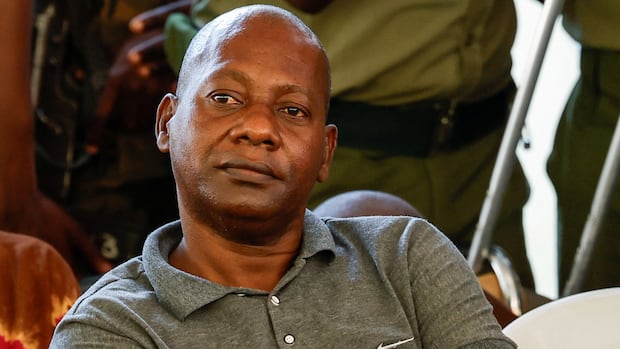

On Friday, a Kenyan court sentenced cult leader Paul Mackenzie to 200 years in prison for the starvation murders of 190 children, who perished on his orders and were buried in a forest. This incident is part of a larger case involving 500 suspected victims in one of the most horrific ritual killings in recent history.
Justice Diana Kavedza announced the sentence, which comprised 100 years for murder by starvation and an additional 100 years for direct homicide.
Prosecutors revealed that Mackenzie, who led an apocalyptic Christian sect in a forest near the Indian Ocean coast of eastern Kenya, instructed his followers to fast to death along with their children to ascend to heaven before the imminent apocalypse.
His associates used threats and violence against the victims to ensure compliance with his directives. The skeletal remains were discovered in shallow graves and discarded in latrines, with some victims having been buried alive.
Dressed in a grey polo shirt and black trousers, Mackenzie showed no emotion as the sentence was read in a tent outside the courtroom.
He refuted the murder allegations, asserting he did not coerce the victims into starvation, but the court dismissed his defense.
Twenty-eight of his accomplices received sentences ranging from 10 to 160 years, all found guilty during last month’s trial.
Lawrence Obonyo, the defense attorney representing Mackenzie and most of the other convicted individuals, stated that he plans to appeal the verdict.
Mackenzie, who had a substantial following on his YouTube channel, gained the trust of his victims through his compelling online presence and then preyed on defenseless followers, especially children, Kavedza noted.
“Children witnessed their siblings dying after suffering from hunger for days,” she remarked. “Those who attempted to steal food or water faced beatings, were bound, and imprisoned in houses designed for fasting until death.”
A Father’s Grief
The case sent shockwaves through Kenya in April 2023 when authorities began discovering bodies in Shakahola Forest, near the coastal town of Malindi.
While the trial focused on the deaths of 190 children and one adult, the Kenya National Commission on Human Rights reported that 448 bodies were eventually uncovered in the forest.
Mackenzie is also implicated in the deaths of 52 individuals found at a different site 30 kilometers away, raising the suspected total to 500. He has pleaded not guilty in this case.
The extent of the killings is comparable to that of a doomsday cult responsible for over 700 deaths in Uganda in 2000, as well as the 1978 Jonestown massacre in Guyana, where an American cult leader ordered over 900 individuals to consume poison.
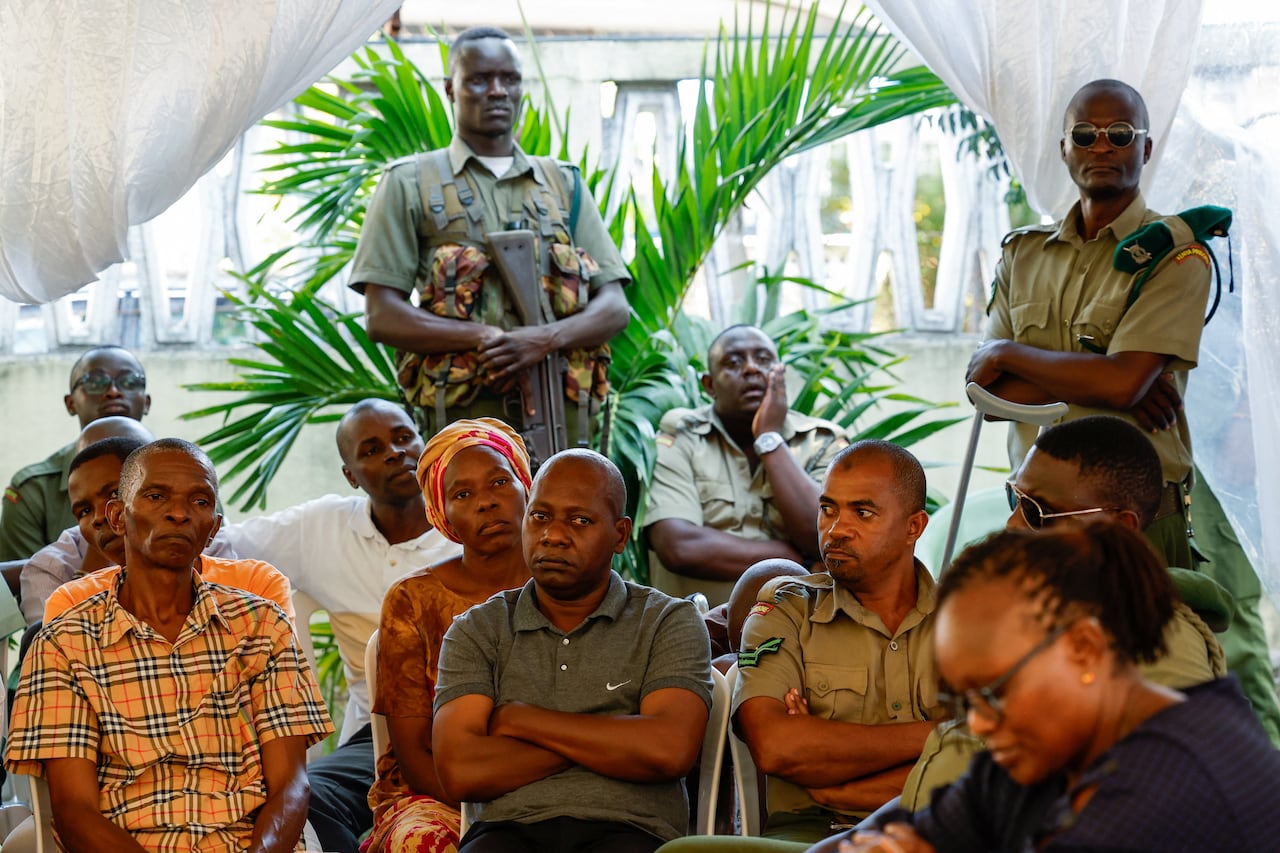
Mackenzie, front centre, sits following his sentencing at the Mombasa High Court, in Mombasa, Kenya, on Friday. (Monicah Mwangi/Reuters)
Stephen Mwiti, aged 48, who lost six children to Mackenzie’s cult and is married to one of the convicted accomplices, stated that his wife took their children to Shakahola, where they were starved to death.
“Even if the adults chose to fast, what about the children?” Mwiti expressed to Reuters prior to the sentencing.
Suleiman Zero, whose wife and six children remain unaccounted for, was seen weeping outside the courtroom after the sentencing.
“I feel relief, but where is my family?” he lamented. “My plea to the government is to assist in locating my family. If they have passed away, I wish to at least have their remains for burial.”
Dan Mackenzie, one of Mackenzie’s sons, revealed that he escaped the group during his teenage years after losing faith in its promises of heaven, which led to the loss of friends and his younger brother.
He stated that the sentence represents “justice for the people we have lost.”
Demand for Greater Accountability
Mackenzie had been under scrutiny from authorities since 2017 when police raided his premises. In 2019, his church in Malindi was shut down, prompting him to move to the nearby Shakahola Forest.
These revelations have spurred calls for enhanced regulation of religious organizations. In May 2023, Kenyan President William Ruto established a task force to review the legal and regulatory frameworks, with separate government and Senate proposals released in 2024, though they have yet to be enacted into law.
Ojiro Odhiambo, who leads rapid response at the Kenya Human Rights Commission, emphasized that while the conviction is a significant development, accountability must extend further, as local officials, police, intelligence agents, and religious leaders failed to heed repeated warning signals.
“All these individuals have let the community down,” he stated.
Kavedza concurred that Kenyan institutions had failed and urged Parliament to take action to prevent a recurrence of such tragedies.
In 2023, Ruto acknowledged his responsibility as president for the government’s inability to avert these deaths.