
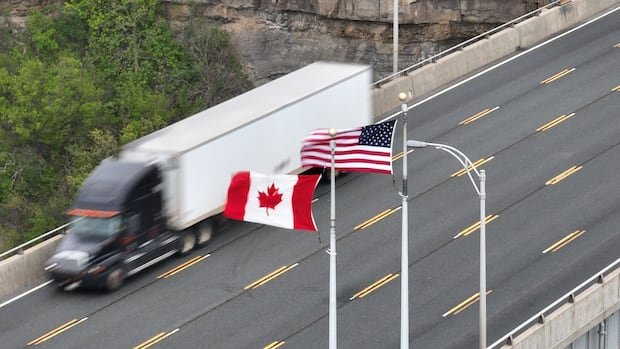

A fresh report is sounding the alarm about potential job losses and economic consequences on both sides of the Canada-U.S. border if the Canada-U.S.-Mexico Agreement (CUSMA) negotiations falter. The report, commissioned by the Canadian American Business Council and conducted by Oxford Economics, explores the implications of various outcomes of the trade discussions between the U.S. and Canada.
The analysis considers three scenarios: maintaining current tariffs, CUSMA dissolution, and successful renegotiation leading to improved trade relations. Should CUSMA terminate, an estimated 214,000 American and 102,000 Canadian jobs would be at risk compared to the status quo. Conversely, successful renegotiation could potentially create 137,000 jobs in the U.S. and 98,000 jobs in Canada.
According to Beth Burke, CEO of the Canadian American Business Council, the findings underscore the critical nature of the U.S.-Canada trade relationship for the prosperity of both nations. The report also projects significant GDP impacts, forecasting potential losses of $1.04 trillion for the U.S. and $271 billion for Canada by 2035 if CUSMA collapses. Additionally, inflation rates are expected to rise, while real disposable income growth, especially in Canada, would be hindered in the breakdown scenario.
In a worst-case scenario for the U.S., manufacturing sectors such as auto, wood products, and metal products would suffer, affecting states like Iowa, Michigan, Kentucky, and Alabama. Similarly, Quebec and Ontario in Canada would bear the brunt of manufacturing losses if CUSMA fails.
Against the looming threat of new 50% tariffs on Canadian exports, officials are actively negotiating to avert potential economic turmoil. Trade Minister Dominic LeBlanc and U.S. Trade Representative Jamieson Greer are engaging in discussions with the aim of presenting a trade deal to President Donald Trump before the tariff deadline.
Burke emphasizes the importance of ongoing talks and the necessity for concessions from both sides to reach a mutually beneficial agreement. Failure to secure a deal could result in detrimental impacts on manufacturers, particularly in central Canada.
The potential consequences of failed negotiations underscore the significance of the U.S.-Canada trade relationship and the need for collaborative efforts to safeguard economic stability and job opportunities on both sides of the border.