
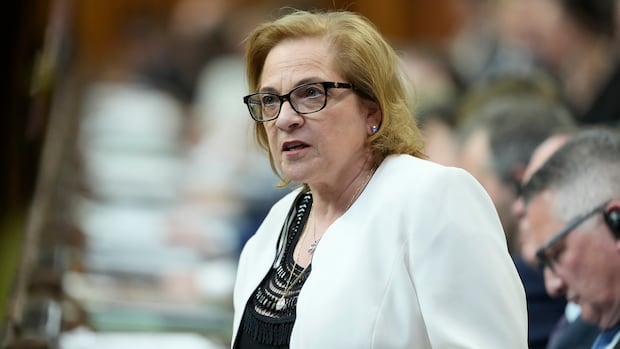

Advocates for refugee rights have expressed their astonishment at the federal immigration minister’s apparent lack of knowledge regarding a pivotal Supreme Court ruling that is widely regarded as the foundation of Canada’s refugee protection framework.
During an interview with Radio-Canada, Immigration Minister Lena Metlege Diab was asked multiple times about the 1985 Singh v. Minister of Employment and Immigration case.
This landmark Singh ruling established that asylum seekers hold the Charter right to fundamental justice and was instrumental in the establishment of the Immigration and Refugee Board of Canada.
The decision is also a central argument in the ongoing legal dispute against the Carney government’s immigration reforms that limit eligibility for hearings before the Immigration and Refugee Board.
-
‘You are a very bad minister,’ immigration critic says at tense meeting
-
Canadians born abroad caught up in citizenship certificate delays
“To be honest, I was profoundly shocked,” remarked Gauri Sreenivasan, co-executive director of the Canadian Council for Refugees. “It raises serious concerns that the individual responsible for Immigration, Refugees and Citizenship Canada is not entirely aware of the Supreme Court’s Singh ruling.”
Diab participated in an interview in July with Radio-Canada’s Les murs: le périple des migrants vers le Canada, a documentary podcast that debuted three weeks ago and investigates Canada’s asylum system.
She was posed with various questions, including those regarding the Safe Third Country Agreement and Bill C-12, the immigration reforms introduced by the Carney government last March.
One of the most debated aspects of Bill C-12 was the stipulation that asylum claims made more than a year after a person’s initial entry into Canada are no longer referred to the Immigration and Refugee Board; instead, these cases undergo a pre-removal risk assessment.
This assessment is performed by an officer from Immigration Canada to determine whether an individual is at risk of torture or death if returned to their country, typically involving a written submission rather than an oral hearing.

Dozens gathered outside the Human Rights Monument in Ottawa on Sunday to call on the federal government to change directions with its immigration policy. Some in attendance say Bill C-12 has made it more difficult for migrants to live in Canada. Cameron Mahler has more.
Diab stated in French that Bill C-12 “adheres to our Canadian Charter,” emphasizing that she is a lawyer and that the amendments aim to tackle the backlog in asylum applications.
When questioned about the assertion that the Singh ruling grants asylum seekers a constitutional right to an oral hearing, she responded that since the law is recent, the government will keep an eye on developments.
Radio-Canada then directly inquired if she was aware of the Singh ruling. After a brief pause, Diab requested that the name of the ruling be repeated.
Upon hearing again that it referred to the Singh decision made by the Supreme Court of Canada in 1985, she indicated that she would need to consult with her team.
“There are numerous Singhs and numerous decisions,” Diab remarked.
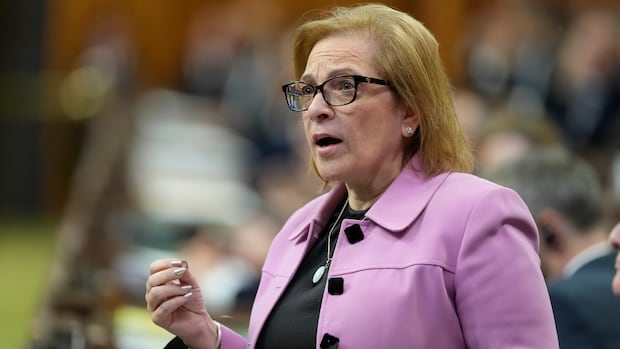
In an interview with Radio-Canada’s Les murs: le périple des migrants vers le Canada, Immigration Minister Lena Diab appeared unfamiliar with a Supreme Court decision that is widely considered the cornerstone of Canada’s refugee protection system.
Radio-Canada then clarified that it was the ruling that resulted in the formation of the Immigration and Refugee Board, to which she replied, “Ah, OK.”
According to various experts consulted by Radio-Canada, the Singh ruling acknowledged, among other points, that asylum seekers are entitled to an oral hearing.
“[The claimant] should receive a comprehensive hearing regarding their case to articulate their circumstances before a qualified decision-maker,” stated François Crépeau, a professor emeritus of public international law at McGill University and former United Nations special rapporteur on the human rights of migrants.
“That is precisely why the Immigration and Refugee Board was established in 1989. It was intended to fulfill the requirements set forth by the Singh ruling.”
Bill C-12 is currently facing legal challenges. Attorneys argue that it breaches Canada’s obligations under both domestic and international law.
-
Canada’s new asylum law puts Iranians in limbo
-
Where is Canada’s immigration minister? Community groups are asking
Immigration Canada asserts that Bill C-12 is in accordance with the Singh decision.
“The Supreme Court in Singh determined that to fulfill the requirements of fundamental justice, an oral hearing is necessary only when there are credibility issues involved. The Supreme Court did not conclude that an oral hearing is obligatory in every case,” a department attorney informed a parliamentary committee reviewing Bill C-12 in February.
Crépeau disagrees, stating: “Eliminating a full hearing … constitutes a breach of the stipulations outlined by the Singh ruling.”
Following the interview, Diab’s office maintained that she was well-informed about the Singh decision, but due to language differences, she may not have comprehended the questions completely.
The podcast interview was conducted in French, which is not Diab’s primary language.
However, during two recent appearances in English before different Senate committees reviewing Bill C-12, the minister similarly refrained from addressing inquiries regarding the Singh ruling, opting to defer to departmental officials and legal advisors.
‘Competence issue’: advocate
“I certainly believe there is a competence issue,” stated Louis-Philippe Jannard of TCRI, a Quebec umbrella organization representing over 160 groups that assist refugees and immigrants.
“The Singh ruling was discussed during the legislative process for Bill C-12 in both the House of Commons and the Senate. Therefore, for it not to be on the minister’s radar is surprising, to say the least.”
When asked by Radio-Canada on Wednesday whether he would retain Diab as immigration minister, Prime Minister Mark Carney responded, “yes, yes, absolutely.”
A spokesperson for the Prime Minister’s Office, Renée LeBlanc Proctor, previously stated in an email to Radio-Canada that Diab plays a “crucial” role in executing the federal government’s mandate to reduce immigration to “sustainable” levels while attracting top talent globally.
“She continues with this work,” Proctor noted.
Diab has faced criticism from immigrant rights organizations who claim the minister is difficult to reach and appears to lack a solid understanding of her cabinet responsibilities. Opposition Conservatives have been calling for Diab’s dismissal for months.