

A new study has determined that humanity has surpassed the safe operational limits for the Earth’s cryosphere, which encompasses the planet’s frozen water systems, including permafrost, ice, and snow.
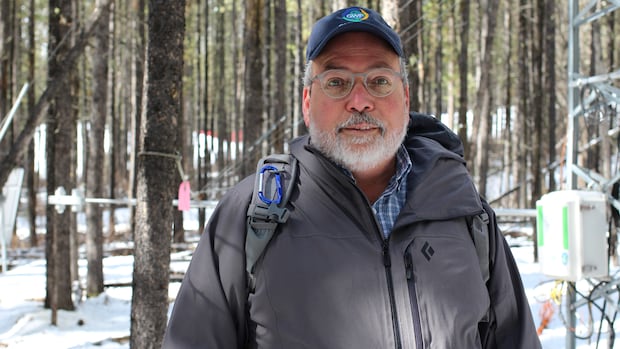
“The frozen water regions globally are essential for our survival,” stated John Pomeroy, a professor at the University of Saskatchewan and the chair of the strategic management committee for the United Nations Decade of Action for Cryospheric Sciences.
Pomeroy is among the 31 specialists who participated in the research titled The Cryosphere Beyond a Planetary Safe Operating Space, which was published in Science on November 12, aligning with the commencement of the COP 31 climate summit in Turkey.
“The issue is that as the temperature of the planet increases, it leads to the melting of snow and the thawing of the ground that is permanently frozen, known as permafrost. Additionally, sea ice is experiencing a dramatic decline,” Pomeroy noted. “Even the ice on lakes, which we rely on for transportation and ice-fishing during winter, is not what it once was.”
The cryosphere consists of all frozen water on the planet. A recent study revealed its decline. University of Saskatchewan professor John Pomeroy was one of the contributors. He spoke with Saskatoon Morning about the study’s results.
Pomeroy indicated that the Earth has warmed approximately 1.5°C since the 1800s, primarily due to emissions from human activities.
“We observe this in Canadian droughts—specifically, Prairie droughts where we fail to receive adequate winter snowpack, leading to insufficient rainfall and subsequent challenges,” he explained.
“Moreover, wildfires in the north are ignited by low snowpacks and early snowmelt. We are also witnessing alterations in the flow of the Saskatchewan River system.”
The study highlights a deficiency in protective measures and suggests a definition for a safe operating space (SOS) for the cryosphere, which outlines the environmental boundaries necessary for the prosperity of human communities and ecosystems.
“Our conclusion is that the cryosphere has surpassed its SOS and is heading toward a path that poses long-lasting risks for both human societies and ecosystems,” the abstract of the study states.

A recent study has shown that Earth’s frozen water—the cryosphere—is declining after more than 10,000 years of stability. Host Candice Lipski interviews one of the authors, University of Saskatchewan professor and UNESCO Chair in Mountain Water Sustainability John Pomeroy, about its implications for the environment and humanity.
Pomeroy expressed that while scientists and specialists understand how to tackle the decline, they require support from governments to implement significant changes, which he felt was lacking at COP 31.
“The outcome of that meeting was a complete disaster,” Pomeroy remarked.
“No agreements were reached at all, and the fossil fuel interests present at the meeting, whether through nations or directly, dominated to ensure that any meaningful wording, even acknowledging the role of fossil fuel combustion in warming, was eliminated.”
He noted that he believes Canada is making strides with Bill C-241, which aims to create a national strategy for flood and drought forecasting and is currently under consideration in the Senate.

Senator Tracy Muggli presents Bill C-241 for second reading on Nov. 19. (Senate of Canada)
Saskatchewan Senator Tracy Muggli is advocating for the bill in the Senate, which had its second reading on November 19.
“Interestingly, Canada stands as the sole G7 nation without a national forecasting strategy for floods and droughts. This bill seeks to rectify that by facilitating the integration of data across the nation to improve modeling and forecasting,” she stated.
Muggli shared her personal experiences with the adverse effects of unpredictable flooding and droughts while growing up on a farm near Muenster, Saskatchewan.
“I recall the drought of 1988, which was a very challenging time, and with better forecasting, different decisions could have been made regarding the appropriate crops to plant, or perhaps even deciding against planting entirely,” she reflected.
There is currently no definitive timeline for the bill’s passage. Muggli mentioned there is still an opportunity for experts to provide input, and any modifications would need to return to the House of Commons.