
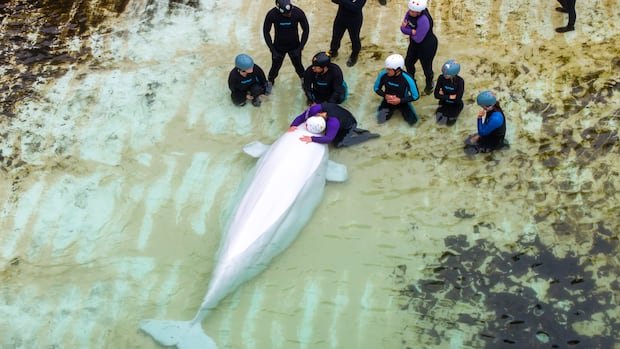

Over the summer, Marineland relocated all its remaining captive whales and dolphins to five different destinations following the Canadian government’s ban on keeping captive whales in 2019. The Ontario theme park, which is now closed, transported its remaining 30 belugas and four dolphins to various locations in the U.S. and Spain, marking the largest transfer of these animals worldwide.
Unfortunately, there have been casualties among the relocated animals, with four belugas and one dolphin succumbing to death. The most recent fatality occurred on September 24 at the Oceanogràfic de València in Spain, raising concerns about the well-being and health impact of these transfers.
One of the deceased animals was Echo, a blind Black Sea bottlenose dolphin estimated to be 30 years old. Echo was transferred to Oceanogràfic on August 26 in a lengthy 19-hour journey from the closed Niagara Falls, Ontario tourist site. According to a statement shared on social media by the facility, Echo arrived with severe vision impairments and other medical issues that necessitated specialized care. Unfortunately, Echo’s health deteriorated rapidly, leading to his demise overnight, as confirmed by the aquarium.
Naomi Rose, a senior scientist specializing in marine mammal biology at the Animal Welfare Institute in Washington, D.C., highlighted the significant stress belugas endure during transportation. While the transport process has been established for decades, Rose emphasized that it is particularly distressing for cetaceans like belugas.
Valeria Vergara, a senior scientist focusing on marine mammals at the Raincoast Conservation Foundation in Pender Island, British Columbia, emphasized the direct link between psychological stress and physiological stress in animals. Elevated stress levels can suppress appetite, impacting the overall health of the animals.
The recent deaths of the relocated belugas and dolphins have prompted questions about the relocation process and the overall well-being of the animals. Investigations are ongoing to determine the causes of the fatalities and to monitor the health of the surviving animals in their new environments.
Furthermore, various aquariums and facilities that received the relocated animals have provided updates on the well-being of the belugas under their care. While some animals have shown positive signs of adjustment, concerns remain about the health and adaptability of the transferred belugas.
Experts in marine mammal science stress the challenges and stressors involved in transporting belugas and emphasize the importance of considering the animals’ welfare in such endeavors. The recent deaths have underscored the complexity and ethical considerations surrounding the captivity and relocation of marine mammals like belugas.