
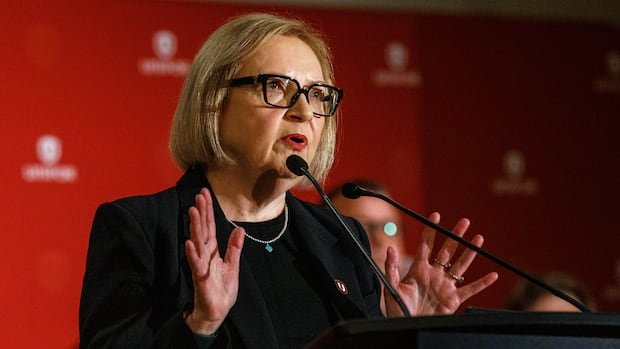

The union representing Canadian workers at Stellantis is urging the automaker to uphold its commitment to retooling its Brampton, Ontario, plant despite indications of a potential sale. Stellantis recently announced it had signed a memorandum of understanding (MOU) with Canadian armored vehicle maker Roshel regarding a potential sale of the Brampton facility. Unifor national president Lana Payne expressed the union’s disagreement with the decision to sell during a news conference in Toronto.
The Brampton plant has been inactive since 2023 when plans were in place to retool it for Jeep Compass production before being halted in early 2025. Subsequently, the company decided to shift production of the vehicle model to the United States instead. Payne emphasized that Unifor’s stance remains firm on the need for Stellantis to proceed with retooling the plant for Jeep Compass production rather than closing or selling it.
In response, Stellantis highlighted its longstanding commitment to Canada, emphasizing its continued operations in Windsor, the Etobicoke casting facility, and investments in advanced research and development at its engineering center in Windsor. The company expressed readiness to engage with Unifor and encouraged discussions between Unifor and Roshel to understand the vision for the Brampton plant.
Roshel’s CEO, Roman Shimonov, conveyed ambitious plans for production in Brampton, aiming to create over 2,000 jobs and introduce new capabilities, including ballistic steel production. Stellantis mentioned that various options were explored to revive production in Brampton, citing market and trade conditions that impacted the original business case for the plant.
Unifor indicated a potential for strike action if necessary, following complications arising from Roshel’s involvement in the negotiations. The union’s objective is to reach a tentative agreement without resorting to a strike, although the possibility remains. Payne addressed concerns to Industry Minister Mélanie Joly regarding the timing and implications of the potential sale amidst ongoing trade tensions and collective bargaining discussions.
Worker anxiety at the Brampton plant was described as significant, with some employees relying on savings to support themselves during the idle period. The closure of the plant was deemed as potentially devastating by stakeholders, symbolizing broader implications for the Canadian automotive industry. Automotive reporter Greg Layson characterized the contract talks and the plant’s future as a complex situation, exacerbated by unmet commitments tied to government incentives and external economic uncertainties.
The MOU with Roshel was seen as a potential solution, but preserving the plant without closure or sale was considered the preferable short-term approach. Layson highlighted the unprecedented challenges posed by the trade war and the need for Stellantis to address its obligations tied to government investments.