
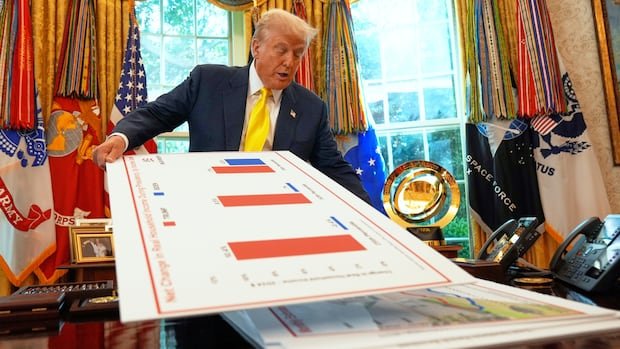

In his state of the union address in March 2025, U.S. President Donald Trump expressed optimism about revenue generation and job creation through tariffs, foreseeing a prosperous future. However, despite promises made during his first term in 2018 to alleviate the national debt through tariffs, job growth has not materialized. Instead, the U.S. government debt has surged past $40 trillion, impacting bond markets and maintaining high yields and interest rates.
While tariffs have led to challenges for some, they have also resulted in significant benefits for certain sectors. Economists note that tariffs have facilitated a substantial wealth transfer from lower-income and middle-class individuals to affluent corporations and well-connected entities within the U.S. This aligns with the broader economic agenda of the Trump administration and the Republican Party, which has utilized tax policies to achieve similar outcomes.
Analysts suggest that tariffs predominantly affect lower-income households, as they consume a larger portion of their income. Wealthier households, on the other hand, tend to spend more on services and non-tariff-impacted items, thus minimizing the impact of tariffs on them. The distribution of tariff exemptions and refunds has further exacerbated wealth concentration, favoring large corporations over smaller businesses and individuals.
Recent developments have seen the U.S. Treasury issuing over $100 billion in refunds to businesses affected by tariffs deemed unlawful by the U.S. Supreme Court. Major corporations such as Walmart and Target have been among the primary beneficiaries of these refunds, significantly bolstering their financial positions. Conversely, smaller entities like mom-and-pop businesses and individual consumers have largely been excluded from receiving such benefits.
Despite claims that tariff refunds would lead to price reductions for consumers, evidence suggests that the majority of the burden still falls on U.S. buyers. While some corporations pledge to pass on refunds to customers, economists remain skeptical about the extent to which these benefits will trickle down to consumers. Studies indicate that American buyers bear a substantial portion of tariff costs, undermining the notion of tariffs benefiting the broader population.
The interplay between tariffs and tax policies under the Trump administration has contributed to a wealth disparity, with tax cuts predominantly benefiting the wealthy while tariffs impact the middle class. Furthermore, tariff revenues have proven insufficient to offset the costs of tax cuts, leading to escalating national debt and higher debt-servicing charges. Economists caution that the current tariff strategy may result in adverse economic repercussions, necessitating a reevaluation of revenue-raising methods by future administrations.