
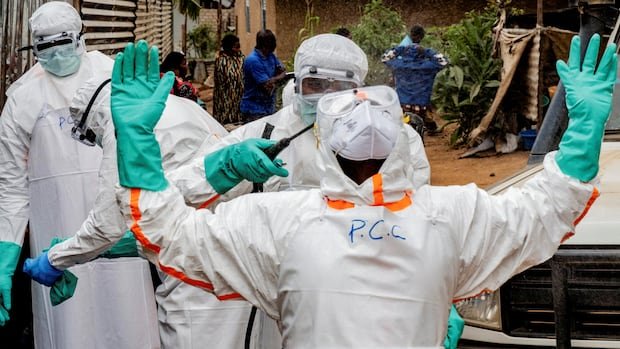

The Democratic Republic of Congo announced on Tuesday that the confirmed Ebola fatalities have reached 2,011, marking a significant milestone in what health officials have described as the most rapidly spreading outbreak on record. According to the latest figures from Congo’s public health institute, there are 4,381 confirmed cases spread across five provinces.
Factors such as delayed detection, ongoing conflict, and strained healthcare services have contributed to the accelerated spread of the virus compared to previous outbreaks. This 17th outbreak in Congo is attributed to the Bundibugyo strain of Ebola, for which there are currently no approved vaccines or treatments.
The World Health Organization has declared this outbreak, which has also resulted in cases in neighboring Uganda, as a public health emergency of international concern. A recent report published in the journal Science indicated that transmission might have started as early as January in Ituri province, with over 500 suspected cases identified between mid-January and May 15.
Challenges such as shortages of medical supplies and insecurity in affected regions have hindered efforts to trace contacts, isolate patients, and control the spread of the virus. The current outbreak in Congo is second only to West Africa’s 2014-2016 Ebola outbreak, which recorded 28,616 cases and 11,310 deaths across Guinea, Liberia, and Sierra Leone, according to the World Health Organization.
It took nearly five months from the declaration of the West Africa outbreak to reach 1,000 deaths, while the current outbreak in Congo has surpassed 2,000 deaths in less than three months. In a previous Ebola outbreak in Congo from 2018 to 2020, it took slightly over 12 months to reach 2,000 deaths. The rapid increase from 1,000 to 2,000 deaths in less than a month in the current outbreak highlights the swift spread of the virus.
To address community resistance and mistrust, a task force involving local militias and civil society groups has been established in the city of Butembo in North Kivu province to support Ebola responders and protect them in their duties. The task force aims to safeguard health workers, treatment facilities, and enforce quarantine measures for individuals suspected of exposure to the virus.
During a media briefing on Monday, Guy Ngavo, one of the task force leaders, mentioned that individuals handling Ebola victims’ bodies or refusing quarantine orders could be taken to Ebola treatment centers forcibly. In cases of repeated non-compliance, they may face disciplinary actions, including whipping.