
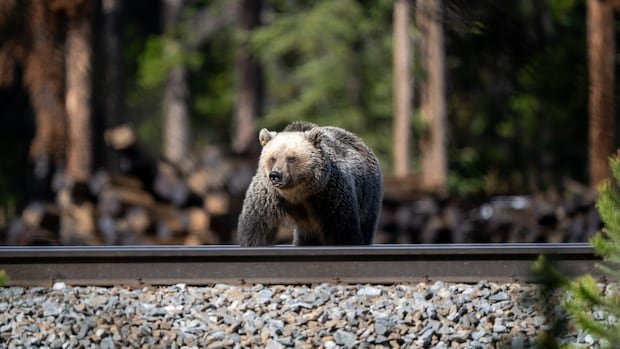

A recent widely shared incident involving a grizzly bear and new research outcomes are emphasizing the significance of keeping dogs on a leash while hiking. The situation arose when a woman posted a TikTok video in July, attracting millions of views and potentially facing a substantial fine of up to $25,000. The video captures a man using bear spray to deter a grizzly bear while a small off-leash dog intervenes between the man and the filming woman.
The footage showcases the presence of grizzly bear No. 142, a renowned female bear, peacefully traversing the Taylor Lake trail in Banff National Park without displaying any aggressive behavior. The woman responsible for filming the incident is set to face legal proceedings in Canmore court later this month.
In a recent peer-reviewed study titled “The Canine Conundrum: Is a Dog a Help or Hindrance in Bear Country?” that delved into scenarios resembling those in the video, researchers scrutinized 326 documented human-bear conflicts involving dogs from 1901 to 2023. The study revealed that 54% of conflicts were instigated by dogs, resulting in fatalities of five individuals and 56 dogs, with 170 people sustaining injuries.
Lana Ciarniello, an independent researcher involved in the study, highlighted that hiking with at least one companion reduces the likelihood of negative bear encounters by 50%. However, the presence of a dog escalates the risk of such encounters as “a dog significantly complicates recreational activities,” as per Ciarniello.
The catalyst for the study was a tragic incident in 2023 where a grizzly bear fatally attacked two hikers and their dog in the Red Deer Valley area of Banff National Park. The study underlined that human-bear conflicts can distort public perceptions of these vital ecosystem elements and emphasized the critical need for adherence to leash regulations and group hiking practices to mitigate conflict risks.
Ciarniello expressed hope that individuals will comply with leash regulations for dogs, which are mandated in Canada’s national parks, and suggested exploring potential dog restrictions in crucial grizzly habitat areas to safeguard both humans and bears.
Following the fatal incident in the Red Deer Valley area, Parks Canada wildlife experts recommended implementing “enhanced dog restrictions” across Banff National Park to mitigate potential risks associated with dog-related encounters with wildlife. The internal report obtained by CBC underscored the importance of reevaluating dog-related policies and regulations within the park to prevent future tragedies.
The report highlighted the prevalence of non-compliance with leash regulations despite frequent wildlife encounters within the park, cautioning that as park visitation rises, negative dog-wildlife encounters become increasingly foreseeable. The report’s recommendations aimed to address these concerns and enhance visitor safety within the park.
According to the report, the majority of human-bear conflicts result from surprise encounters, with a significant percentage involving dogs. The report cited examples from U.S. national parks where dogs are not permitted on trails or in the backcountry, emphasizing the need for stringent dog regulations in Banff National Park.
In response to these developments, Kim Titchener, founder of Bear Safety & More, stressed the importance of understanding a dog’s behavior around wildlife before taking it on outdoor excursions. Titchener advised owners to assess the suitability of bringing their dogs to environments with large carnivores and wildlife that may react strongly to dog presence.
Regarding bear encounters, Titchener recommended hikers to yield the trail to bears, carry bear spray, keep dogs on a leash, and prioritize safety over filming during such encounters. She cautioned against prioritizing video recording over personal safety and stressed the need for remaining calm and focused on the situation in bear encounters.