
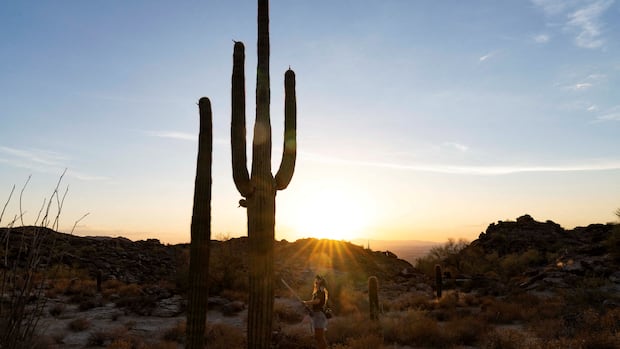

The remarkable saguaro cactus, which has adapted over thousands of years to flourish in the scorching Sonoran Desert, is now facing challenges due to intensifying heat waves.
This distinctive cactus, often featured in Hollywood westerns and seen on Arizona license plates, can reach heights of 40 feet (12 meters) or more and can live for 150 years or longer.
Prior to 2020, researchers from the Desert Botanical Garden in Phoenix, located in one of the hottest areas of saguaro territory, noted that approximately one to two percent of saguaro cacti perished each year. However, with the onset of extreme heat across Arizona, the mortality rate attributed to heat in the city surged to four percent in 2021 and increased to seven percent in 2023.
Although the heat-related death rate has shown signs of recovery, according to Kevin Hultine, the research director at the Botanical Garden, it has only returned to four percent, leading to concerns about the future of this iconic cactus.
Heat waves, which were once minor and sporadic occurrences 65 years ago, have evolved into extensive, prolonged, and global weather phenomena that Reuters has labeled as “heat storms.”
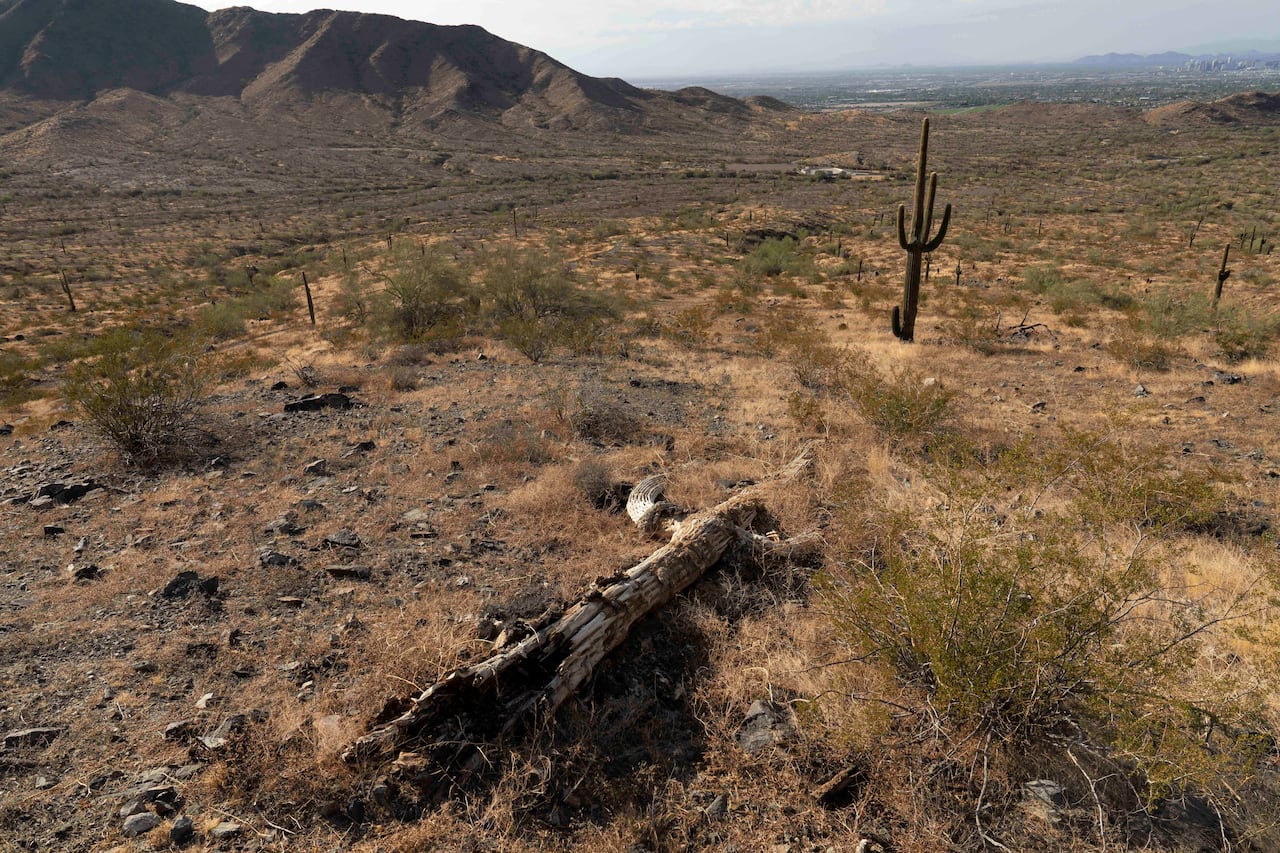
A dead saguaro cactus lies next to a healthy one at South Mountain Park and Preserve in Phoenix on July 20, 2026. (Rebecca Noble/Reuters)
Prolonged heat can weaken the cactus in several ways—by harming its exterior, which affects the plant’s ability to produce food and makes it susceptible to infections, or by causing its internal water to evaporate, leading it to droop and potentially collapse.
Recent decades have also seen the emergence of nighttime heat storms that frequently envelop the desert.
The saguaro and other cacti and succulents have adapted to perform a vital step of photosynthesis not during the scorching daytime but in the cooler night. At dawn, the saguaro’s tough outer skin closes its stomata, significantly reducing evaporation during the heat of the day.
However, with its pores tightly shut, the saguaro can hardly absorb any carbon dioxide, which hinders its nutrient production. Thus, it waits for the evening. As nighttime temperatures drop, the cactus opens its tiny pores, inhaling essential carbon dioxide.
Enzymes then convert the carbon dioxide into a storage form that the cactus can utilize until morning. At sunrise, different enzymes release the stored CO2, enabling the remainder of the photosynthesis process to convert it into food.
Yet, there is a complication—warm nights can interfere with the functioning of the nighttime enzymes.
Essentially, a hot night can rob the saguaro of its necessary sustenance.
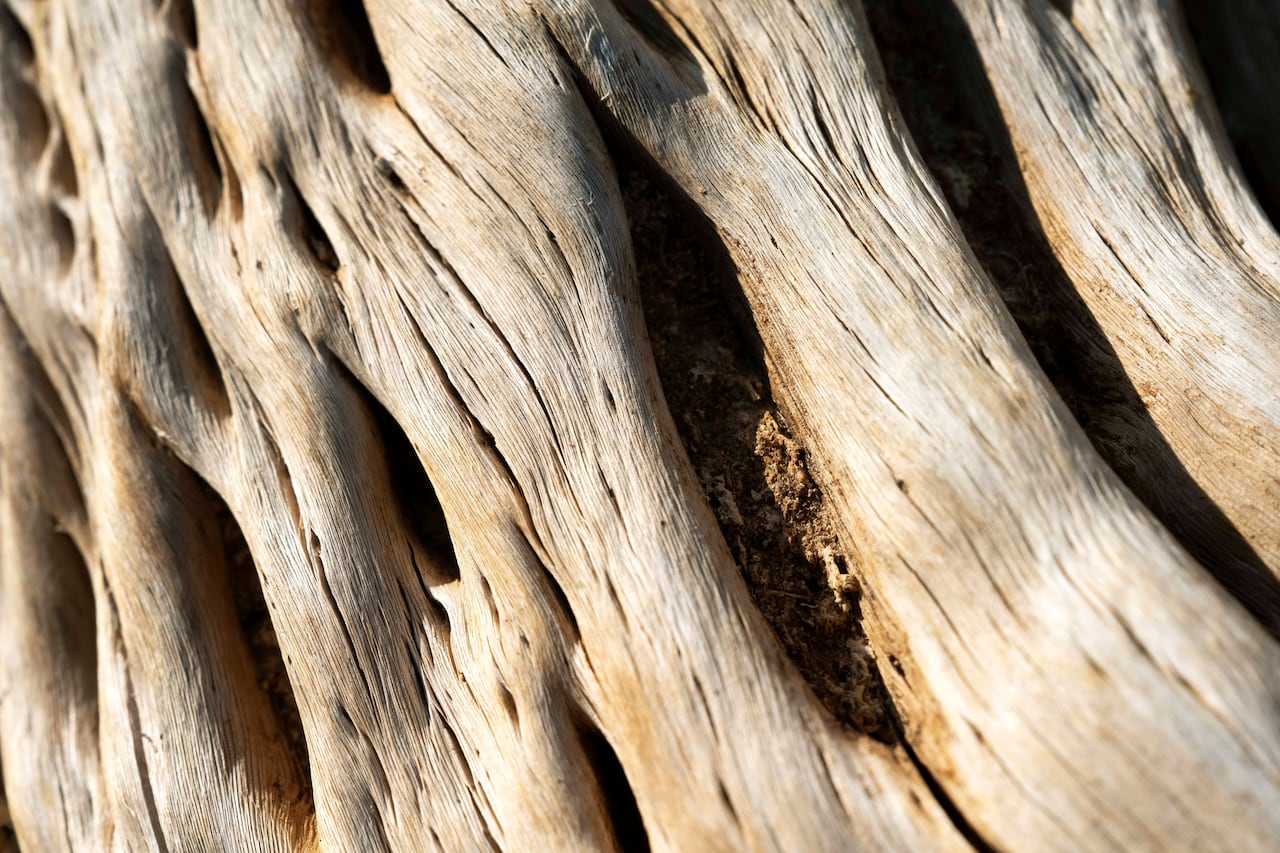
A close-up of the ribs of a dead saguaro cactus at South Mountain Park and Preserve in Phoenix, Ariz., on July 20, 2026. (Rebecca Noble/Reuters)
Moreover, warm nights can also lead to increased evaporation of the saguaro’s internal water.
Researcher Ali Schuessler is examining the damage caused by such extreme heat on the saguaros located nearby at South Mountain Park and Preserve, a hilly region overlooking the city. If temperatures remain excessively high for extended periods, saguaros can experience significant water loss due to evaporation. The cactus relies on its internal water for structural integrity; excessive water loss can result in bending and eventual collapse.
“I’ll never forget how shocked I was the first time I saw one of them fall over, and our horticulture team was cutting it up and feeling the inside of the plant, and how hot it was,” she recalled. The saguaro was as hot as “your tea or your coffee.”
‘A relic’
The future of the saguaro is likely to unfold over several decades, as it is a slow-growing species. It can live up to 200 years, though 150 years is more common, and its reproduction rate is quite low.
While a mature saguaro can store as much as a thousand gallons of water, a one-year-old saguaro is typically merely a quarter-inch tall (two-thirds of a centimeter). This makes it vulnerable to summer heat that can easily dry it out.
Last November, the Montreal Botanical Garden received 57 exotic plants that were seized at the border as they were being smuggled into Canada. Six were identified as protected species.
In the northern Sonoran Desert, El Niño typically brings essential winter rains for young saguaros, which allow them to absorb sufficient water to endure the harsh summer heat.
However, the last “super” El Niño that resulted in a baby saguaro boom occurred in 1982-83. Since then, according to research director Hultine, El Niños have often brought heavy rainfall but have also coincided with an increase in heat storms and heat waves.
Schuessler is concerned about the long-term sustainability of the saguaro: “Even if these guys can survive in their environment for a long time, if they cannot reproduce, then they are doomed.”
Currently, another super El Niño comparable to the one from the 1980s has developed over the Pacific. However, Hultine remains pessimistic due to the escalating heat storms and heat waves.
He believes that the region’s saguaros are “effectively a relic.”