
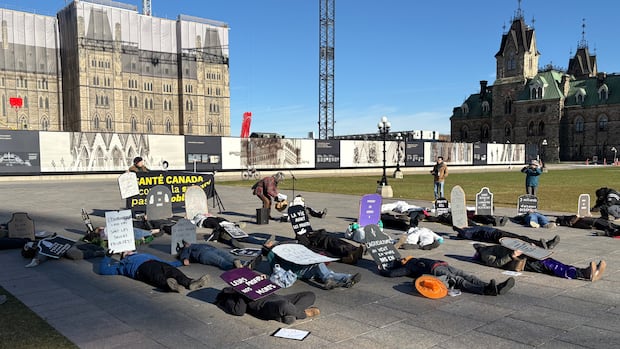

On Saturday, demonstrators placed cardboard grave markers on Parliament Hill as part of a “die-in” to raise concerns about the federal government’s pesticide policies.
The nearly 40 tombstones were created to oppose two legislative proposals that they argue diminish existing restrictions and regulatory standards on pesticides, prioritizing corporate profits over the well-being of everyday Canadians.
“Children are especially at greater risk from pesticides,” stated Elodie Mantha, representing the Quebec non-profit Vigilance OGM.
“They have lower thresholds for absorbing pesticides, and they will be consuming this food and drinking this water for a longer period. Thus, it builds up over time.”
The two legislative measures in question are Bill C-30, which was enacted in June, and the proposed omnibus Bill C-31, currently advancing through the House of Commons and the Senate.
Bill C-30 grants the federal government the power to approve pesticides deemed necessary for economic or national food security, even if those pesticides had been previously classified as unsafe by Health Canada.
The omnibus Bill C-31 includes provisions that amend the Pest Control Products Act, enabling the health minister to postpone or limit the scope of a re-evaluation of a registered pest control product.
Backlash Against C-30
Bill C-30 has received criticism from environmental and health organizations that describe it as the most significant change to pesticide regulations in decades.
In response, a representative for Health Minister Marjorie Michel stated that the cabinet would be open about its decisions, allowing certain pesticides to be used only temporarily and under specific conditions.
However, some protesters, including Dr. Helen Hsu, argue that these new regulations contradict the principles of evidence-based health policy.
“Without a chance for reassessment, we risk exposing the entire population to harmful chemicals that could have long-lasting effects,” remarked Hsu, who is affiliated with the Canadian Association of Physicians for the Environment.
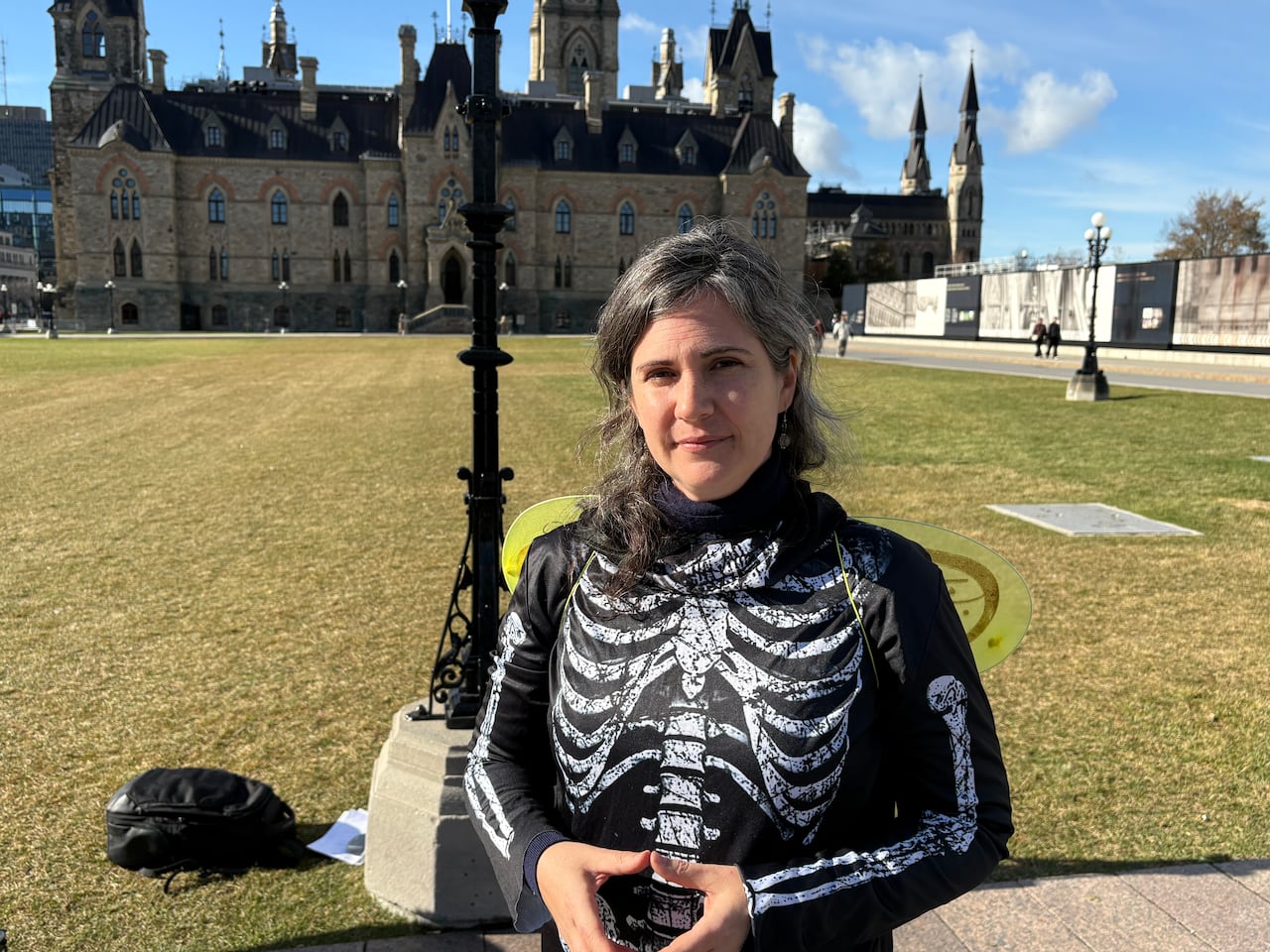
Elodie Mantha, representing the Quebec non-profit Vigilance OGM, expresses concerns about the impact of the government’s latest bills on Canadian children, who may face exposure to harmful pesticides for generations. (Liam Baker/CBC)
‘Die-ins’ Across Quebec
Concurrent protests took place in seven cities throughout Quebec on Saturday morning, with gatherings in Quebec City, Montreal, and Terrebonne. Demonstrators included individuals of all ages, from children to seniors, many donned in Halloween costumes.
In addition to activists and medical professionals, farmers also shared their experiences at the “die-in,” emphasizing the need for improved testing procedures for pesticides.
“Some of these pesticides may be safe, but we cannot be sure. We need the government to conduct the testing rather than relying on pesticide manufacturers to do so,” stated André Houle, who operates a farm in Curran, Ont.
-
Carney government enacts law permitting approval of prohibited pesticides
-
Regulatory changes to pesticides raise concerns in Northeastern Ontario
In a statement provided to CBC, a representative for Michel affirmed that Health Canada will maintain rigorous scientific standards while overseeing pesticides throughout their lifecycle.
“These modifications will aid in reducing assessment delays and ensure that regulatory resources are directed toward products posing the highest risks and emerging concerns, rather than routinely reassessing products every 15 years simply due to the passage of time,” the statement indicated.
The spokesperson added that these recent changes create a more agile regulatory system aimed at safeguarding Canadians while bolstering a more robust national food framework.
Tag: rewrite-pending