
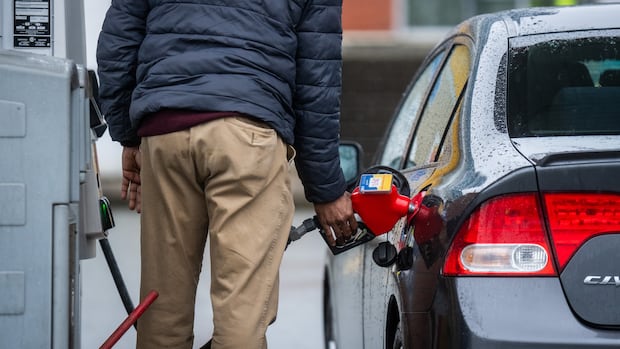

No, you’re not imagining things — those soaring gas prices are decreasing throughout Canada.
As of Wednesday, the Canadian national average for gas prices was recorded at $1.514 per litre, according to the price monitoring website affordableenergy.ca. This marks a reduction of approximately eight cents from the previous week and is 29.4 cents lower than the national average from 30 days prior, based on the same tracking site.
In provinces such as Manitoba and Saskatchewan, average prices have fallen by over 30 cents in comparison to last month’s averages, as noted by GasBuddy petroleum analyst Patrick De Haan.
“Actually, in certain parts of Calgary, we are noticing gas stations … priced below a dollar per litre again,” De Haan mentioned.
He predicts that prices may still decrease by another five to ten cents per litre across the country in the coming weeks, provided that there are no new developments regarding the U.S. conflict in Iran, which at times nearly halted traffic through the crucial Strait of Hormuz, causing oil prices to surge.
While gas prices remain elevated compared to last year, analysts attribute the recent decline primarily to increased oil flow through the strait, along with several seasonal influences.
Recent months have seen a rise in tanker traffic through the strait, <u supported by U.S. military escorts, according to Al Salazar, the head of oil and gas research at Enverus. This has contributed to the decline in crude oil prices — a barrel of Brent crude is currently priced just below $92 US, down from approximately $116 US during the peak in mid-October.
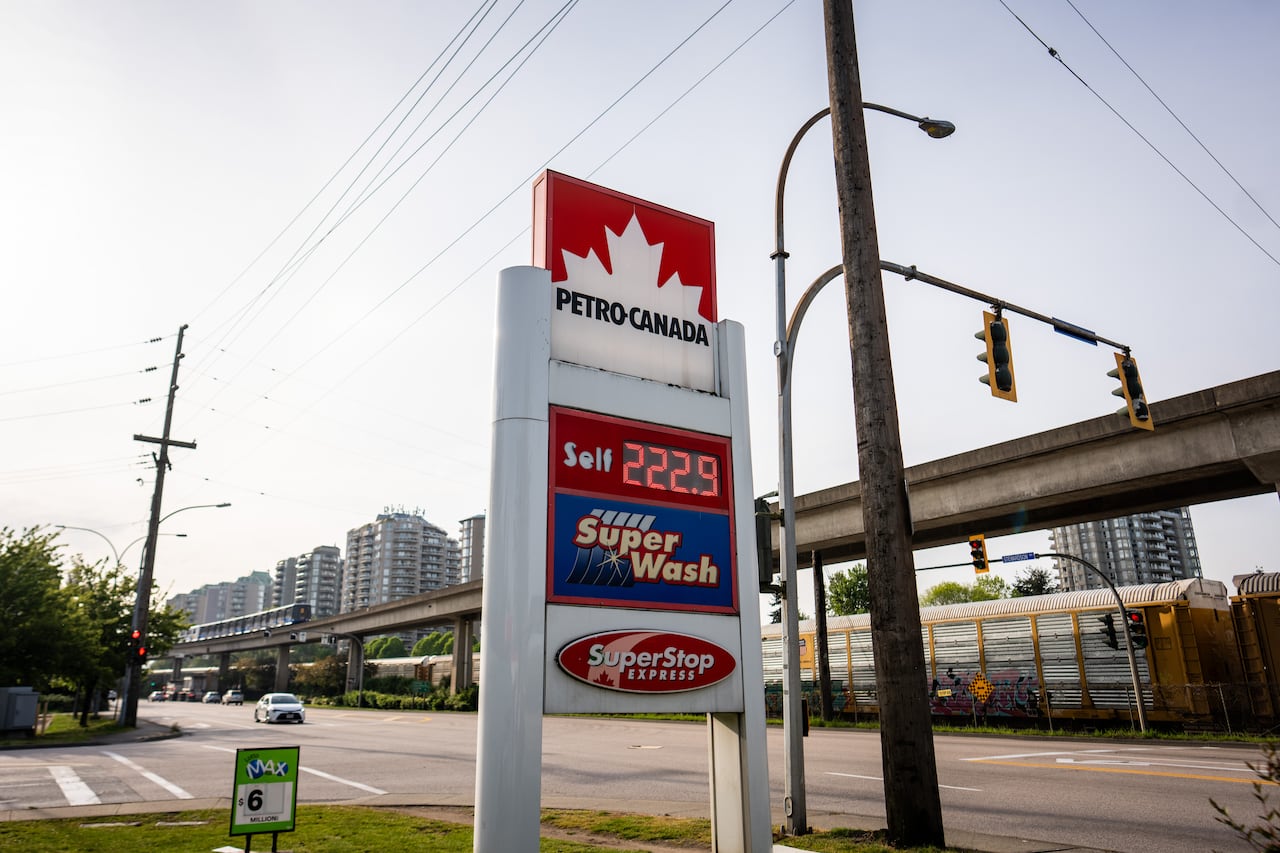
Gas prices are shown at 222.9¢ per litre at a gas station in New Westminster, B.C., on May 1. The oil crisis triggered by the conflict in Iran has significantly raised gas prices in recent months, with some instances exceeding $2 per litre. (Ben Nelms/CBC)
“Before the midterms, the U.S. military was actively [supporting] the safe passage of ships through the strait, which has led to an oversupply,” Salazar remarked.
Additionally, the International Energy Agency recently announced last week that the global oil market could achieve a surplus in the fourth quarter, as more oil is able to exit the Middle East.
At the same time, U.S. President Donald Trump has adopted a less aggressive stance on the conflict. Expectations that Democrats could leverage their new authority following the midterms to prevent further military action against Iran have also contributed to the decline in oil prices, according to Salazar.
Seasonal changes are providing the industry with additional “breathing room,” De Haan points out.
The transition to the less expensive “winter blend” gasoline is underway, and maintenance activities at refineries related to this shift are concluding. Maintenance at the Irving Oil facility in New Brunswick was expected to wrap up yesterday, while De Haan adds that increased production at prairie refineries is contributing to the significant price drops at the pump in Manitoba and Saskatchewan.
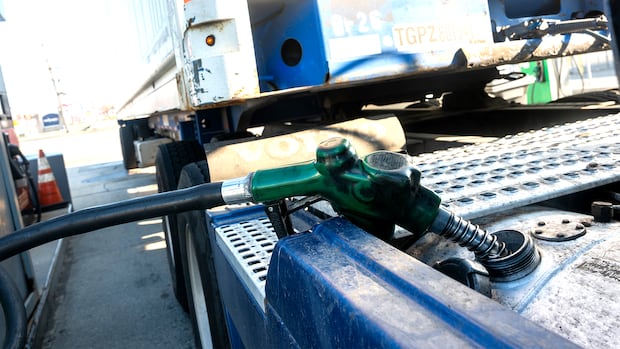
Crude oil exports through the Strait of Hormuz are gradually recovering, so why are diesel prices soaring? The National’s Eli Glasner investigates the factors behind the rise and discusses why diesel prices likely won’t see a decline anytime soon.
Moreover, Canadians typically drive less during the winter months, which helps reduce demand.
Despite a decrease in diesel prices — which have been a burden on sectors such as trucking, farming, and fishing — relief on this front may be temporary, warns Dan McTeague, president of the Canadians for Affordable Energy advocacy group.
Diesel shares similarities with jet fuel and home heating oil — the latter of which will see increased demand as temperatures drop in winter, McTeague noted.
“As for diesel, this is likely the best it will get by the end of this week,” he told CBC’s Hanomansing Live earlier this week.
Dan McTeague believes the decrease in gas prices results from a phase of geopolitical stability, as no significant attacks have occurred against major energy infrastructures in Iran or Ukraine. He anticipates that the decline will persist for a while, although he does not foresee a drop in food prices until energy and input costs decrease overall.
De Haan expects the trend of lowering gasoline prices to continue into early 2027, but he cautions that some of this “artificial drop” will vanish once the suspended fuel excise tax is reinstated. The tax is set to return at a 50 percent rate at the end of January 2027, before reverting to its full amount at the end of March.
Furthermore, both De Haan and Salazar warn that costs could spike again if tensions with Iran escalate. Given that attacks on vessels in the strait have increased recently, Salazar foresees that the relief at the pump may not endure for long.
“This truly sounds like a call to arms. For us, it appears there’s no sustainable solution to preventing the Iranians from attacking ships,” Salazar concluded.
“So take advantage of the temporary dip in prices, but I suspect that we will see higher prices again soon.”