
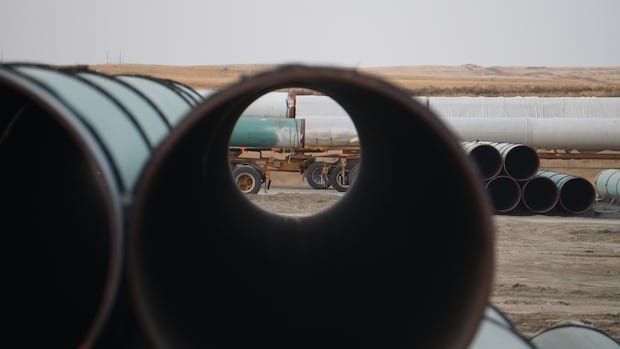

U.S. President Donald Trump has hinted at the possibility of reviving the Keystone XL oil pipeline project in collaboration with Canada under a new trade agreement. This move, announced on social media just before scheduled tariffs on Canadian imports, has sparked discussions among experts. While some view Trump’s statement as a strategic political move, others emphasize the complexities surrounding the project’s resurrection.
Former TransCanada Corporation executive Dennis McConaghy believes Trump’s mention of the Keystone XL Pipeline in the trade deal discussions could impact Prime Minister Mark Carney’s decision-making process. Since imposing tariffs on Canadian goods in 2025, Trump has repeatedly expressed a lack of necessity for Canadian imports, except for certain commodities like oil and minerals.
However, experts like Carlo Dade from the University of Calgary caution against premature optimism regarding the revival of the Keystone XL project due to existing political and environmental hurdles. The project’s feasibility remains uncertain, especially with potential changes in U.S. leadership affecting long-term investments.
Valérie Beaudoin, part of the federal Advisory Committee on Canada-U.S. Economic Relations, highlights the challenges Trump may face in executing the Keystone XL revival, considering the future political landscape. Trump’s recent remarks on the project are seen as a direct response to his predecessors’ decisions, aiming to assert his administration’s policies.
In discussions about the Keystone XL pipeline, South Bow Corp.’s role in Canada’s oil exports to the U.S. market is significant. Despite recent developments like the Trans Mountain pipeline expansion diversifying export destinations, the Keystone Pipeline System remains crucial for delivering crude oil to American refineries.
The potential revival of the Keystone XL project has generated interest from the Canadian government, particularly under Carney’s administration. The project’s history, including previous cancellations and subsequent approvals by Trump, underscores the complex dynamics of cross-border energy infrastructure.
Looking ahead, South Bow’s involvement in projects like the Prairie Connector, utilizing parts of the Keystone XL pipeline, signals a potential increase in Canadian oil exports to the U.S. market. While the project’s economic benefits are recognized, final decisions on its construction are pending, awaiting market developments and regulatory considerations.