
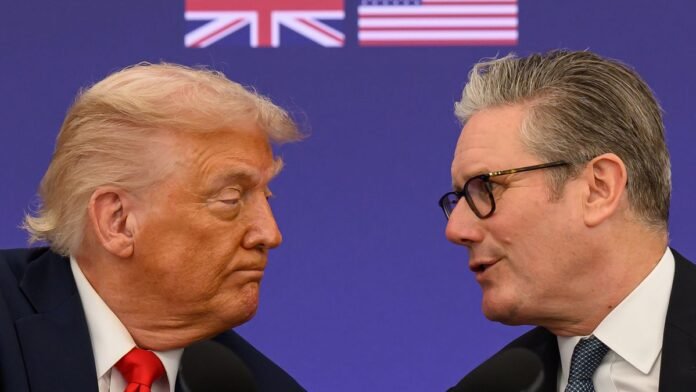

Donald Trump expressed deep disappointment in Keir Starmer, signaling a strain in the ‘special relationship’ between the two leaders. However, the recent developments might not be as concerning as they initially appear.
This week, the leaders of the United States and the United Kingdom reached a pivotal moment in their relationship that had been building up for some time. Keir Starmer took a stand akin to Hugh Grant’s character in Love Actually, refusing to condone Donald Trump’s actions.
Unlike previous instances involving sexual harassment, this disagreement stemmed from Trump’s decision to initiate a questionable military campaign in a Middle Eastern nation. Starmer, known for upholding international laws, firmly rejected the idea of allowing indiscriminate bombing operations from UK territories.
Starmer emphasized that the UK had learned from past mistakes, particularly referencing the Iraq war, and was not willing to participate in similar endeavors that could lead to regime change through aerial attacks.
While the UK declined to partake in bombing missions, they agreed to support defensive measures against Iran’s missile systems. Notably, B2 Bombers were preparing for action at RAF Fairford to counter potential threats.
Despite Trump ultimately achieving most of his objectives, he was visibly irked by the delay in decision-making. Starmer’s calm demeanor contrasted with Trump’s impatience, prompting Trump to make disparaging remarks comparing Starmer to Winston Churchill.
In response, Starmer reassured the public during a press conference that the relationship between the two nations remained intact. He likened the situation to a temporary separation between parents but underscored ongoing collaboration and mutual respect.
Critics on the right criticized Starmer for hesitating in his response. However, Starmer’s cautious approach aimed at distancing the UK from Trump’s controversial actions could prove beneficial in the long run.
As tensions ease, the hope remains that the US will return to a more conventional stance in international affairs once Trump’s presidency concludes. Starmer’s stance against hasty military interventions aligns with a broader historical perspective that may favor him in the future.