
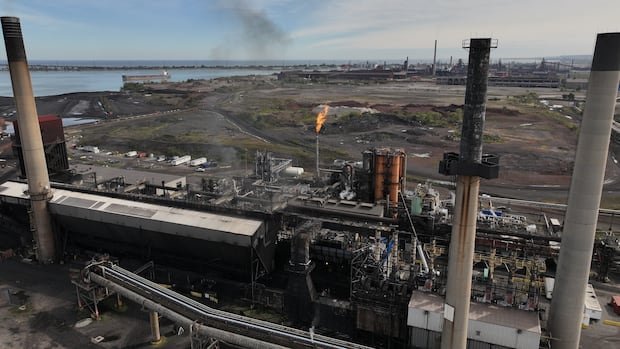

Stelco Holdings Inc. announced its decision to halt operations at part of its Hamilton plant to safeguard the company’s future amidst challenges posed by U.S. tariffs affecting its sales. The move is expected to impact around 500 employees. In a memo seen by CBC News, the company disclosed its plans to indefinitely idle the cold-rolled and coated operations at the Hamilton Works plant, with the shutdown process commencing on October 9.
According to Ron Wells, president of United Steelworkers Local 1005, approximately 350 steelworkers are anticipated to face layoffs. He expressed concerns about the uncertainty surrounding the duration of the layoffs and the impact on employees, especially with the holiday season approaching.
Stelco clarified that the idling of operations will not disrupt its supply of hot-rolled steel products. Frederic Fafard, the company’s vice-president of sales, emphasized in the memo that the decision was regrettable but necessary to address the challenging market conditions for cold-rolled and coated products due to ongoing trade disruptions affecting the Canadian steel industry.
The acquisition of Hamilton-based Stelco by Ohio’s Cleveland-Cliffs in a $3.4 billion Cdn cash-and-stock transaction in November 2024 has been highlighted. Following the deal, former Stelco CEO Alan Kestenbaum emphasized the importance of upholding national interests and supporting the workforce.
In response to the layoffs, Industry Minister Mélanie Joly expressed disappointment, mentioning that the government had offered support to Stelco to mitigate the impact of U.S. tariffs but was rebuffed. The minister pledged to utilize all available resources to defend Canadian industry, safeguard jobs, and secure the supply chain.
Meanwhile, U.S. President Trump lauded a new $15 billion US investment initiative by Minnesota’s Mesabi Metallics, showcasing it as proof of the effectiveness of American steel tariffs. The announcement of a new plant in Iowa by Mesabi Metallics has raised concerns among Canadian steelworkers, prompting discussions on protective measures for workers in the face of trade challenges.