
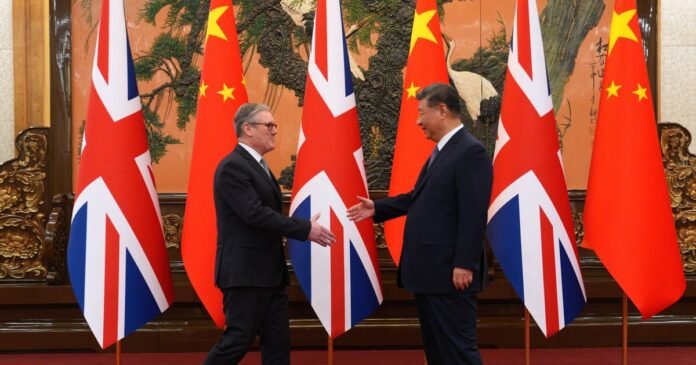

Keir Starmer showcased his diplomatic agility during a meeting with Chinese President Xi Jinping. Despite being a devoted Arsenal fan, Starmer engaged in a friendly conversation about Arsenal’s recent loss to Manchester United, presenting President Xi with a signed match ball from the game. This gesture subtly bridged their rapport.
President Xi, a known Manchester United supporter, demonstrated interest in various Premier League clubs, including Manchester City, Arsenal, and Crystal Palace. He also complimented Starmer on his football skills, recognizing the shared passion for the sport.
The casual exchange during their discussions in Beijing may seem insignificant, but it holds significance in the context of the strained UK-China relationship. While previous leaders faced challenges due to issues like Chinese espionage and human rights violations, Starmer acknowledged the necessity of maintaining ties with China for economic benefits.
Given China’s status as the world’s second-largest economy, forging closer relations could offer trade advantages to the UK amid global economic uncertainties. Starmer’s strategic approach, in contrast to past foreign policies, aims to leverage China’s economic potential to address domestic economic concerns and alleviate living costs.
Amidst geopolitical shifts caused by factors like Donald Trump’s unconventional foreign policies, many countries, including the UK, are recalibrating their relationships with China. Starmer’s recent meeting with President Xi marked a departure from their initial formal encounter in 2024, evolving into a more extensive dialogue and culminating in agreements for enhanced collaboration.
Despite the ceremonial grandeur surrounding the meeting and the agreements reached, underlying challenges persist. Issues such as Chinese espionage allegations and concerns over human rights violations continue to strain the bilateral relationship. Starmer faces pressure to address sensitive topics like the imprisonment of pro-democracy activist Jimmy Lai and the persecution of Uyghur Muslims, while navigating Beijing’s sanctions on British officials critical of its policies.
In navigating these complexities, Starmer recognizes the risks involved but deems it essential to engage with China constructively. The strategic balancing act he employs reflects a pragmatic approach to safeguarding UK interests while addressing contentious issues in the UK-China relationship.