
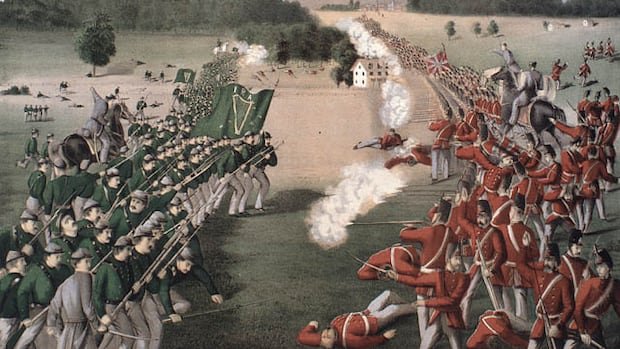

An unfamiliar clash occurred on Canadian land just a year prior to Confederation, a significant event often overlooked in Canadian history. The Battle of Ridgeway, also known as Limestone Ridge, in 1866 marked the first instance of Canadian troops, under Canadian leadership, engaging in combat. This battle also served as the inspiration for Decoration Day, a precursor to Remembrance Day observed in certain regions annually. Despite these historical connections, the nine individuals who perished in the conflict are notably absent from the Books of Remembrance, a compilation on Parliament Hill commemorating soldiers who gave their lives in service to Canada.
A fresh petition slated for submission in the House of Commons aims to rectify this omission by advocating for the inclusion of the fallen nine and the numerous casualties following the confrontation. Conservative MP Fred Davies, spearheading the petition, emphasizes the importance of acknowledging those who made the ultimate sacrifice in defense of Canada.
The Battle of Ridgeway unfolds as a narrative of Canadian volunteers, largely inexperienced, facing off against battle-hardened Fenian raiders, veterans of the American Civil War. The Fenian Brotherhood, an Irish American group seeking Irish independence from British rule, orchestrated the incursion into British North America. In response, around 800 Canadian volunteers from various regiments confronted the invaders at Limestone Ridge near Ridgeway and Fort Erie.
Noted historian and author Peter Vronsky underscores the rapid mobilization of hundreds of Canadians from the Golden Horseshoe region, albeit ill-equipped for what he describes as Canada’s inaugural modern battle. Despite facing challenges such as lack of provisions and ammunition, the Canadian forces engaged the Fenians in combat. The clash culminated in a disorderly retreat by the Canadians following a Fenian assault, prompting the raiders to abandon their invasion and retreat to the U.S. side of the Niagara River.
Davies acknowledges the tactical defeat at Ridgeway but underscores the valor and dedication of those who fought to repel the invaders, emphasizing the need for recognition of their sacrifices. A memorial erected in 2016 commemorates the nine fallen soldiers, yet efforts to have their names enshrined in the Books of Remembrance have been unsuccessful.
While the Battle of Ridgeway predates the establishment of Canada as a nation, advocates argue for the historical significance of honoring these fallen soldiers. They contend that the battle’s impact resonated during the formation of Confederation, influencing key individuals to align with the idea. Additionally, the regiments that participated in the 1866 conflict, such as the Queen’s Own Rifles and the Royal Hamilton Light Infantry, continue to exist today, marking a testament to the enduring legacy of that pivotal moment.
The Battle of Ridgeway holds a special place in Canadian history, symbolizing a shift towards fighting for local communities and national identity. Alexander Muir, the composer of “The Maple Leaf Forever,” drew inspiration from his experiences at Ridgeway, encapsulating the sentiment of Canadians fighting for their homeland. The battle, though not a resounding victory, played a crucial role in shaping Canada’s military heritage and collective spirit.