
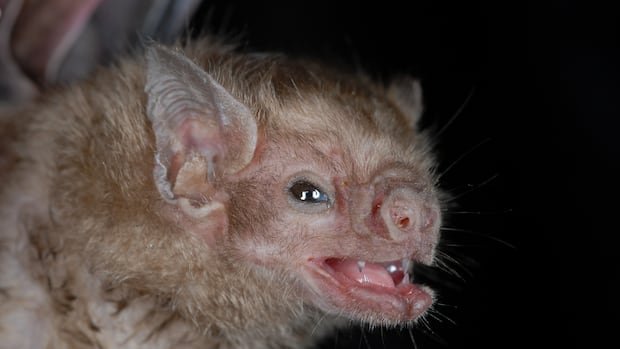

Scientists have resolved the debate surrounding the origin of bats and shed light on the characteristics of early bats through an extensive study involving the genomes of all 21 modern bat families and comparisons with numerous fossil bats. According to a new study published in the journal Nature, the earliest bats likely emerged in Europe approximately 65 million years ago.
Previously, the geographical origin of bats had been a topic of contention among scientists, with discussions including the possibility of Asia, Africa, or North America. Sonja Vernes, the senior author of the paper and director of the Bat1K consortium, noted that the scarcity of fossil evidence hindered definitive conclusions. Vernes, a professor at the University of St. Andrews in Scotland, emphasized the global dispersal of bats over millions of years due to their flying abilities.
The research team delved into the characteristics of early bats by analyzing genomes from 103 bat species, examining their traits and genes, and utilizing a sophisticated computational approach. They discovered that ancient bats possessed 26 chromosomes and originated around 65 million years ago, following the extinction of dinosaurs and the diversification of many mammal species.
Furthermore, the study revealed that echolocation developed early in bat evolution. The analysis pinpointed the fossil bat Vielasia, which lived 50 million years ago and exhibited bone structures indicative of echolocation, as a key component in the oldest branch of the bat family tree.
Presently, the world hosts 1,500 bat species, constituting approximately a fifth of all mammal species. The comprehensive family tree constructed by the researchers elucidates the interrelationships among the 21 bat families.
The public availability of the research data has sparked excitement among scientists like Vernes, who anticipate leveraging bat genomes to enhance human health outcomes. The exceptional longevity and resistance to viral diseases observed in bats have long intrigued researchers, with hopes that genomic studies may unlock the secrets behind these unique traits.
Bats, often underappreciated, play vital ecological roles such as pollination, seed dispersal, and pest control. By making a wealth of bat genomes accessible for research, experts like Burton Lim, who provided samples for the study, aim to facilitate further investigations into the genetic mechanisms underpinning distinctive bat attributes like echolocation.
The profound impact of the study extends to conservation efforts, as highlighted by ecologist Christina Davy, who lauds the study for uncovering the intricate history of bats on Earth. She emphasizes the potential of genetic insights to guide conservation strategies by identifying genetically vulnerable bat families for targeted preservation efforts.
The groundbreaking research, involving a global collaboration of 600 scientists, has set the stage for a deeper exploration of bat evolution and behavior. With the vast database of bat genomes now accessible to the scientific community, researchers anticipate unraveling the mysteries surrounding bat evolution and contributing to diverse fields of study.