
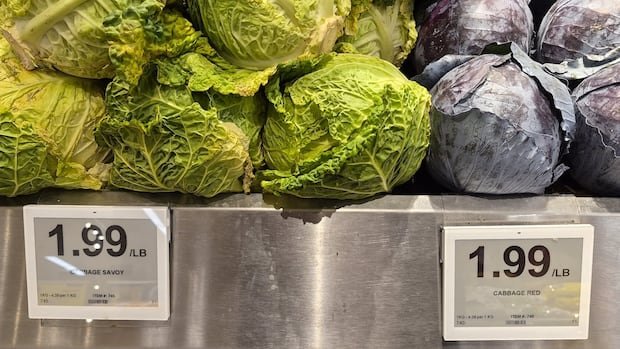

Loblaw has decided to reinstate country-of-origin labeling on produce signage in response to significant customer dissatisfaction. The controversy arose when shoppers noticed missing origin information on produce displays in stores. Karla Hennig, a dedicated supporter of Canadian products from Penticton, B.C., expressed disappointment over the absence of labeling at her local Superstore, emphasizing the importance of transparency in food origins.
The change in produce signage was noticed across Loblaw stores nationwide, except in Ontario and Quebec, where provincial regulations mandate origin details. The removal of country-of-origin labeling prompted backlash from customers in various provinces, especially amidst escalating trade tensions between Canada and the U.S., which reignited interest in buying Canadian goods.
In light of the public outcry, Edmonton resident Karl Mueller took action by voicing his concerns on social media and contacting the supermarket chain directly. He highlighted the significance of supporting local businesses during uncertain economic times, echoing the sentiments of many other consumers who advocated for clear labeling practices.
Agricultural economist Ellen Goddard predicted Loblaw’s reversal of its labeling policy, citing heightened emotions surrounding trade uncertainty. Following a news inquiry, Loblaw announced its commitment to assisting shoppers in purchasing Canadian products by reintroducing country-of-origin information on produce signage and implementing a symbol for U.S. tariff-affected items.
The response from shoppers to Loblaw’s decision was cautiously optimistic, with many acknowledging the influence of consumer demand on corporate policies. However, concerns were raised regarding Loblaw’s initial justification for removing the labeling, especially considering the availability of sourcing information in certain provinces and the importance of transparency to build consumer trust.
The decision to remove country-of-origin labeling initially stemmed from regulatory issues faced by Loblaw and other grocers, leading to fines and warnings for misleading promotions. The subsequent media coverage and public scrutiny prompted a reassessment of labeling practices to ensure compliance and maintain consumer trust.
Despite the legal position that grocers are not obligated to provide country-of-origin information on store signage for bulk produce, there have been calls for new federal regulations mandating clearer labeling practices to inform consumers about product origins. The ongoing debate underscores the significance of transparency in the food industry and the role of regulations in ensuring consumer awareness and choice.