
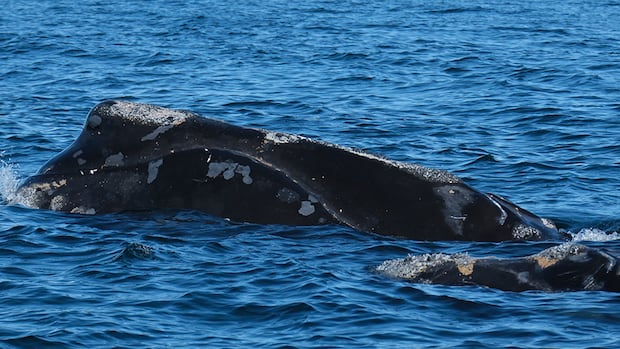

The year 2026 saw a historic surge in North Atlantic right whale births, reaching the highest number since 2009, with 24 calves recorded, including a newborn observed with its mother Silt off Quebec’s coast in September. However, these young whales continue to face serious risks from ongoing threats.
Current estimates indicate that the population stands at merely 382, prompting the North Atlantic Right Whale Consortium to advocate for immediate measures to protect the survival of the species.
“The latest estimate of the right whale population highlights the urgent need for enhanced protections,” stated Heather Pettis, who heads the right whale research initiative at the Anderson Cabot Center and chairs the North Atlantic Right Whale Consortium.
“The population is not yet clearly on the road to recovery and remains extremely susceptible to entanglements and vessel collisions—dangers that we know how to mitigate.”

On January 27, a four-year-old male named “Division” was discovered off the North Carolina coast after suffering from severe entanglement related to Canadian snow crab fishing gear. In February, researchers found the body of a three-year-old female along a barrier island on Virginia’s eastern shore. (Submitted by Clearwater Marine Aquarium Research Institute)
In 2026, two whale fatalities have been recorded—one due to entanglement and another with an unknown cause. In January, Division’s remains were located off North Carolina.
This four-year-old male was first seen in 2025 with fishing line tangled around his head and mouth, causing wounds to his blowhole and jaw.
Shortly after, the New England Aquarium discovered a deceased three-year-old female right whale near Virginia. Additionally, there have been eight reported incidents of human-induced injuries to right whales this year, including seven entanglements and one vessel strike.
Phillip Hamilton, a researcher at the New England Aquarium in Boston, has been studying North Atlantic right whales since the 1980s, driven by his concern for these marine mammals, which have faced extinction for many years.
Hamilton expressed the difficulty of comprehending the suffering a whale endures when ensnared in fishing gear.
“Imagine being ensnared in rope that shifts with your movements … literally cutting into your flesh,” he remarked. “It’s excruciating. They lack arms, so the pain is … almost unfathomable.”
Hamilton can identify many of the remaining North Atlantic right whales by name, but the notable Admiral holds a unique significance for him.
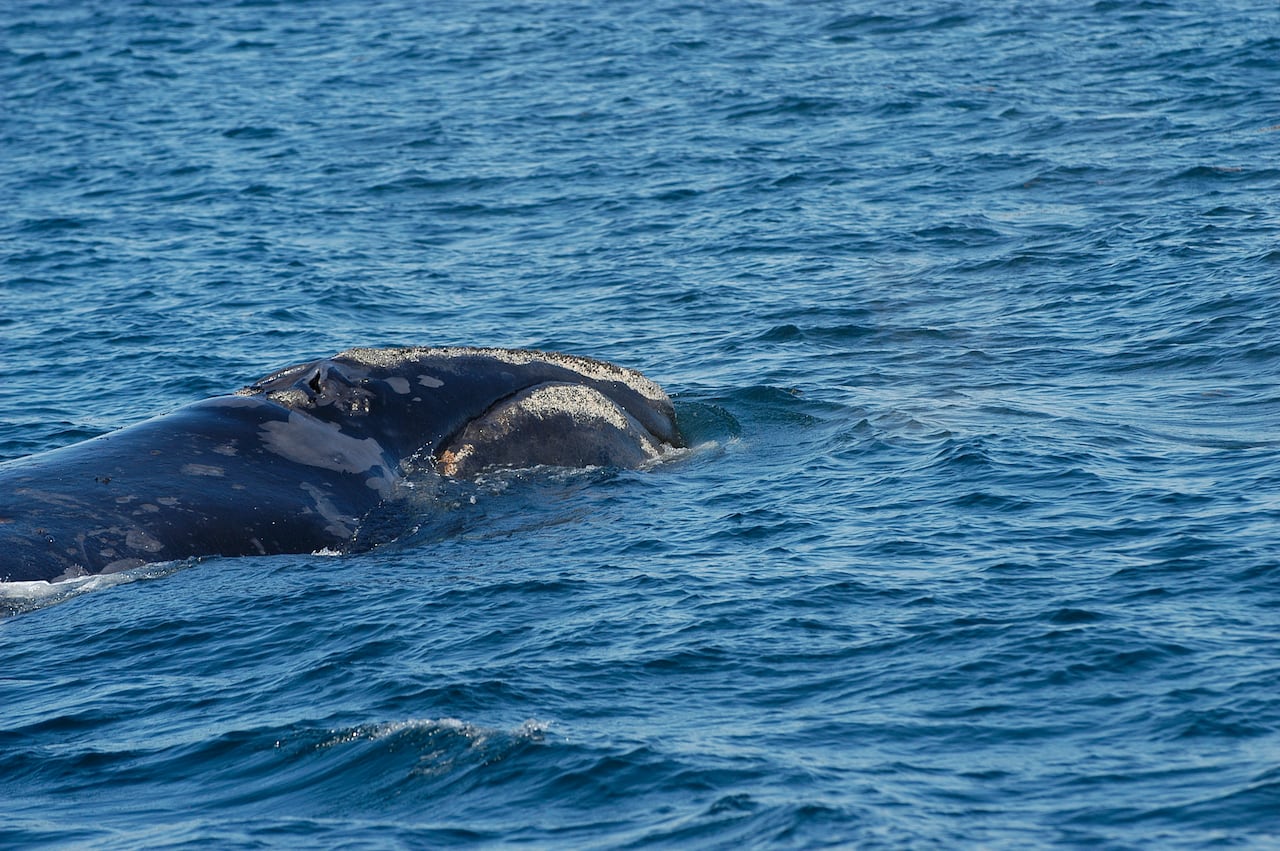
Admiral is particularly beloved among biologists due to her playful surfacing behavior. She experienced a severe entanglement in 2007 and has not been sighted since. (Submitted by New England Aquarium)
“She was first observed as an adult in 1980 and felt like the matriarch of the population. Her size was such that I could recognize her from a mile away as she would emerge like a submarine and bounce on the surface,” Hamilton recounted.
“She was known to perform headstands in certain areas, so you would often see her with her tail raised high in the air.”
However, this iconic whale has not been seen for over a decade following her serious entanglement with fishing lines.
“The right whales are doing everything they can. We must ensure that we are doing our part to safeguard them since they cannot do more than what they are already accomplishing,” Hamilton stated.
Whale-safe gear
In February, the Canadian government introduced a Whale-safe Gear Strategy. Testing of ropeless fishing equipment has been occurring in eastern Canada, including western Newfoundland.
Andrea Morden, involved with DFO whale management, noted that collaboration with fishers has led to advancements in reducing entanglements and demonstrating potential models for a whale-safe fishery.

“What we have discovered is that a universal gear solution will not suffice across the variety of eastern Canadian fisheries,” she remarked.
Morden indicated that certain fisheries, such as crab and lobster, pose higher risks due to their reliance on rope. She mentioned that DFO is working alongside the fishing industry to trial gear modifications that foster both economic success and the recovery of the North Atlantic right whale population.
These innovations include not only ropeless gear but also adaptations designed to reduce the likelihood of whale entanglement, such as lower breaking-strength ropes and remote-controlled fishing gear.
Whale aware
Radiating enthusiasm, marine mammal scientist Dr. Jack Lawson from Newfoundland expressed how fortunate residents of Newfoundland and Labrador are to experience the ocean, including sightings of North Atlantic right whales earlier this summer. Yet, Lawson emphasized that this closeness to nature brings with it a responsibility.
“We enjoy the presence of these animals in our waters yearly, and with that comes the responsibility to exercise caution around them,” remarked Lawson, who researches the North Atlantic right whale.

Dr. Jack Lawson expresses excitement about observing North Atlantic right whales in Newfoundland and Labrador, but he is concerned for their safety as they approach the coastlines. (Leila Beaudoin/CBC)
He emphasized the importance of awareness—not just for small boats but for large vessels as well—regarding the potential presence of these mammals and the fatal consequences a collision could entail.
-
A surprise baby right whale spotted near Quebec is bringing ‘a lot of hope’ for the species
-
North Atlantic right whales at greater risk of collision with boats at night: study
Experts indicate that forecasting where collisions with North Atlantic right whales may happen is challenging. The movement of the species is significantly affected by seasonal migration and calving requirements, which is why researchers advocate for enhanced cooperation between Canada and the United States.
Pettis emphasized that the recovery of the species hinges on ongoing protective measures in both nations.
Download our free CBC News app to sign up for push alerts for CBC Newfoundland and Labrador. Sign up for our daily headlines newsletter here. Click here to visit our landing page.