

During this winter, many individuals might unknowingly be overspending due to a common issue with household appliances. Rising monthly bills have prompted people to seek ways to save money, and certain practices may be exacerbating the situation.
According to experts at Which?, a telltale sign of potential overspending on heating expenses is visible outside a home with a combi, system, or gas boiler. The presence of excess combustion gases billowing out of the flue indicates a need to adjust a simple setting on the appliance to prevent unnecessary expenditure.
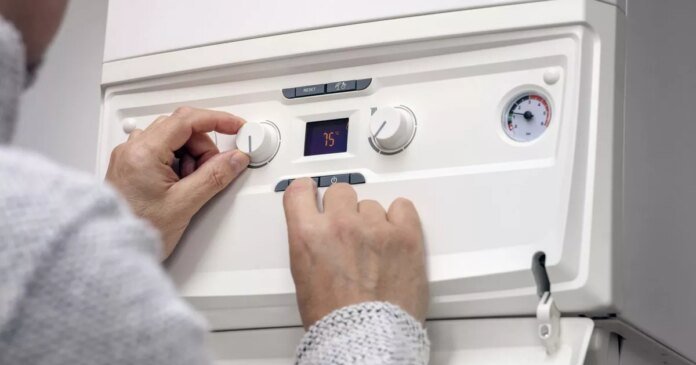
The flue, which serves to safely vent combustion byproducts, is typically located outside a property, protruding from an external wall near the boiler. Adjusting the main boiler’s temperature can lead to significant gas savings, particularly on modern combi boilers, where many people tend to set the temperature too high, resulting in excessive energy consumption.
Research conducted by the Salford Energy House revealed that reducing the heating flow temperature from 80°C to 60°C or 55°C can yield gas usage savings of up to 9% and 12%, respectively. Lower flow temperatures enhance the efficiency of combi boilers, requiring less gas to achieve the desired room temperature, thereby reducing costs and environmental impact.
Which? emphasized the importance of setting the flow temperature at an optimal level, typically around 60°C, to maximize efficiency without compromising comfort. Fine-tuning the temperature throughout the year is recommended, with caution advised for those with hot water tanks seeking expert guidance.
In addition to optimizing boiler settings, Which? highlighted the impact of radiator settings on energy bills. Maintaining radiators at a moderate level, rather than at maximum settings, can ensure comfort while conserving energy and reducing expenses during cold winter months.
For more money-saving tips and consumer news, visit the new Everything Money website.