
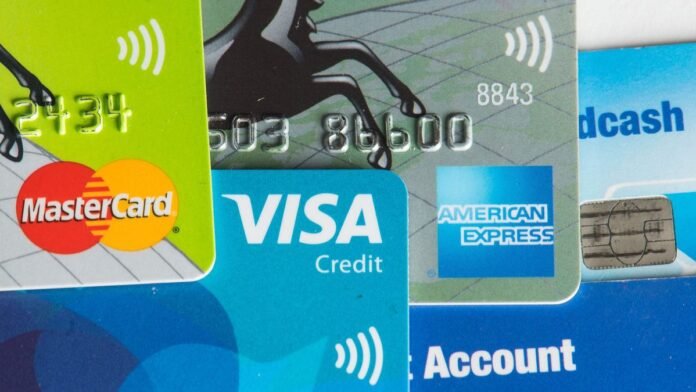

Millions of credit card users are facing the highest interest rates in over two decades, despite a general decline in interest rates. Recent data from financial experts at Moneyfacts reveals that the average Annual Percentage Rate (APR) on credit cards has surged to 35.8%, the highest level since Moneyfacts began tracking in June 2006.
Rachel Springall, a finance specialist at Moneyfactscompare.co.uk, highlighted the shift in credit card usage over the past two decades. While credit cards offer convenience and security, borrowing costs have escalated. Borrowers carrying balances are advised to make consistent payments to expedite debt repayment.
This rise in credit card rates contrasts with the Bank of England’s base rate at 3.75% and a potential upcoming decrease. On average, credit card companies are charging nearly ten times the Bank’s main rate. Concurrently, major UK banks like Barclays, including Barclaycard, reported substantial profits, with credit card spending reaching £21.4 billion in November 2025, a 2.6% increase from the previous year.
Despite the high rates, data from UK Finance shows a slight decrease in the percentage of credit card balances incurring interest, indicating a utilization of interest-free offers. Springall mentioned the availability of lengthy interest-free balance transfer cards, with TSB leading with a 38-month term and a 3.49% transfer fee.
Financial experts like Philly Ponniah caution against accumulating high credit card balances at soaring rates, warning of potential impacts on mortgage applications. Ponniah emphasized the strain that high card debt places on borrowers and its implications for borrowing capacity and financial stability.
Ranald Mitchell, director at Charwin Mortgages, likened high credit card rates to a financial burden and advised against making minimum payments. He criticized the 35.8% APR as a burden on those facing financial constraints, emphasizing the importance of proactive debt management to avoid long-term financial damage.