
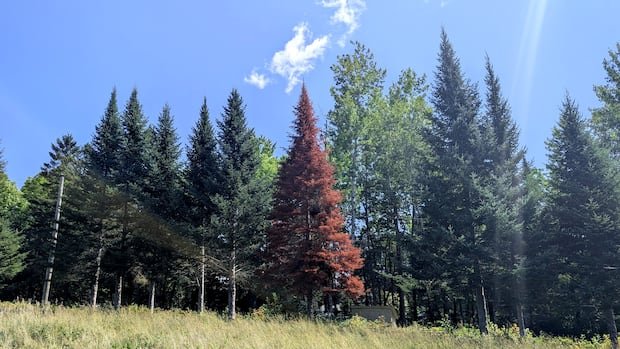

Balsam fir trees in New Brunswick are displaying a concerning trend of turning red and dying following last year’s drought, prompting worries about the fate of this key provincial tree. Professor Anthony Taylor, a forestry researcher at the University of New Brunswick, has observed this phenomenon firsthand among woodlot owners. The vibrant evergreen trees, often sought after for Christmas decorations, are gradually wilting and perishing due to the aftermath of the scorching and arid summer conditions.
According to Taylor, the current scenario aligns with previous instances after hot and dry summers. He underscores that the warmth and lack of moisture, as seen during the recent drought, significantly impede the balsam fir’s growth capacity. Having extensively studied climate change impacts on New Brunswick’s forests, Taylor notes similar die-offs of balsam firs were evident after exceptionally dry summers in 1986 and 2018.
The researcher explains that under drought stress, these trees prematurely halt the photosynthesis process, hindering their growth potential. This disruption leads to an energy deficiency crucial for basic metabolic functions and defense mechanisms, rendering the trees more susceptible to external stresses like insect infestations and diseases, ultimately escalating the risk of widespread tree mortality.
Additionally, the shallow root system of balsam firs complicates their ability to access water during dry periods. Peter McKeil, a woodlot owner in Burtt’s Corner, noticed the ominous signs of tree damage early this summer, with the lower branches turning red and progressing upwards. Despite processing some of the deceased trees for lumber, McKeil anticipates further losses, prompting him to adjust his harvesting practices to salvage remaining fir trees.
McKeil highlights the urgency of adapting to climate change, stressing that without significant action, the balsam fir species faces a bleak future, particularly in southern New Brunswick. He emphasizes the necessity for plants to adapt or face extinction, potentially migrating northward due to changing climatic conditions.
Taylor views the red trees as a stark indication of the detrimental effects of climate change on New Brunswick’s iconic tree species. He likens this visible transformation to a warning signal, urging society to accelerate efforts in reducing fossil fuel usage and curbing excessive deforestation. Taylor’s research aims to raise awareness and drive meaningful change to address the pressing challenges posed by climate change on forests and biodiversity.