

On Tuesday, a crowded British Parliament convened as Members of Parliament (MPs) listened to the government redefine its ties with Israel.
Prime Minister Andy Burnham, who has been in office for seven weeks, was present alongside his cabinet ministers. He paid close attention as the new Foreign Secretary, Ed Miliband, who is Jewish, declared a prohibition on trade with settlers from the occupied West Bank. Miliband mentioned that Canada and France would implement similar measures.
“Today, alongside Britain, France and Canada are announcing their own ban on imports from illegal settlements,” Miliband stated.
The parliamentary chamber erupted in applause. Miliband pointed out that these three nations are not isolated in their stance against Israel’s ongoing settlement expansion in the occupied West Bank.
“Countries such as the Netherlands, Ireland, Belgium, Spain, and Norway have either imposed bans or are in the process of doing so. Additionally, many others, including Denmark, Finland, Iceland, Poland, Portugal, and Sweden, are pledging support for further actions today,” he added.
Miliband also announced that the U.K. would target “particular companies and individuals involved in providing services related to construction, infrastructure, financing, or real estate for settlement expansion.”
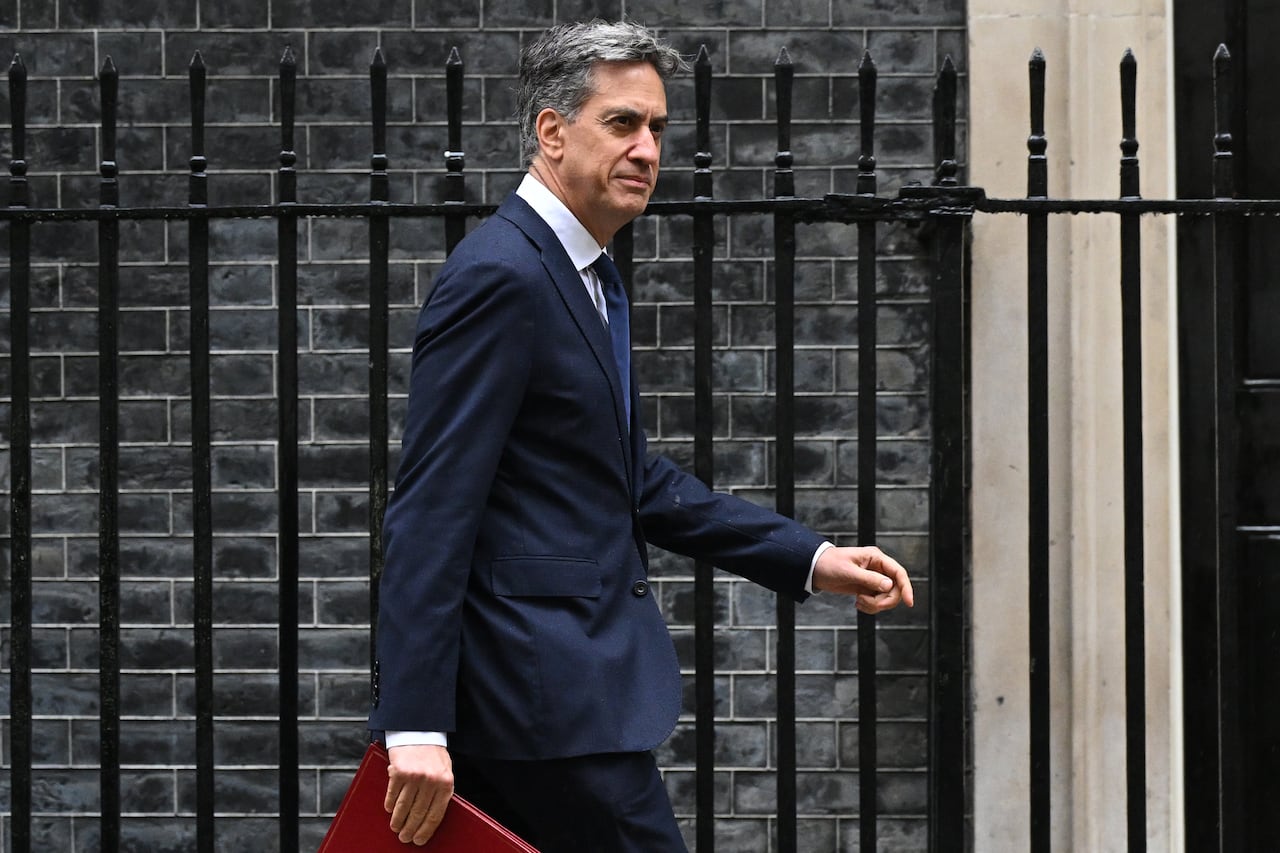
U.K. Foreign Secretary Ed Miliband arrives for a weekly government cabinet meeting at Downing Street on Tuesday in London, England. (Getty Images)
To another round of cheers, he declared: “You will face the full extent of U.K. sanctions.”
Miliband explained that the U.K.’s actions are prompted by Israel crossing a “long-term red line,” referencing Israel’s recent announcement regarding tenders for the construction of 1,200 settler homes in a region known as E1 in the occupied West Bank.
Most nations, along with the United Nations, consider these settlements illegal under Article 49 of the Fourth Geneva Convention concerning military occupations. However, Israel disputes this characterization, viewing the region as disputed territory rather than occupied.
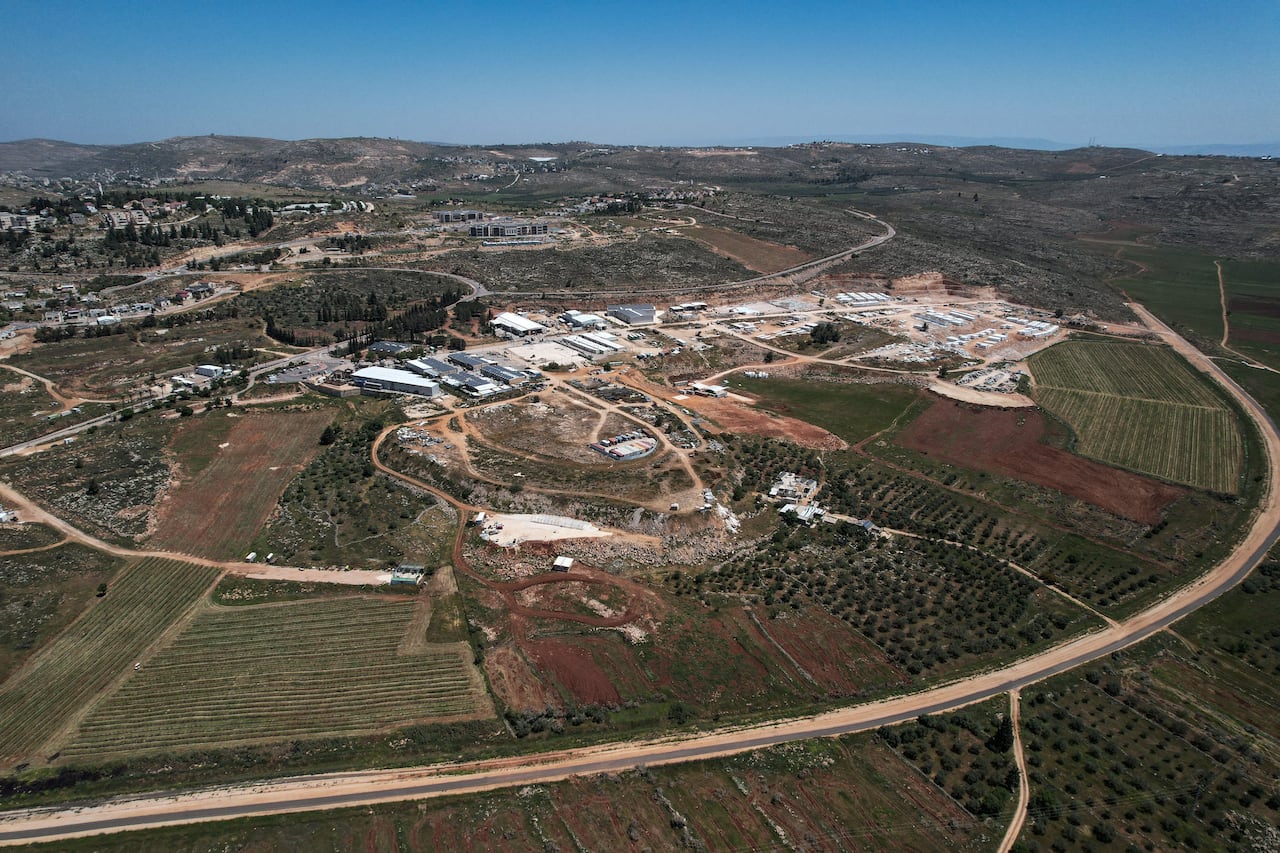
A drone view shows a factory belonging to Israeli company Libi Construction and Infrastructure in Shilo, an Israeli settlement in the occupied West Bank, on April 30. (Ammar Awad/Reuters)
September marks one year since Canada, the U.K., and France acknowledged the state of Palestine.
In a collective statement, Prime Minister Mark Carney, along with his British and French counterparts, asserted, “the time has come to take further action.”
The leaders reiterated their “steadfast commitment to Israel’s security,” adding, “we support a secure and safe Israel, living alongside a secure and safe Palestine.”
Their emphasis on maintaining a two-state solution, the statement noted, remains “essential for peace, stability, and security in the Middle East and beyond.”
In their explanation for imposing sanctions, Carney, Burnham, and French President Emmanuel Macron stated that the “systematic expansion of settlements in the West Bank, including Israel’s recent decision to advance the E1 settlement, along with the significant rise in settler violence, represents a direct and pressing threat to the vision for peace.”
-
Israeli settler blockades part of escalating violence against Palestinians in the occupied West Bank
-
the fifth estate
Canadian charities complicit in helping fund Israeli settlement movement in West Bank, critics say
On Tuesday, Canadian Foreign Affairs Minister Anita Anand released a joint statement with foreign ministers from the U.K., France, and nine other European nations.
“We are united in our resolve: the two-state solution must be safeguarded,” their statement emphasized.
In a social media post, Anand indicated that in the upcoming months, Canada will “implement restrictions on trade in goods from settlements in the West Bank that violate international law.”

We’re in the occupied West Bank on the trail of millions in tax deductible charitable donations sent to support Israeli settlements deemed illegal under international law. Canada calls the expansion of settlements a barrier to Palestinian statehood.
A significant increase in reported violence in the occupied West Bank was cited by Miliband as another factor influencing the U.K.’s decision to impose sanctions.
“The British government,” Miliband informed parliamentarians, “recognizes that there is ethnic cleansing occurring against Palestinians in certain West Bank areas, carried out by settler terrorists.”
Israel responds with countermeasures
Israel’s Foreign Minister Gideon Sa’ar accused his British counterpart of spreading “outrageous falsehoods” and announced the immediate closure of the U.K. consulate in East Jerusalem.
Sa’ar also mentioned that Israel would expel U.K. representatives from a joint military center that monitors the Gaza ceasefire and cease U.K. training of the Palestinian Authority’s security forces in the West Bank.
Furthermore, Israel intends to deny entry to 12 elected U.K. officials and other British citizens whom Sa’ar claimed were “involved in antisemitic and anti-Israel actions.”
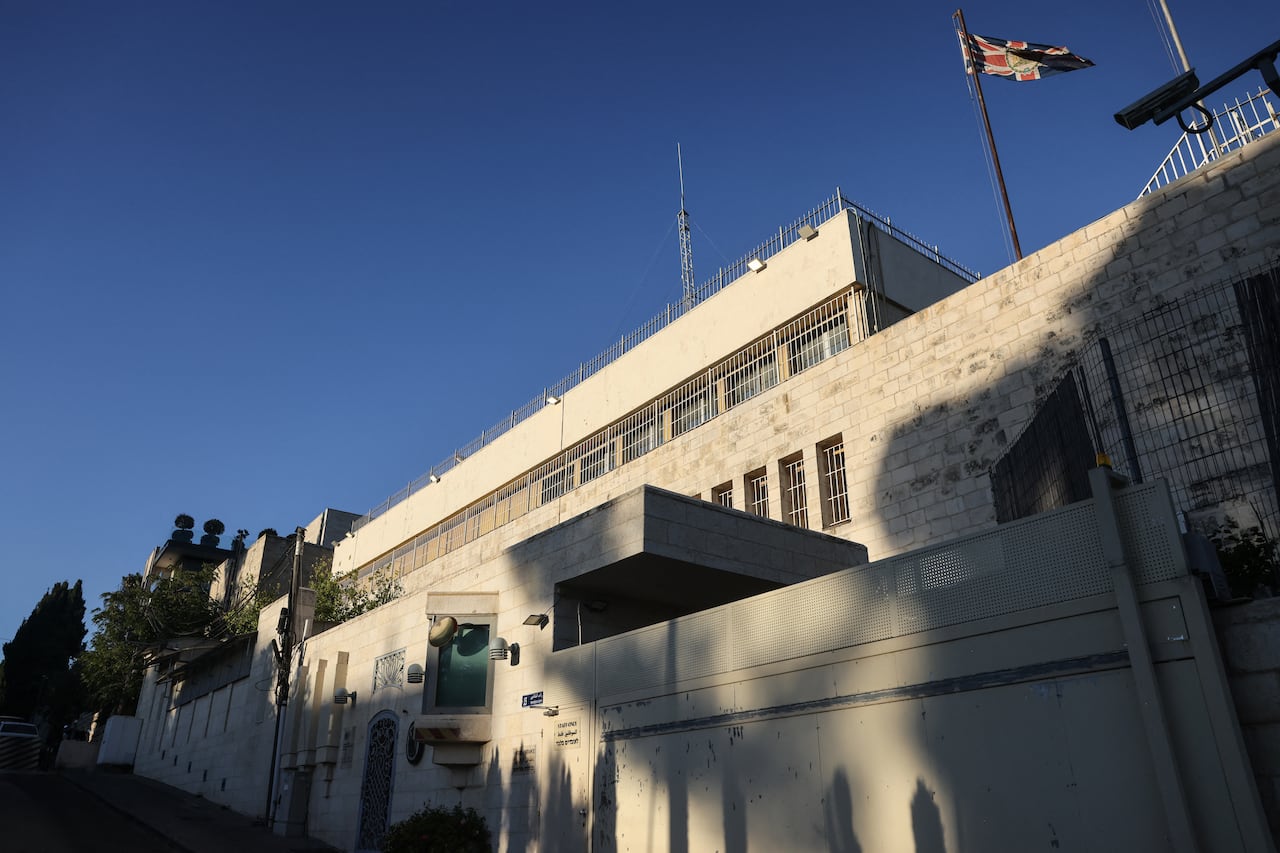
The British consulate in East Jerusalem is shown on Tuesday. Israel has ordered the closure of the consulate after London led Western sanctions over violence by Israeli settlers against Palestinians in the occupied West Bank. (Ahmad Gharabli/AFP/Getty Images)
Jewish leaders denounce the measures
Jewish leaders in both Canada and Britain voiced their opposition to the measures enacted by the U.K., Canada, France, and other European nations.
Noah Shack, CEO of the Centre for Israel and Jewish Affairs, which represents the Jewish community in discussions with government, media, and various sectors, stated that the Canadian government has “chosen to align with the United Kingdom’s stance, seemingly driven by domestic political motives to placate the most extreme factions of society.”
Ephraim Mirvis, the chief rabbi of the U.K., described it as “truly a dark day for British Jews.”
The Board of Deputies of British Jews expressed heightened concerns about “communal security” as the Jewish New Year festival of Rosh Hashanah approaches. Labour MP Peter Prinsley, vice-chair of the Labour Friends of Israel group, warned that there is “a real risk of increased incidents targeting the British Jewish community.”

The violent behaviour of Israeli settlers besieging Palestinian homes in the occupied West Bank has drawn a rare rebuke from U.S. Ambassador to Israel Mike Huckabee.
The official Palestinian news agency welcomed “the resolve of these nations,” asserting that the escalation of Israeli settlements constitutes a “blatant breach of international law.”
In Washington, D.C., U.S. Secretary of State Marco Rubio told reporters that the White House had no comment regarding the collective action but added, “we certainly won’t follow the U.K.’s approach.”
The signs of a shift in the U.K.’s relations with Israel had been apparent for months.
In the days leading up to Burnham’s assumption of the role of prime minister in July, he hinted at a potential reset. He expressed regret over the Labour Party’s initial reaction to Israel’s military actions in Gaza, acknowledging that the party “did not handle it correctly” and asserting that under his leadership, it must “improve.”