
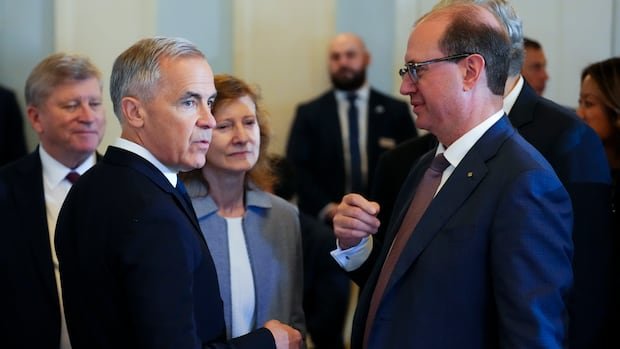

Canada’s ambassador to the United States emphasized the importance of reintroducing American alcohol to Canadian shelves as a key requirement for finalizing a trade deal and avoiding potential new tariffs. Mark Wiseman conveyed this message during a detailed briefing to approximately 100 members of the Canada-U.S. trade council, which comprises various business entities, industry associations, and labor unions.
In ongoing negotiations in Washington, Canada is striving to avert a scenario where billions of dollars in Canadian exports face hefty 50% tariffs imposed by the Trump administration. The deadline for reaching an agreement is looming by midnight Friday, prompting intense discussions between the Canadian negotiating team and U.S. officials.
Wiseman shared insights on a potential consensus to sidestep the proposed tariffs during the call, without disclosing the sources due to confidentiality. He mentioned that around 35 Canadian officials stationed at the Canadian Embassy in Washington are diligently working to finalize the language of a prospective deal within the next 24 to 48 hours.
The envisioned trade agreement involves a reduction in steel, aluminum, and auto tariffs, along with modifications to how dairy import licenses are allocated by the government. Concerns were raised by former Canadian chief trade negotiator Steve Verheul regarding the potential trade-offs and concessions in the deal, cautioning against short-term gains that could compromise long-term strategic advantages.
Verheul highlighted the risks of Canada relinquishing its leverage prematurely in negotiations, potentially leaving room for escalating demands from the U.S. He noted that a significant portion of the American industry supports maintaining free trade through mechanisms like the Canada-U.S.-Mexico Agreement (CUSMA), challenging Canada’s approach to making concessions under pressure.
Additionally, industry insiders expressed dissatisfaction with the lack of consultation and transparency from the Canadian government compared to the detailed briefings received by their U.S. counterparts. Former finance minister Chrystia Freeland also participated in the council’s discussion, raising concerns about the challenges of reversing tariff agreements once they are in place, even if there are changes in the U.S. administration.
As negotiations continue amid mounting pressure and uncertainties, stakeholders on both sides are closely monitoring the developments, with critical decisions on the line for the future of trade relations between Canada and the United States.