
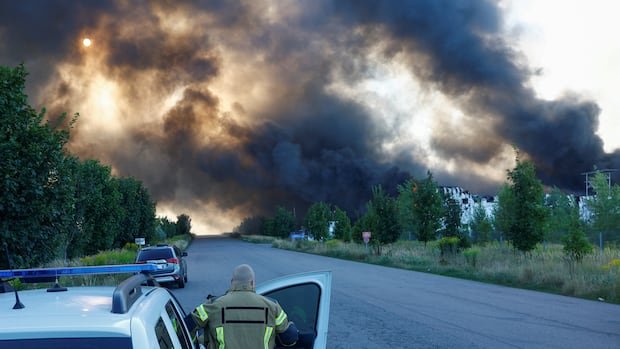

Russia launched a heavy aerial assault on the Ukrainian capital Kyiv and its surrounding areas, firing numerous missiles and drones, resulting in the deaths of at least 16 individuals, officials confirmed on Thursday.
The onslaught by Moscow’s forces included a significant increase in ballistic missile attacks on Kyiv, taking advantage of Ukraine’s limited supply of U.S.-made Patriot air defense interceptors, the only system capable of countering such missile threats. Ukrainian President Volodymyr Zelenskyy urgently requested additional Patriot interceptors from other countries, but global supplies are strained due to ongoing conflicts like the Iran war and Ukraine’s prolonged battle against Russia.
The attack also involved cruise missiles and high-speed jet-powered drones, placing additional pressure on Ukrainian air defenses, as explosions reverberated throughout the city. While Kyiv bore the brunt of the assault, strikes were reported in 28 locations across the country, causing injuries to around 40 people. Zelenskyy described the attack as “massive,” emphasizing Russia’s meticulous planning to inflict maximum damage on civilian infrastructure.
As the assault unfolded, the Polish Armed Forces Operational Command activated military aviation operations and heightened air defense measures, with NATO military aircraft monitoring the airspace. Romania reported an unauthorized drone crash near its border with Ukraine, underscoring Russia’s escalating provocations and disregard for neighboring countries’ sovereignty.
Meanwhile, challenges persist for Ukraine’s missile defense systems, with dwindling Patriot inventory levels and production limitations hindering immediate solutions. Despite commitments to bolster interceptor production, significant gaps remain, with political uncertainties further complicating the situation. Amid the ongoing conflict, both Russia and Ukraine have engaged in strategic strikes on each other’s critical infrastructure, intensifying the military stalemate along the extensive frontline.
The overnight strikes in Kyiv targeted residential neighborhoods, causing severe damage to buildings and claiming lives. Emergency teams worked tirelessly to rescue trapped individuals and provide assistance to those affected by the devastation. Amid the chaos, stories of resilience emerged, highlighting the human toll of the conflict and the urgent need for international support to mitigate the escalating crisis.
In response to the escalating violence, Ukraine has sought to shift the battleground by launching long-range drone strikes on Russian territories, aiming to disrupt vital infrastructure. The Russian Defense Ministry reported intercepting a significant number of Ukrainian drones across various regions, including Crimea and the Black and Azov seas, marking a significant escalation in aerial confrontations. Both sides continue to deploy drones and missiles in a bid to gain tactical advantages, underscoring the protracted and complex nature of the conflict.