
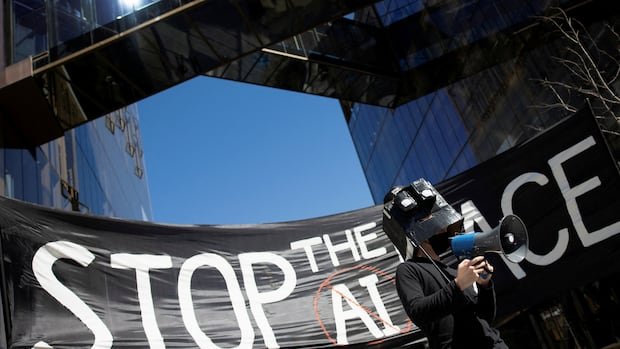

The debate on artificial intelligence safety concerns is rapidly evolving, involving notable figures like King Charles, U.S. President Donald Trump, Prime Minister Mark Carney, and leading AI executives. Recent warnings within the tech industry have sparked discussions on whether to slow down cutting-edge AI research.
While some AI advocates emphasize the positive aspects of AI, such as advancements in healthcare and sustainable energy, others raise alarm about the potential risks associated with powerful AI models. Concerns range from cyberattacks to the development of bioweapons and autonomous weapons systems using AI technology.
Various stakeholders have differing opinions on the need for an AI slowdown. Proponents of continued AI research, like Trump and Meta CEO Mark Zuckerberg, argue that pausing research could result in losing technological leadership to other nations, particularly China. They believe that slowing down AI progress may hinder scientific breakthroughs and medical advancements.
Calls for regulating AI are not new. High-profile figures like Elon Musk and Steve Wozniak endorsed a pause on certain AI systems’ training back in 2023. However, voices advocating for a slowdown, such as OpenAI and Anthropic CEOs, stress the importance of aligning AI development with ethical and safety considerations.
On the other hand, figures like Nvidia CEO Jensen Huang and U.S. President Donald Trump oppose an AI slowdown, citing concerns about losing competitive advantage and innovation pace. Cohere CEO Aidan Gomez criticizes the fearmongering around AI risks, emphasizing the need for sensible regulations without stifling innovation.
Prime Minister Mark Carney has proposed the idea of establishing a “technology stability” organization to coordinate global AI advances. While the debate on AI safety continues, ensuring the safety and ethical use of AI remains a top priority for governments and industry leaders.