
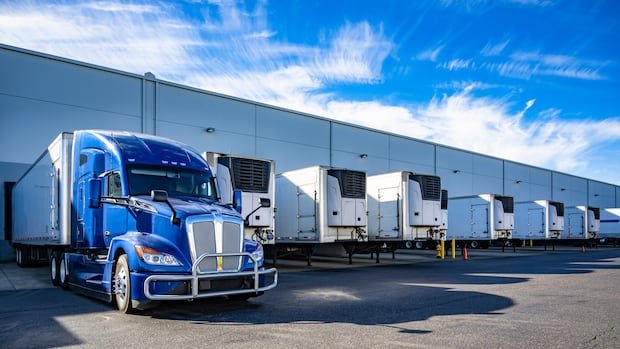

Canadian citizens preparing for significant counter-tariffs may witness price hikes not only on American aluminum, toilet paper, and furniture but also on the semi-trailers transporting these goods within and into the country. Ocean Trailer, the primary distributor of semi-trailers in Western Canada, is anticipating the arrival of a $45 million order comprising 600 trailers from U.S. suppliers. The company is expediting the process to bring in as many trailers as possible before a 25% Canadian counter-tariff on trailers and various other items goes into effect on Tuesday.
Mack Keay, the Chief Operating Officer of Ocean Trailer, mentioned that the 25% additional cost surpasses their profit margin on a trailer, leaving them with no option but to transfer the increased cost to customers. This decision follows the announcement by the federal government to implement dollar-for-dollar countermeasures on $27.6 billion worth of U.S. goods in response to the recent tariffs imposed by President Donald Trump’s administration.
Keay noted that Ocean Trailer might be able to cancel part of its order, expected to be gradually delivered until year-end, but the trailers already in production in the U.S. cannot be halted. Those that do not make it to Canada by September 8 will either be stored in the U.S. or sold to American retailers, with a potential loss for Ocean Trailer.
Concerns in the Industry
Other industry players share Ocean Trailer’s apprehensions. The head of the Manitoba Trucking Association highlighted that most semi-trailers in Canada originate from the U.S., and many companies are worried about the escalating costs due to the counter-tariffs. The rush to import goods before the tariffs take effect is evident among businesses reliant on trucking companies for product shipments.
Various types of semi-trailers are commonly seen on Canadian roads, with dry vans and refrigerated vans being the most prevalent. The former is used for transporting a wide range of goods, from kitchen appliances to electronics, while the latter, also known as “reefer” vans, are designed for perishable items like groceries and pharmaceuticals.
Challenges Ahead
The limited number of semi-trailer manufacturers in Canada poses a challenge, as the sudden surge in demand post-counter-tariffs cannot be met domestically. Keay emphasized that the country’s manufacturing capacity falls short of meeting the industry’s requirements. The average cost of trailers is approximately $75,000, and a 25% tariff could push this figure closer to $95,000.
The impact of the counter-tariffs on the industry is expected to be substantial, with potential repercussions on trailer availability and costs, ultimately affecting consumer goods pricing. The uncertainty surrounding the duration of the tariff war leaves many businesses vulnerable, with concerns raised about potential bankruptcies within the trucking sector and beyond.
Tag: rewrite-complete