
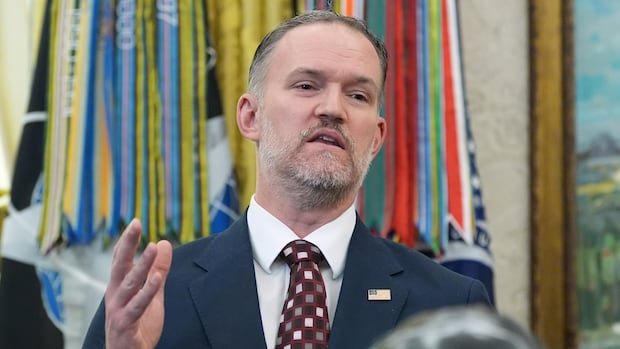

U.S. Trade Representative Jamieson Greer announced that both U.S. President Donald Trump and Prime Minister Mark Carney will receive “options” after trade discussions between Canadian and U.S. trade officials on Thursday. Greer mentioned that the president and prime minister will engage in talks and consider various choices, reflecting the ongoing negotiations according to the Trump administration’s standpoint.
In an exclusive interview with CBC News after the meetings, Greer described the discussions as positive and friendly. Following the talks, Canada-U.S. Trade Minister Dominic LeBlanc affirmed his commitment to fulfilling Canadian expectations. He did not specify the number of future meetings with Greer, stating they will have as many sessions as necessary.
LeBlanc is set to update the federal government’s Advisory Committee on Canada-U.S. Economic Relations on Friday afternoon regarding the ongoing negotiations. This committee plays a crucial role in strategizing Canada’s approach to its economic ties with the U.S.
After today’s meeting, both LeBlanc and chief trade negotiator Janice Charette met with Greer for the second time this week and the fourth time in three weeks. Discussions have intensified since Trump’s threat to impose 50% duties on numerous Canadian goods, in addition to existing sectoral tariffs set to take effect on August 19.
Charette continued discussions with her U.S. counterpart late into the evening following the meeting, as revealed by a source to CBC News. LeBlanc and Greer are reportedly developing a proposal to present to Trump before the tariff deadline, aiming to pave the way for a potential trade deal as early as Monday.
In a new development, sources disclosed that the Americans proposed lowering some sectoral tariffs on Tuesday, though not meeting Canadian expectations. The U.S. is also seeking preferential access to Canadian critical minerals, covering security and energy aspects.
CBC News previously reported that the Canadian side emphasized to the Americans that if the Aug. 19 tariffs are imposed, there would be little political support in Canada to continue the negotiations. The Canadians are willing to address some of the trade concerns, including ending booze bans and making adjustments in the auto and dairy sectors.
Ontario Premier Doug Ford expressed willingness to restore U.S. alcohol sales in Ontario if a fair deal safeguards key sectors like steel, auto, forestry, agriculture, and manufacturing. Ford emphasized that tariffs on Canada are essentially taxes on Americans.
Ford’s stance aligns with Quebec Premier Christine Fréchette’s office, which affirmed that the ban on U.S. alcohol sales in Quebec will persist until a fair agreement is reached. Quebec maintains its authority over alcohol sales decisions, underscoring its commitment to negotiating fair terms.