
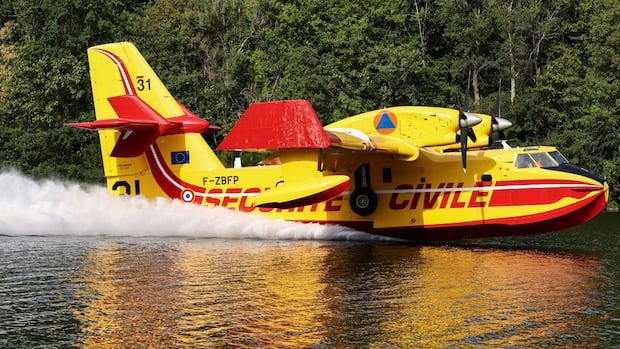

Amid a severe wildfire season affecting Canada, the United States, and Europe, there is mounting pressure on the manufacturer of Canadair “Super Scooper” water bombers to boost production. De Havilland, based in Calgary, has resurrected the production of Canadair after acquiring the water bomber program from Bombardier. The assembly of these renowned aircraft mainly takes place in Calgary, utilizing a nationwide supply chain. The revived production line, initiated in 2022, is progressing well, with the first two aircraft expected to be completed and delivered by early 2028.
The Canadair amphibious firefighting plane, originally introduced in the 1960s, was specifically designed for combatting large fires in the Canadian wilderness. With its unique ability to operate at low altitudes and swiftly collect water from various sources like lakes and rivers, the Canadair has garnered global acclaim for its firefighting prowess.
Political figures in Canada and Europe are urgently seeking to acquire these aircraft due to current shortages and aging firefighting fleets. The latest iteration of the Super Scooper will closely resemble previous Canadair models, featuring a 30-meter wingspan, a 6,100-liter water tank, and the iconic yellow and red exterior.
Facing criticism from opposition politicians, De Havilland is under significant pressure to meet the soaring demand for water bombers. The company is contemplating establishing a second production line to augment output. Alberta Premier Danielle Smith is actively advocating for a substantial order from the federal government to facilitate the expansion of manufacturing capabilities.
Experts highlight the necessity for additional production lines to meet the escalating worldwide demand for Canadair water bombers. The threat of potential competition from foreign manufacturers poses a risk to Canadian jobs, emphasizing the importance of enhancing domestic manufacturing capabilities.
The recent Senate report on wildfires in Canada recommended the creation of a national fleet of modern firefighting aircraft. While aircraft play a crucial role in wildfire management, they are just one component in a comprehensive strategy that includes prevention and mitigation efforts. The federal government is committed to bolstering national capacity to respond to the escalating threat of wildfires and is collaborating with provincial and territorial authorities to enhance emergency response capabilities.