
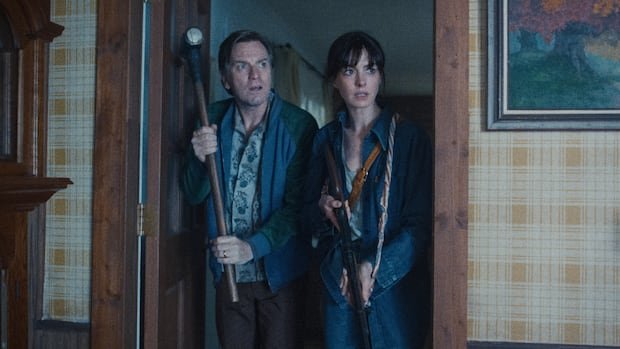

In 1982, housewives faced various concerns. From kids engaging in teenage antics to a husband juggling multiple jobs, the worries were endless. However, in Oak Street, a peculiar phenomenon unfolds. A family finds themselves transported back to the late Jurassic era, battling not only prehistoric creatures but also their internal conflicts.
The family, led by the aloof father Greg and genius elder sister Audrey, navigates this strange new world reminiscent of a Spielbergian tale meets a Stephen King novel. Despite its nostalgic 80s charm, “The End of Oak Street” falls short of being the summer blockbuster anticipated by many.
While the film offers some originality and fun moments, it lacks the depth and thematic resonance of its inspirations. The characters’ arcs are overshadowed by dinosaur encounters, leading to a disjointed narrative. With rushed character introductions and repetitive action sequences, the film struggles to engage viewers beyond the spectacle of giant lizards wreaking havoc.
Despite its homage to Spielberg’s visual style, “The End of Oak Street” fails to deliver a compelling story that resonates with audiences. While some may enjoy the film for its entertainment value, others might find it lacking in substance compared to similar works with deeper thematic explorations.
In the end, the film raises questions about the necessity of having a meaningful narrative in a dinosaur disaster movie. While some may overlook its shortcomings for the sake of entertainment, others may seek more profound storytelling akin to previous works that delved deeper into societal and personal themes.