
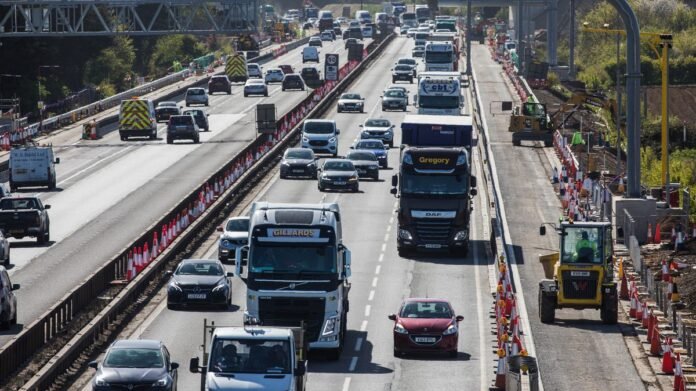

A recent study conducted by the AA shows that the number of drivers feeling nervous or anxious while using modern “smart” motorways has doubled over the past year. These motorways are equipped with technology that utilizes the hard shoulder as an additional lane, with a total of 396 miles of smart motorways in England as of April 2024.
Critics argue that smart motorways have significant flaws, citing at least 79 fatalities on these roads between 2010 and 2024. Research also indicates that drivers who experience breakdowns on motorways without a hard shoulder are approximately three times more likely to face fatal or severe injuries compared to those on roads with a consistently available hard shoulder.
A survey of 12,705 AA members revealed a notable increase in feelings of nervousness or anxiety on smart motorways without a hard shoulder, where emergency refuge areas are positioned approximately every three-quarters of a mile. The percentage of drivers reporting such feelings doubled from 23% to 46% in the past year. Additionally, motorways where the hard shoulder is only operational during peak periods saw a rise in anxiety levels among drivers, increasing from 30% to 47% within the last 12 months.
In response to safety concerns, the government announced in April 2023 the cancellation of plans for new smart motorways due to drivers’ lack of confidence and financial constraints. Edmund King, the AA president, emphasized the necessity of reintroducing the hard shoulder in controlled motorway settings to restore driver confidence in smart motorways.
The AA emphasized the importance of enhanced transparency and consistency in evaluating and monitoring motorway safety. Despite the halt in new construction, there remains uncertainty regarding how safety on existing smart motorways is being independently reviewed. The AA urged the prompt release of performance reports for various motorway sections where smart technology is still in operation.
Mr. King stressed the critical nature of these safety reports to assess the success of smart motorways. Delays in publishing these reports raise concerns that potential drawbacks outweigh the benefits. Regardless of the content, immediate disclosure of these documents is essential.
A spokesperson for the Department for Transport defended smart motorways as the safest roads in terms of fatalities or severe injuries. The government continues to enhance their performance, including the installation of over 150 additional emergency areas to enhance user safety. Furthermore, ongoing efforts to elevate road safety standards are outlined in the Road Safety Strategy, the first of its kind in over a decade.