
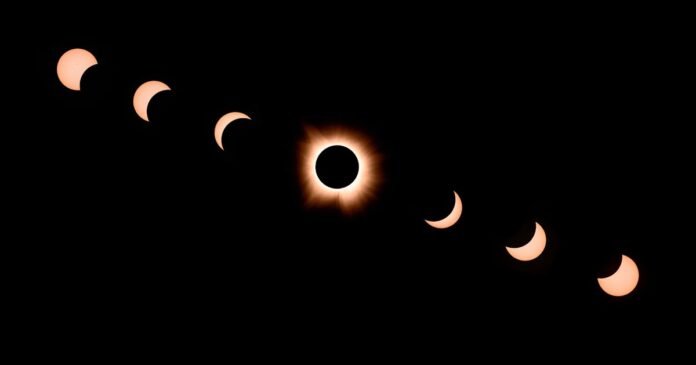

A rare and spectacular celestial event known as the ‘eclipse of the century’ is slated to occur this year, offering a remarkable sight to behold. However, this breathtaking phenomenon will only be fully visible from select locations on Earth.
Eclipses have captivated civilizations throughout history, serving as a source of inspiration for various forms of art and culture. Notably, a total solar eclipse played a pivotal role in bringing an end to a prolonged conflict between the Lydian and the Medes kingdoms in ancient Turkey, signaling a divine desire for peace.
While the last total solar eclipse in Britain occurred in 1999, enthusiasts will have to wait until 2090 for the next occurrence within the country. Nevertheless, those willing to travel can witness a total solar eclipse on August 12, 2026, in a restricted path extending from Iceland to Spain and the Balearic Islands.
In Iceland’s capital, Reykjavík, the eclipse will peak at 5:48 pm local time, lasting just over a minute. Similarly, in Gijón, Spain, it will be visible at 8:28 pm local time for approximately one minute and 45 seconds. The eclipse will reach totality at different times in various Spanish locations, offering unique viewing experiences.
On the same day, the UK will experience a partial lunar eclipse, resulting in a dimmed sky effect akin to twilight. At its peak, between 89% and 91% of the sun will be obscured by the Moon, creating an impressive crescent shape in the sky.
For those seeking more eclipse adventures, August 2, 2027, will feature one of the longest total eclipses in a century, best viewed from North Africa. Although the UK will witness a partial eclipse with around 42% sun coverage, territories like Gibraltar will have a clearer view of this remarkable astronomical event.